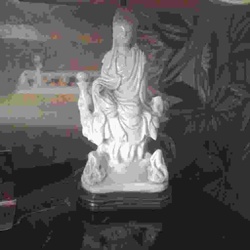
Carved Green Nephrite Jade Guan Yin Head Sculpture
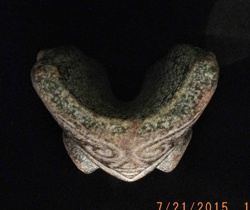
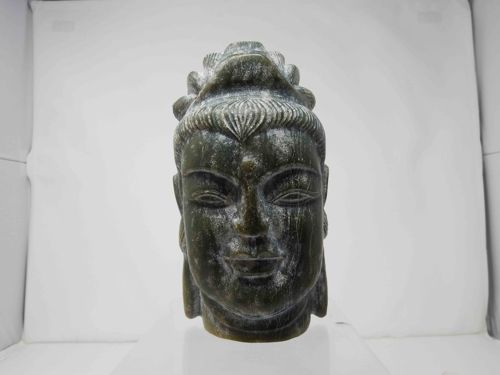
This is a hand-carved sculptural head depicting the Bodhisattva Guan Yin, crafted from a deep olive-green nephrite jade. The piece features a high, stylized ushnisha or hair arrangement characterized by vertical linear incising, gathered at the top in a floral or flame-like crown. The facial features are rendered in a classic serene expression with heavy-lidded almond-shaped eyes, a prominent bridge to the nose, and a gentle smile. Elongated earlobes are visible at the sides, signifying spiritual wisdom. The stone displays significant natural variation, featuring dark green to black inclusions and pervasive white cloud-like surface mineral deposits or calcification, which may indicate long-term burial or chemical weathering. There are visible vertical stress lines and minor surface abrasions across the face, particularly on the forehead and nose. The craftsmanship reflects a traditional East Asian style, likely 20th century in origin, though intended to mimic archaic Ming or Qing dynasty aesthetics. The heavy, dense nature of the jade and the softly polished finish suggest a solid block construction without modern composite fillers.
AI-Generated Appraisal Disclaimer
Estimated Value
$400 - $600
Basic Information
Category
Asian Art and Antiquities
Appraised On
March 9, 2026
Estimated Value
$400 - $600
Additional Details Provided By Owner
User Provided Information
Jade sculpture, unknown artist
Item Description
This is a hand-carved sculptural head depicting the Bodhisattva Guan Yin, crafted from a deep olive-green nephrite jade. The piece features a high, stylized ushnisha or hair arrangement characterized by vertical linear incising, gathered at the top in a floral or flame-like crown. The facial features are rendered in a classic serene expression with heavy-lidded almond-shaped eyes, a prominent bridge to the nose, and a gentle smile. Elongated earlobes are visible at the sides, signifying spiritual wisdom. The stone displays significant natural variation, featuring dark green to black inclusions and pervasive white cloud-like surface mineral deposits or calcification, which may indicate long-term burial or chemical weathering. There are visible vertical stress lines and minor surface abrasions across the face, particularly on the forehead and nose. The craftsmanship reflects a traditional East Asian style, likely 20th century in origin, though intended to mimic archaic Ming or Qing dynasty aesthetics. The heavy, dense nature of the jade and the softly polished finish suggest a solid block construction without modern composite fillers.
Related Tags
Get Your Items Appraised
Instant estimates of your treasures with AI-powered instant appraisals