AI Appraisal Estimate

AI-generated estimates · not official valuations

From the user

What was submitted

Photo and notes provided by the user — not generated by AI

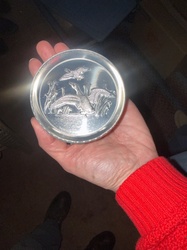
Submitted item photo
Submitted photo · June 12, 2026

User's notes

Imari platter

AI analysis below

AI appraisal

AI analysis & estimate

AI-Generated · Verify before acting

Everything below is generated by AI for informational purposes only. AI can make mistakes — the AI may misidentify items or misattribute them (artist, maker, brand, designer, origin, era). This is not an official valuation and should not be used for insurance, sale, tax, estate, legal, or lending purposes — or any decision requiring a certified appraisal. It is not an authoritative claim about any person, brand, or rights holder — do not share or rely on it as a factual statement about a third party. Always consult qualified professionals before making financial decisions.

Note

This analysis also relies on unverified notes provided by the user, which may be incomplete or inaccurate and could affect the result.

Read the full disclaimer

AI Identification

·Not independently authenticated·Verify before acting

Victorian Electroplated Nickel Silver (EPNS) Tray Base

Antique Metalware / Silverplate

AI Estimated Value

·Not an official valuation·Verify before acting

$40-$75

As of June 12, 2026

AI Item Analysis

·AI can make mistakes·Verify before acting
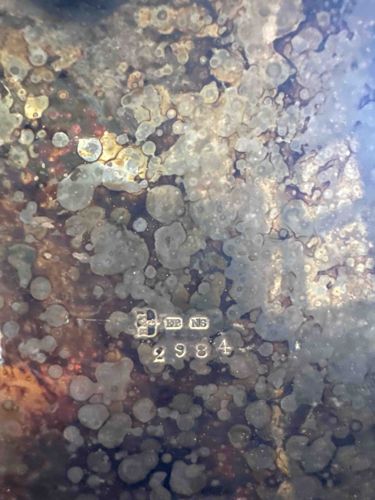
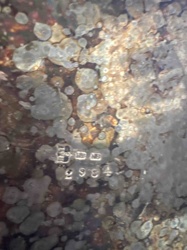
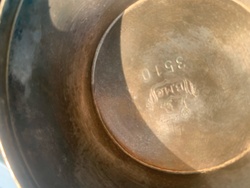
This item is the metallic underside of a platter, specifically identified by its hallmarks as Electroplated Nickel Silver (EPNS). The surface displays significant oxidation, heavy tarnish, and extensive circular corrosion spotting (pitting) across the entire visible area, suggesting long-term exposure to moisture or neglect. The metal shows a dark, mottled patina ranging from deep charcoal to yellowish-bronze tones. Centered on the base are clear struck marks: a maker's mark consisting of a stylized crest or shield followed by the uppercase letters 'EP NS', which denotes a base of nickel silver plated with a thin layer of silver. Below these letters is the numerical stamp '2984', which typically serves as a pattern or catalog number used by the manufacturer for production tracking. The construction belongs to the late 19th or early 20th century (Victorian or Edwardian era), a period when EPNS was a popular, durable alternative to solid sterling silver. The craftsmanship is industrial yet precise, evidenced by the uniform striking of the digits. Given the user context of an 'Imari platter', this metal component likely serves as the heavy-duty mounting or footed base for a ceramic Imari-style porcelain insert, a common design for luxury serving pieces of that era.
AI Appraisal Report

·AI can make mistakes·Verify before acting
I have examined the digital images of the EPNS tray base, pattern number 2984. The hallmarks confirm its identity as Electroplated Nickel Silver, a mass-produced Victorian-era alternative to sterling silver. In my professional estimation, the condition is poor to fair. I observe extensive oxidation and significant pitting that likely penetrates the thin silver layer, a condition often referred to as 'bleeding.' This dictates the need for professional re-plating, which often exceeds the market value of the object. While the construction suggests a high-quality manufacturer from the late 19th century, the absence of the ceramic Imari insert—which likely provided 80-90% of the total value—relegates this component to a replacement part or a decorative base for a mismatched piece. Market demand for damaged silverplate is currently low, with collectors prioritizing pieces that retain their original silver luster and accompanying ceramic components. Comparable intact Victorian Imari-style porcelain and EPNS galleried trays typically fetch $150-$300; however, as a standalone base in this state of neglect, it is valued primarily as a curiosity or restoration project. Note that this appraisal is based on image analysis alone. Without in-person inspection, I cannot determine the exact thickness of the remaining silver or if the base metal is compromised by structural fatigue. A physical examination for a maker’s crest identification (to specific firms like Elkington or Walker & Hall) would be necessary to verify if this piece originated from a prestigious workshop, which could marginally improve its desirability to a specialist collector.

Get your items appraised

Instant estimates of your treasures with AI-powered appraisals

Browse More Appraisals