AI estimate as of September 1, 2025 · verify with a professional before acting
AI-Generated · Verify before acting
Everything on this page is generated by AI for informational purposes only. AI can make mistakes — the AI may misidentify items or misattribute them (artist, maker, brand, designer, origin, era). This is not an official valuation and should not be used for insurance, sale, tax, estate, legal, or lending purposes — or any decision requiring a certified appraisal. It is not an authoritative claim about any person, brand, or rights holder — do not share or rely on it as a factual statement about a third party. Always consult qualified professionals before making financial decisions.
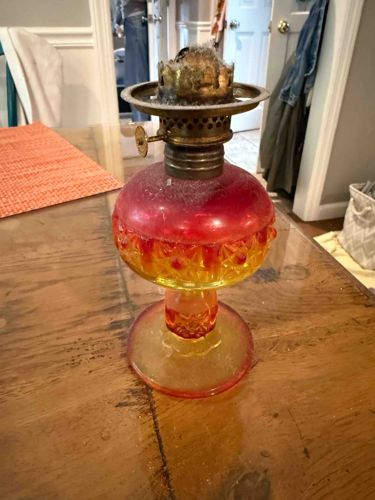
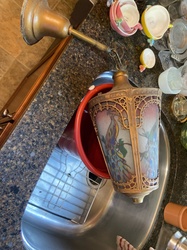
This item is an antique or vintage oil lamp, characterized by its vibrant two-tone glass and brass components. The lamp features a squat, rounded font (oil reservoir) that transitions from a rich, translucent cranberry or ruby red at the top to a warm, translucent yellow-amber towards the bottom. The glass is pressed, exhibiting a distinct hobnail or diamond-point pattern around the lower half of the font, providing tactile and visual texture. This pattern continues into the stem, which connects the font to a circular base, also in the yellow-amber hue with a red rim. The top of the font is fitted with a common size brass burner assembly. This burner includes a threaded collar for secure attachment, a wick-adjusting knob (visible on the side), and air vents. The current state shows significant dust accumulation across the glass body and a thick layer of grime and what appears to be carbonized wick residue on the brass burner, indicating prolonged disuse and lack of cleaning. The brass itself shows a dark, uneven patination consistent with age and oxidation. There are no visible chips, cracks, or significant damage to the glass, although its overall dusty appearance obscures minor imperfections. The design, particularly the pressed glass and bi-coloration, suggests a manufacturing period from the late 19th to early 20th century, possibly during the Victorian or Edwardian eras, a time when decorative pressed glass gained popularity for household items. The craftsmanship appears mass-produced, typical for utilitarian yet decorative items of that period, focusing on visual appeal through color and pattern.
AI Appraisal Report
Upon examining the image of this two-tone cranberry and amber pressed glass oil lamp, I find it to be a charming example of late 19th to early 20th-century decorative lighting. The pressed glass pattern, particularly the hobnail or diamond-point design, coupled with the bi-coloration, aligns well with manufacturing techniques and aesthetic preferences of the Victorian or Edwardian eras. While the overall form and brass burner appear authentic to the period, I must state that a definitive authentication of age and origin is limited by image-only assessment.
The condition, despite significant dust and grime on both the glass and the burner, appears good with no visible chips, cracks, or major damage to the glass. However, minor imperfections could be obscured by the surface dirt. The brass burner exhibits typical age-related patination and signs of disuse, including carbonized wick residue, which is common for functional antique items. Cleaning and a new wick would restore its utilitarian aspect. The mass-produced nature, typical for such household items, indicates it was widely available, which impacts rarity.
In terms of market conditions, pressed glass oil lamps are consistently sought after by collectors of antique lighting and Americana. The two-tone glass, especially the cranberry transitioning to amber, is a desirable feature that enhances its appeal. Comparables in similar condition with attractive bi-coloration typically fetch good prices. However, the lack of a prominent maker's mark or unique design elements keeps its value from reaching higher echelons reserved for rarer or artist-attributed pieces.
Factors significantly impacting value include the attractive color combination and the apparent lack of damage to the glass. Negative factors are the dirty condition and the common nature of mass-produced pressed glass. For complete authentication, an in-person examination would allow for precise measurement, detailed inspection of the glass for faint maker's marks or stress fractures, and an assessment of the brass burner's full integrity. Provenance documentation, if available, would also be invaluable. Scientific testing for glass composition is generally not warranted for items of this value but could confirm age if needed.