Ruffled Rim Hand-Blown Spatter Glass Vase
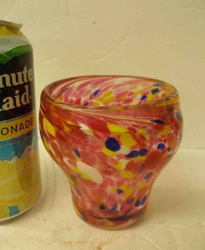
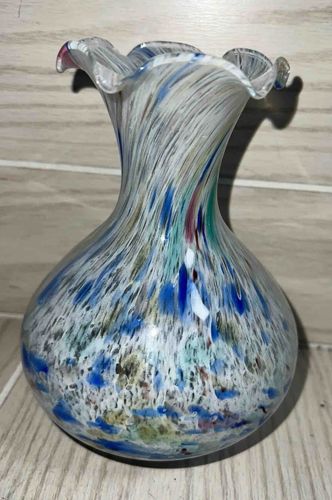
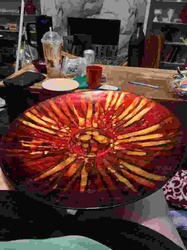
This is a hand-blown decorative glass vase featuring a bulbous body that tapers into a slender neck before flaring into a classic ruffled or crimped rim. The piece is constructed using a 'spatter' or 'splatter' glass technique, where multicolored glass frit—primarily in shades of cobalt blue, emerald green, and deep burgundy—has been rolled into the surface of a clear or white base and pulled vertically toward the rim. The result is a dynamic, streaked aesthetic reminiscent of confetti or brushstrokes. The white internal casing provides a solid background that makes the vibrant colors pop. The craftsmanship suggests mid-to-late 20th-century origins, likely between the 1960s and 1980s, common in both European (specifically Bohemian or Murano) and American studio glass tradition. The condition appears excellent with no visible cracks or chips on the crimped edges, which are highly susceptible to damage. The surface retains a high-gloss finish with no evident clouding or 'sick glass' syndrome. The base is not visible to confirm a pontil mark, but the irregular ruffles indicate individual hand-tooling rather than machine molding. The color distribution is dense at the base and thins out as it stretches up the neck, showing the artisan's breath-control during the blowing process.
AI-Generated Appraisal Disclaimer
Estimated Value
$45.00 - $75.00
Basic Information
Category
Art Glass / Decorative Collectibles
Appraised On
December 31, 2025
Estimated Value
$45.00 - $75.00
Item Description
This is a hand-blown decorative glass vase featuring a bulbous body that tapers into a slender neck before flaring into a classic ruffled or crimped rim. The piece is constructed using a 'spatter' or 'splatter' glass technique, where multicolored glass frit—primarily in shades of cobalt blue, emerald green, and deep burgundy—has been rolled into the surface of a clear or white base and pulled vertically toward the rim. The result is a dynamic, streaked aesthetic reminiscent of confetti or brushstrokes. The white internal casing provides a solid background that makes the vibrant colors pop. The craftsmanship suggests mid-to-late 20th-century origins, likely between the 1960s and 1980s, common in both European (specifically Bohemian or Murano) and American studio glass tradition. The condition appears excellent with no visible cracks or chips on the crimped edges, which are highly susceptible to damage. The surface retains a high-gloss finish with no evident clouding or 'sick glass' syndrome. The base is not visible to confirm a pontil mark, but the irregular ruffles indicate individual hand-tooling rather than machine molding. The color distribution is dense at the base and thins out as it stretches up the neck, showing the artisan's breath-control during the blowing process.
Get Your Items Appraised
Instant estimates of your treasures with AI-powered instant appraisals