Prehistoric Flint Biface Core Tool
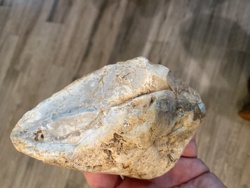
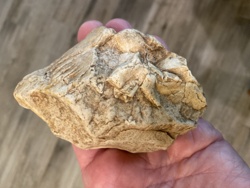
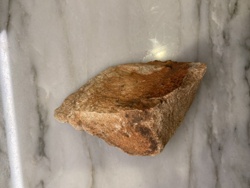
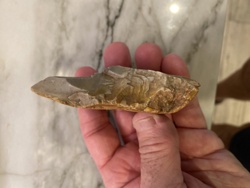
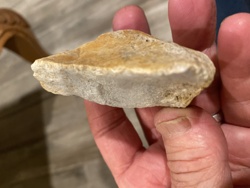
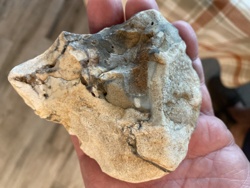
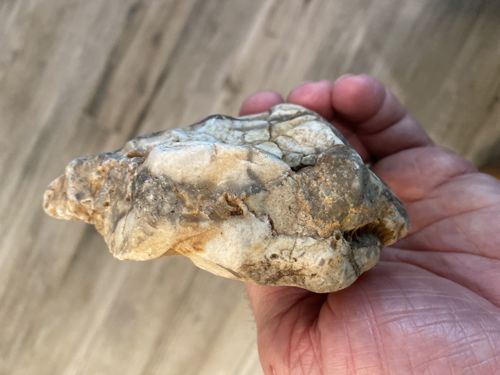
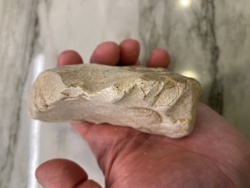
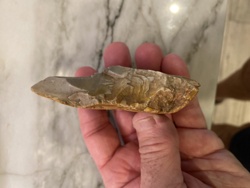
This prehistoric stone artifact, found in Guthrie, OK, measures approximately 4 inches by 3.5 inches. It is a lithic biface, likely serving as a multi-purpose core tool, hand axe, or large scraper. The material consists of what appears to be a variegated flint or chert, exhibiting a complex color palette of creamy whites, varying shades of grey, and tan earthy tones. The physical construction shows evidence of intentional percussion flaking, with visible flake scars across its surface to shape the stone and create functional edges. The item possesses a rugged, irregular geometry typical of early-stage lithic reduction. Condition-wise, it displays significant natural weathering and a developed patina consistent with long-term exposure to the elements or burial in soil. There are some minor step fractures and crushing along the perimeter, which may indicate either ancient use-wear or post-depositional damage. The craftsmanship avoids refined pressure flaking, suggesting it may have been a tool-in-progress or a primary tool for heavy-duty tasks such as butchering or woodworking. The age likely dates to the Paleo-Indian or Archaic periods of North American prehistory, representing essential survival technology of indigenous populations in the Great Plains region.
AI-Generated Appraisal Disclaimer
Estimated Value
$45.00 - $75.00
Basic Information
Category
Archaeological Artifacts / Native American Lithics
Appraised On
February 17, 2026
Estimated Value
$45.00 - $75.00
Additional Details Provided By Owner
User Provided Information
Prehistoric flint bi face hand axe scraper core tool found in Guthrie OK measuring 4" x3.5"
Item Description
This prehistoric stone artifact, found in Guthrie, OK, measures approximately 4 inches by 3.5 inches. It is a lithic biface, likely serving as a multi-purpose core tool, hand axe, or large scraper. The material consists of what appears to be a variegated flint or chert, exhibiting a complex color palette of creamy whites, varying shades of grey, and tan earthy tones. The physical construction shows evidence of intentional percussion flaking, with visible flake scars across its surface to shape the stone and create functional edges. The item possesses a rugged, irregular geometry typical of early-stage lithic reduction. Condition-wise, it displays significant natural weathering and a developed patina consistent with long-term exposure to the elements or burial in soil. There are some minor step fractures and crushing along the perimeter, which may indicate either ancient use-wear or post-depositional damage. The craftsmanship avoids refined pressure flaking, suggesting it may have been a tool-in-progress or a primary tool for heavy-duty tasks such as butchering or woodworking. The age likely dates to the Paleo-Indian or Archaic periods of North American prehistory, representing essential survival technology of indigenous populations in the Great Plains region.
Get Your Items Appraised
Instant estimates of your treasures with AI-powered instant appraisals