AI Appraisal Estimate

AI-generated estimates · not official valuations

From the user

What was submitted

Photo and notes provided by the user — not generated by AI

Submitted item photo
Submitted photo · June 27, 2026

User's notes

No additional notes provided.

AI analysis below

AI appraisal

AI analysis & estimate

AI-Generated · Verify before acting

Everything below is generated by AI for informational purposes only. AI can make mistakes — the AI may misidentify items or misattribute them (artist, maker, brand, designer, origin, era). This is not an official valuation and should not be used for insurance, sale, tax, estate, legal, or lending purposes — or any decision requiring a certified appraisal. It is not an authoritative claim about any person, brand, or rights holder — do not share or rely on it as a factual statement about a third party. Always consult qualified professionals before making financial decisions.

Read the full disclaimer

AI Identification

·Not independently authenticated·Verify before acting

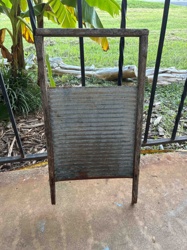
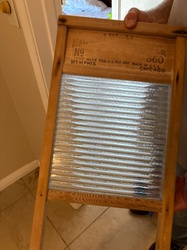
National Washboard Co. No. 863 Glass Washboard

Household Antiques & Primitive Laundry Tools

AI Estimated Value

·Not an official valuation·Verify before acting

$45.00 - $65.00

As of June 27, 2026

AI Item Analysis

·AI can make mistakes·Verify before acting
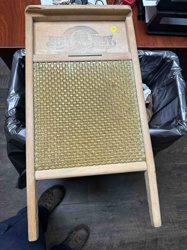
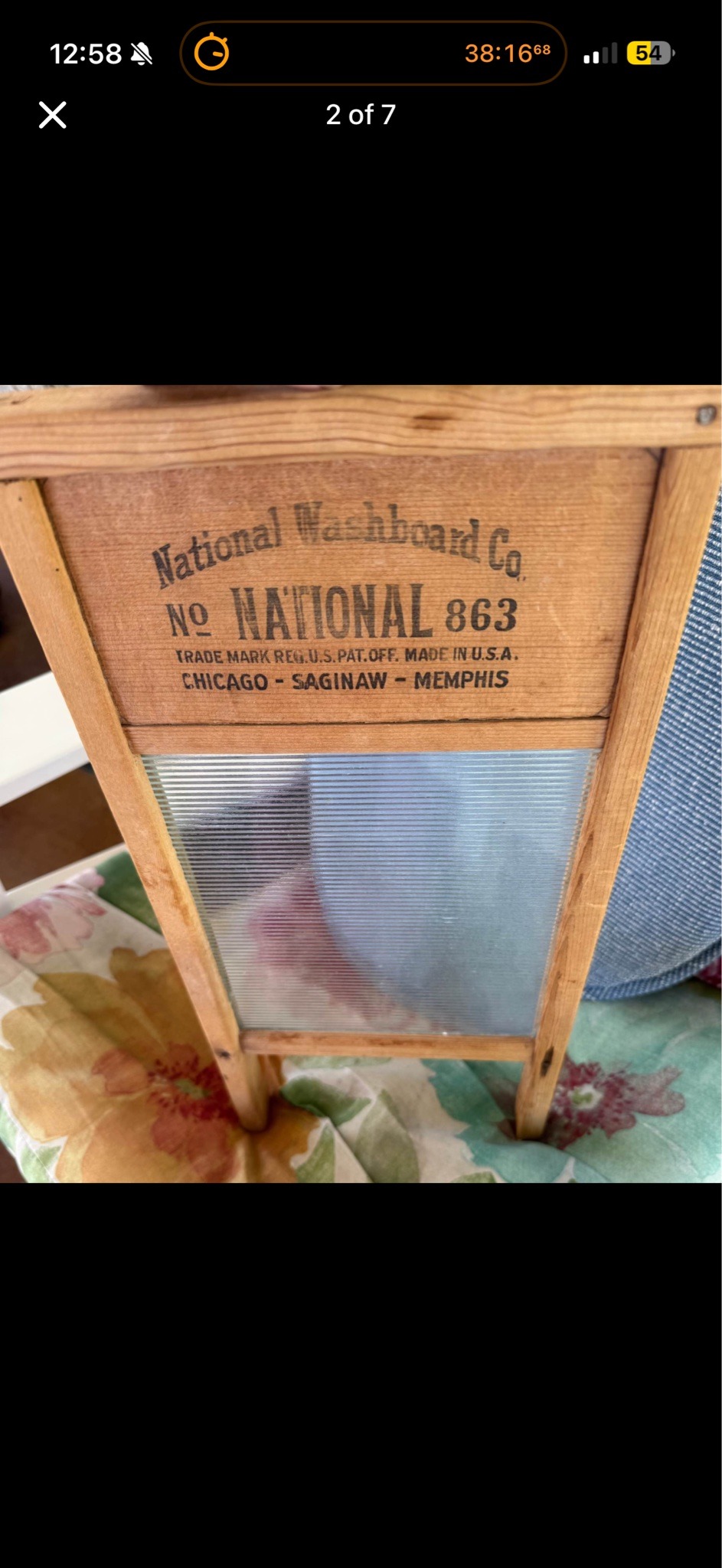
This is a vintage washing board manufactured by the National Washboard Co., identified by model number No. 863. The item features a sturdy rectangular frame constructed from light-colored natural wood, likely pine or hemlock, with traditional mortise-style jointing and metal fasteners. The scrubbing surface is made of clear, heavy-duty glass with a distinct horizontal ribbed or 'crimp' pattern designed to agitate clothing. The wooden header is prominently stamped in black ink with the manufacturer's name, brand, and manufacturing locations including Chicago, Saginaw, and Memphis, alongside the 'TRADE MARK REG. U.S. PAT. OFF. MADE IN U.S.A.' designation. These glass-insert boards became particularly popular during World War II when metal was restricted for the war effort, placing this item's production likely between the 1920s and 1940s. The condition appears well-preserved with a warm aged patina on the wood and visible original grain. There are minor signs of wear consistent with age, such as slight darkening on the lower legs and small abrasions on the frame, but the glass remains intact without significant cracks or chips. The craftsmanship is typical of high-volume industrial household goods from the early-to-mid 20th century, characterized by functional durability and bold, legible branding.
AI Appraisal Report

·AI can make mistakes·Verify before acting
I have conducted a visual examination of the National Washboard Co. No. 863. This 'Victory' era piece features a glass scrubbing surface, which suggests a manufacture date between 1920 and 1945, a period when metal was prioritized for wartime production. The wood frame retains a desirable honey-colored patina and the branding stamps remain crisp and legible, which is critical for value in the primitive laundry tool market. The glass ribbing appears free of the typical pressure cracks found in frequently used specimens. This item is considered common rather than rare, as National was a high-volume manufacturer; however, the transition from metal to glass inserts makes this model a popular cross-over collectible for both history enthusiasts and interior decorators. Current market conditions for Americana primitives show steady demand for pieces with original branding and structural integrity. Comparables recently sold at auction and through antique dealers typically range from $35 for worn examples to $85 for pristine units. Factors impacting this specific value include the lack of water staining on the header and the intact 'Made in U.S.A.' marks. Limitations of this appraisal include the inability to physically test the wood for dry rot or detect hairline fractures in the glass through digital imagery. For a definitive authentication, an in-person inspection would be required to verify the depth of the ink pigment and the specific weight of the glass. Provenance documentation, such as family history or purchase records from long-standing collections, would further solidify its place in the market.

Get your items appraised

Instant estimates of your treasures with AI-powered appraisals

Browse More Appraisals