Archaistic Jade Hongshan Culture Style Eagle Ornament
Asian Antiques & Decorative Arts

Archaistic Jade Hongshan Culture Style Eagle Ornament

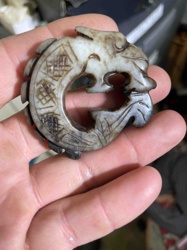
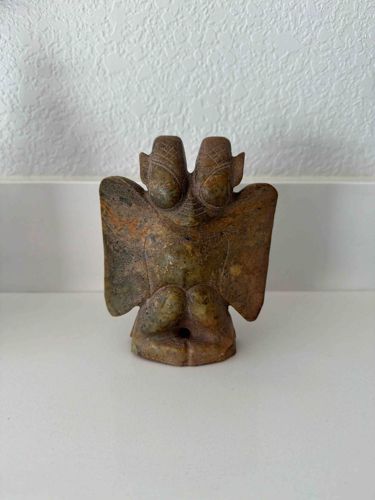
This small-scale sculpture is an archaistic representation of a bird, specifically an eagle or owl, modeled in the distinct style associated with the Hongshan Culture of Neolithic China. The piece is carved from a nephrite jade or similar hardstone that exhibits a mottled olive-green base color heavily affected by iron oxidation and calcification, resulting in russet and tan surface patches. The figure is characterized by its large, bulging protuberant eyes and two horn-like crests atop the head, which feature fine cross-hatched incisions. The wings are flared out to the sides in a semi-rectilinear fashion with rounded edges, while a small central hole is visible at the base, likely intended for suspension or securing to a mount. The overall condition shows significant artificial weathering and a matte limestone-like patina meant to simulate ancient burial. There are visible surface abrasions, pits, and mineral deposits consistent with 'antiqued' modern reproductions rather than authentic prehistoric jade. The carving style is chunky and symbolic, utilizing incised lines to define anatomical features. While it mimics the aesthetic of the 4700-2900 BC period, the tool marks and specific surface treatments suggest this is a 20th or 21st-century decorative homage to early Chinese lapidary art.
Estimated Value

$150 - $300

Basic Information

Category

Asian Antiques & Decorative Arts

Appraised On

January 1, 2026

Estimated Value

$150 - $300

Item Description

This small-scale sculpture is an archaistic representation of a bird, specifically an eagle or owl, modeled in the distinct style associated with the Hongshan Culture of Neolithic China. The piece is carved from a nephrite jade or similar hardstone that exhibits a mottled olive-green base color heavily affected by iron oxidation and calcification, resulting in russet and tan surface patches. The figure is characterized by its large, bulging protuberant eyes and two horn-like crests atop the head, which feature fine cross-hatched incisions. The wings are flared out to the sides in a semi-rectilinear fashion with rounded edges, while a small central hole is visible at the base, likely intended for suspension or securing to a mount. The overall condition shows significant artificial weathering and a matte limestone-like patina meant to simulate ancient burial. There are visible surface abrasions, pits, and mineral deposits consistent with 'antiqued' modern reproductions rather than authentic prehistoric jade. The carving style is chunky and symbolic, utilizing incised lines to define anatomical features. While it mimics the aesthetic of the 4700-2900 BC period, the tool marks and specific surface treatments suggest this is a 20th or 21st-century decorative homage to early Chinese lapidary art.
Get Your Items Appraised

Instant estimates of your treasures with AI-powered instant appraisals

Browse More Appraisals