Prehistoric Lithic Scraper / Unifacial Stone Tool
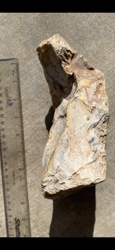
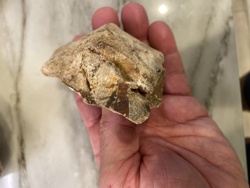
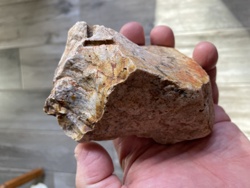
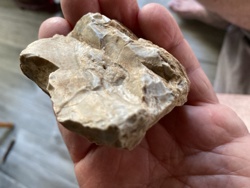
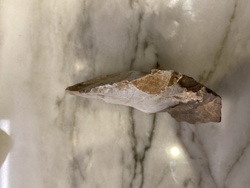
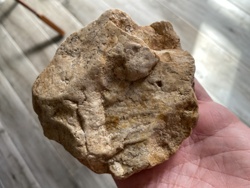
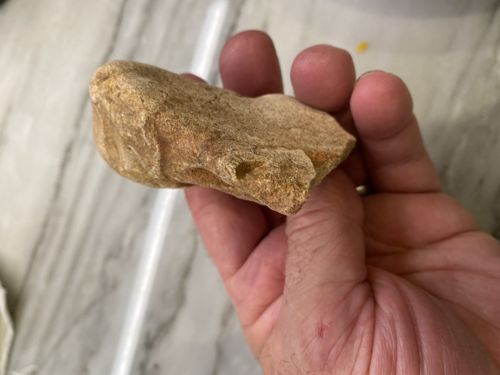
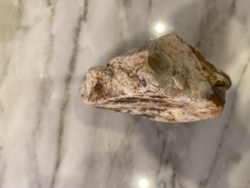
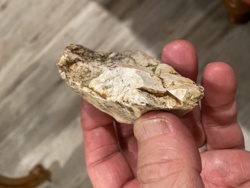
This is a prehistoric lithic stone tool, specifically identified as a scraper found in Guthrie, OK. Measuring approximately 3 inches by 2.25 inches, the artifact is crafted from a locally sourced chert or silicified sandstone, exhibiting a characteristic warm ochre to tan coloration with subtle reddish oxidation spots. The item is characterized by a thick, hand-sized profile that suggests it was designed as a handheld tool for tasks such as hide scraping or wood processing. The physical construction shows evidence of unifacial flaking (worked on one side), with a distinct bulb of percussion and intentional retouching along the primary working edge to create a sharp, durable bevel. The texture is rough and matte, displaying a heavy prehistoric patina consistent with long-term environmental exposure. Visible condition issues include minor modern abrasions and weathered edges that have softened over millennia, though the core integrity remains strong. Due to its discovery in Oklahoma, it likely dates to the Archaic or Woodland periods, reflecting high-quality utilitarian craftsmanship. Its specific ergonomic shape suggests it was fashioned to fit comfortably in the palm of the hand, providing significant leverage for heavy-duty scraping applications.
AI-Generated Appraisal Disclaimer
Estimated Value
$45.00 - $85.00
Basic Information
Category
Prehistoric Native American Artifacts
Appraised On
February 18, 2026
Estimated Value
$45.00 - $85.00
Additional Details Provided By Owner
User Provided Information
Prehistoric lithic stone scraper found in Guthrie OK measuring 3" x 2.25
Item Description
This is a prehistoric lithic stone tool, specifically identified as a scraper found in Guthrie, OK. Measuring approximately 3 inches by 2.25 inches, the artifact is crafted from a locally sourced chert or silicified sandstone, exhibiting a characteristic warm ochre to tan coloration with subtle reddish oxidation spots. The item is characterized by a thick, hand-sized profile that suggests it was designed as a handheld tool for tasks such as hide scraping or wood processing. The physical construction shows evidence of unifacial flaking (worked on one side), with a distinct bulb of percussion and intentional retouching along the primary working edge to create a sharp, durable bevel. The texture is rough and matte, displaying a heavy prehistoric patina consistent with long-term environmental exposure. Visible condition issues include minor modern abrasions and weathered edges that have softened over millennia, though the core integrity remains strong. Due to its discovery in Oklahoma, it likely dates to the Archaic or Woodland periods, reflecting high-quality utilitarian craftsmanship. Its specific ergonomic shape suggests it was fashioned to fit comfortably in the palm of the hand, providing significant leverage for heavy-duty scraping applications.
Get Your Items Appraised
Instant estimates of your treasures with AI-powered instant appraisals