AI Appraisal Estimate

AI-generated estimates · not official valuations

From the user

What was submitted

Photo and notes provided by the user — not generated by AI

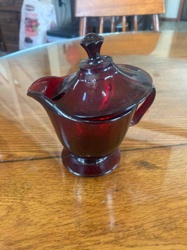
Submitted item photo
Submitted photo · June 13, 2026

User's notes

clay.art

AI analysis below

AI appraisal

AI analysis & estimate

AI-Generated · Verify before acting

Everything below is generated by AI for informational purposes only. AI can make mistakes — the AI may misidentify items or misattribute them (artist, maker, brand, designer, origin, era). This is not an official valuation and should not be used for insurance, sale, tax, estate, legal, or lending purposes — or any decision requiring a certified appraisal. It is not an authoritative claim about any person, brand, or rights holder — do not share or rely on it as a factual statement about a third party. Always consult qualified professionals before making financial decisions.

Note

This analysis also relies on unverified notes provided by the user, which may be incomplete or inaccurate and could affect the result.

Read the full disclaimer

AI Identification

·Not independently authenticated·Verify before acting

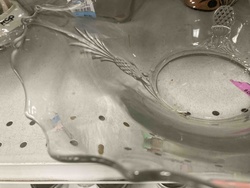
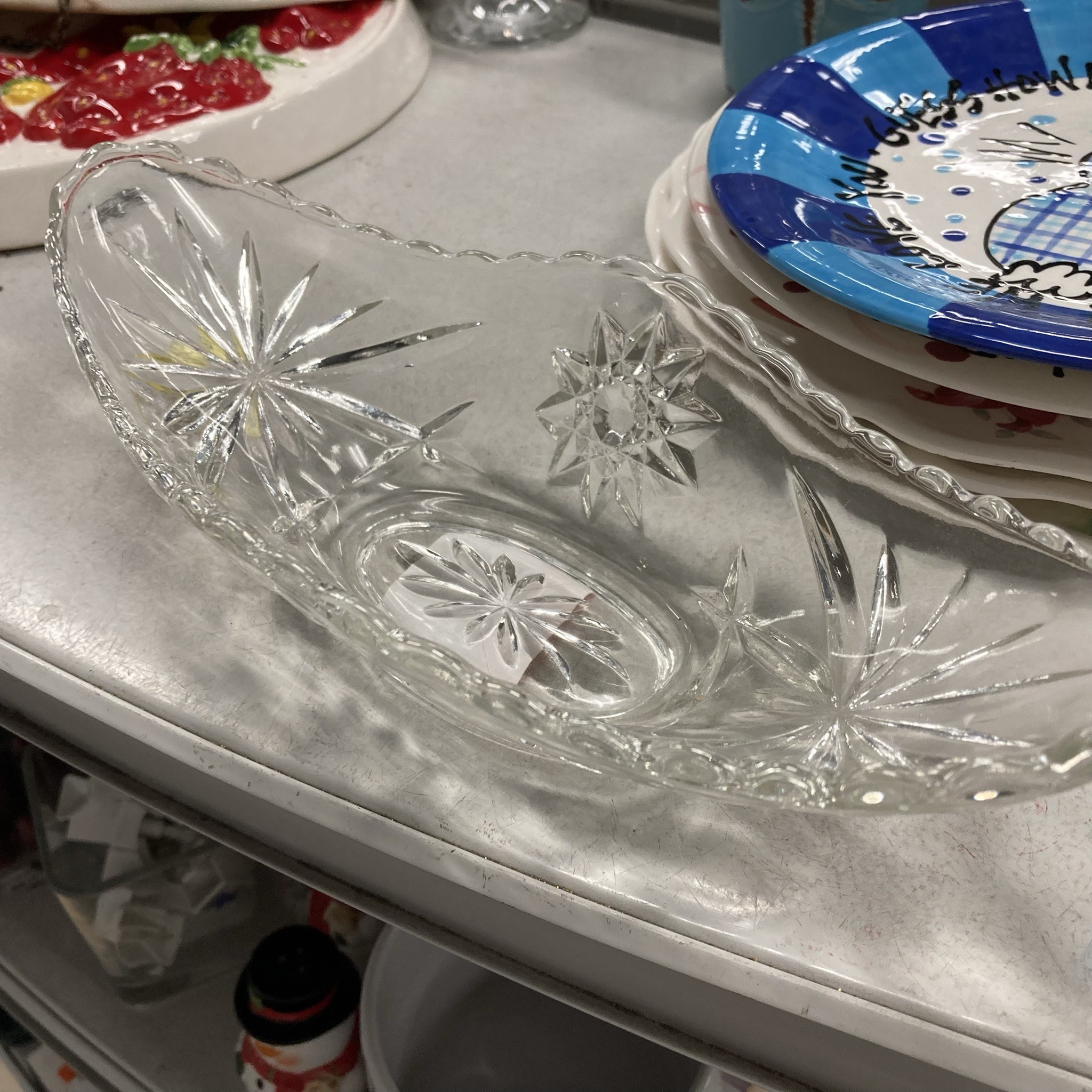
Oval Cut-Glass Starburst Celery Dish

Vintage Glassware / Kitchenalia

AI Estimated Value

·Not an official valuation·Verify before acting

$15.00 - $25.00

As of June 13, 2026

AI Item Analysis

·AI can make mistakes·Verify before acting
This is a vintage oval-shaped serving vessel, commonly referred to as a celery or relish dish, likely manufactured in Canada or the United States between 1920 and 1950. The piece is constructed from thick, clear pressed glass designed to emulate expensive hand-cut lead crystal. It features an elongated, boat-like silhouette with high curved ends and a scalloped, serrated 'sawtooth' rim that adds texture and visual interest to the profile. The decorative program is dominated by large, deeply embossed starburst or 'pinwheel' motifs on the sides and base, with smaller secondary star patterns (hobstars) interspersed. The base is an indented oval with a central sunburst pattern, providing stability and refracting light upwards through the glass. The glass displays a high degree of clarity with no visible yellowing or 'clouding,' though microscopic surface scratches are present on the underside from shelf wear. The craftsmanship is typical of high-quality mass-produced American Brilliant Period style glassware, characterized by sharp geometric facets and heavy weight. No maker's marks or signatures are immediately visible, which is common for glass from firms such as Anchor Hocking or Dominion Glass during this era.
AI Appraisal Report

·AI can make mistakes·Verify before acting
I have examined the digital representation of this oval glass celery dish. The piece is a classic example of Early American Pattern Glass (EAPG) or mid-century pressed glass (1920-1950), designed to mimic the 'Brilliant Period' of cut crystal. My visual assessment confirms the presence of characteristic 'pinwheel' and 'hobstar' motifs with a sawtooth rim. The clarity of the glass and the lack of yellowing suggest a stable composition, likely soda-lime glass rather than lead crystal, which is consistent with mass-produced tableware by firms like Anchor Hocking or Dominion Glass. While the condition appears good, I noted minor shelf wear on the base, which is expected and does not significantly detract from its utility. In the current market for 'Kitchenalia,' supply for un-signed pressed glass remains high while demand is relatively soft, generally driven by enthusiasts of vintage tablescapes rather than high-stakes collectors. Comparable sales for similar celery dishes frequently fall within the $15 to $25 range. The value is limited by the lack of a maker's mark and the fact that these items were manufactured in large quantities. Final authentication is limited by digital inspection. To provide a definitive valuation, I would need to perform a physical examination to check for 'resonance' (lead content rings when tapped), use UV light to detect fluorescence (signaling specific glass additives), and employ a loupe to differentiate between pressed mold seams and hand-cut miters. For insurance purposes, this item should be considered a functional vintage collectible rather than an investment-grade antique.

Get your items appraised

Instant estimates of your treasures with AI-powered appraisals

Browse More Appraisals