AI Appraisal Estimate

AI-generated estimates · not official valuations

From the user

What was submitted

Photo and notes provided by the user — not generated by AI

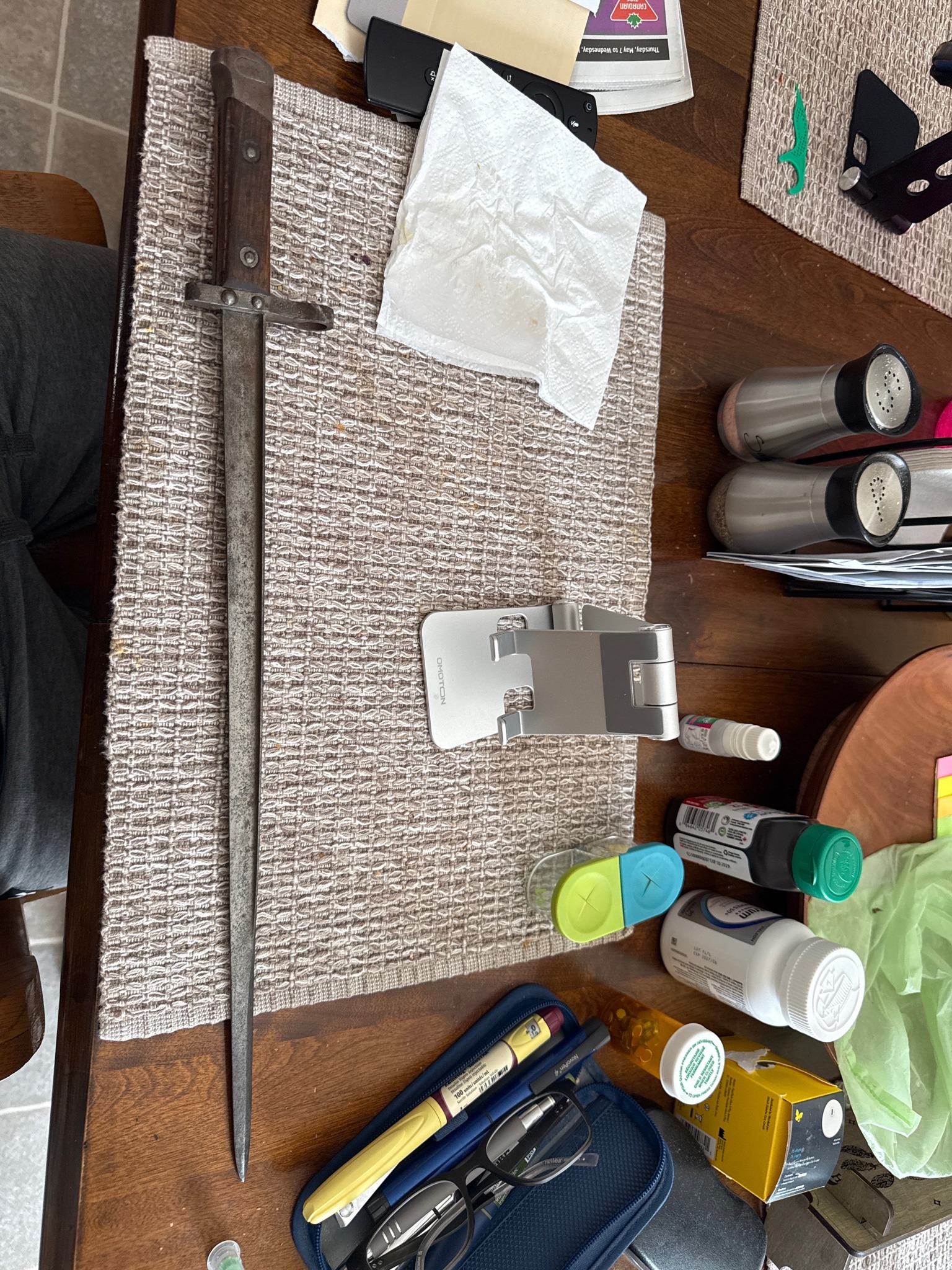
Submitted item photo
Submitted photo · June 21, 2026

User's notes

No additional notes provided.

AI analysis below

AI appraisal

AI analysis & estimate

AI-Generated · Verify before acting

Everything below is generated by AI for informational purposes only. AI can make mistakes — the AI may misidentify items or misattribute them (artist, maker, brand, designer, origin, era). This is not an official valuation and should not be used for insurance, sale, tax, estate, legal, or lending purposes — or any decision requiring a certified appraisal. It is not an authoritative claim about any person, brand, or rights holder — do not share or rely on it as a factual statement about a third party. Always consult qualified professionals before making financial decisions.

Read the full disclaimer

AI Identification

·Not independently authenticated·Verify before acting

Model 1907 Pattern British Bayonet

Military Antiques & Collectibles

AI Estimated Value

·Not an official valuation·Verify before acting

$150 - $225

As of June 21, 2026

AI Item Analysis

·AI can make mistakes·Verify before acting
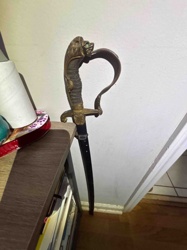
This is a Model 1907 Pattern British bayonet, a distinctive long-bladed sidearm primarily used with the Short Magazine Lee-Enfield (SMLE) rifle during World War I and World War II. The item features a long, single-edged steel blade with a deep fuller (blood groove) extending most of its length. The hilt is constructed with two wooden grip scales secured by two steel rivets, showing a dark, aged patina and significant smoothing from use. The steel crossguard includes a muzzle ring and a small hooked quillon, a feature commonly found on early production models before being simplified in later versions. The pommel is made of steel and includes the functional attachment slot and press-button catch for securing it to a rifle lug. Regarding condition, the metal surfaces exhibit widespread pitting, dark oxidation, and surface rust, particularly along the length of the blade and on the pommel. There are no immediate visible maker's marks or ricasso stamps clear in the photo, though these would typically identify the manufacturer (such as Wilkinson or Enfield) and the date of production. The wooden grips appear intact but worn, consistent with a tool of this age (estimated early to mid-20th century). The overall craftsmanship reflects rugged industrial military standards of the British Empire era.
AI Appraisal Report

·AI can make mistakes·Verify before acting
I have examined the provided images of this Model 1907 Pattern British bayonet. The presence of the hooked quillon is the most significant aesthetic and collector feature, as this curved extension was ordered removed by the British War Office in 1913. This identifies the piece as an early-production specimen, typically manufactured between 1907 and 1913. While early models are rare and highly sought after by Great War enthusiasts, the physical condition of this specific example is a major detractor. My examination reveals heavy surface oxidation and localized pitting throughout the blade and pommel, which suggests improper storage. The wooden grips show authentic wear, but the lack of visible ricasso markings (which usually denote the Crown, manufacture date, and inspector marks) prevents me from confirming a specific maker like Wilkinson or Sanderson. In the current market, 'Hooked Quillon' 1907s in excellent condition can exceed $600; however, due to the severe pitting and lack of a scabbard, the value is significantly tempered. Furthermore, I must note that high-quality reproductions of this specific variant exist. For a definitive authentication, I would require an in-person physical examination to check the depth of the metal stampings under a loupe and verify the specific weight and steel metallurgy. I would also seek provenance documentation linking it to a specific unit or conflict. Without these, I am basing this valuation on the visual assumption of authenticity despite the poor surface preservation.

Get your items appraised

Instant estimates of your treasures with AI-powered appraisals

Browse More Appraisals