AI identification & appraisal estimate

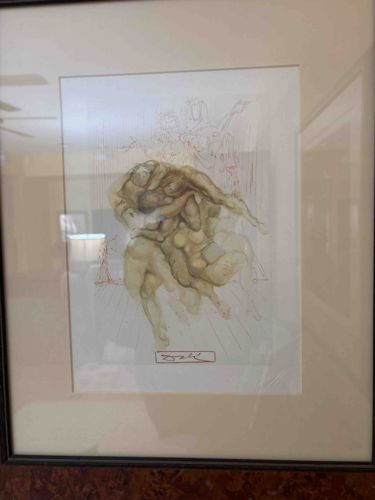
Salvador Dalí - Purgatory Canto 25 (The Gluttons) from the Divine Comedy Series

This name is the AI's identification of the item — it may be incorrect.

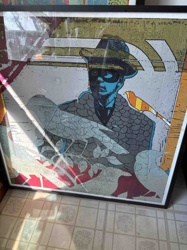
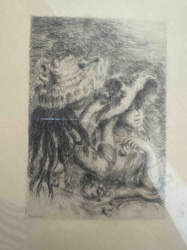
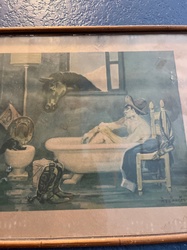
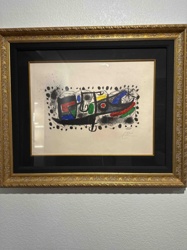
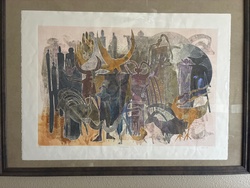
Submitted photo of Salvador Dalí - Purgatory Canto 25 (The Gluttons) from the Divine Comedy Series
Photo submitted by the user — not generated by AI

User's notes

Signed Dali lithograph

These notes were written by the person who submitted this item. Appraiser.AI has not verified them, and the AI's identification and estimate may rely on them.

AI Estimated Value

Not an official valuation

$1,200 - $1,800

AI estimate as of January 24, 2026 · verify with a professional before acting

AI-Generated · Verify before acting

Everything on this page is generated by AI for informational purposes only. AI can make mistakes — the AI may misidentify items or misattribute them (artist, maker, brand, designer, origin, era). This is not an official valuation and should not be used for insurance, sale, tax, estate, legal, or lending purposes — or any decision requiring a certified appraisal. It is not an authoritative claim about any person, brand, or rights holder — do not share or rely on it as a factual statement about a third party. Always consult qualified professionals before making financial decisions.

This analysis also relies on unverified notes provided by the user, which may be incomplete or inaccurate and could affect the result.

Read the full disclaimer

AI Item Analysis

This item is a woodblock color lithograph on paper by the Spanish Surrealist master Salvador Dalí, part of his monumental 'Divine Comedy' suite which was produced between roughly 1950 and 1964. The artwork depicts a cluster of intertwining, distorted human figures in Dalí’s signature surrealist style, characterized by earthy tones of ochre, tan, and brown against a light background with delicate linear etchings. The composition features the characteristic 'Dalíesque' metamorphosis of bodies. The piece is notably signed 'Dalí' in red crayon or pencil within a rectangular box at the bottom center of the plate, which is a common mark for the authorized French editions of this series. The paper appears to be a high-quality woven or rag paper typical of mid-century fine art printing. It is professionally matted with a cream-colored acid-free mat and housed in a simple dark wooden or synthetic frame under glass. Condition-wise, the print shows no immediate signs of foxing or water damage, though there is a prominent reflection on the glass from the surrounding room. The craftsmanship reflects the intricate wood engraving process used to translate Dalí's original watercolors into print form by master engravers Raymond Jacquet and Jean Taricco. Detailed authentication would require inspection of the watermark (often BFK Rives) and the verso.
AI Appraisal Report

I have examined the digital representation of 'Purgatory Canto 25 (The Gluttons)' from Salvador Dalí’s Divine Comedy series. This wood engraving, executed by Raymond Jacquet under Dalí's supervision, exhibits the characteristic earth-toned palette and intricate line work associated with the Parisian editions (Les Heures Claires). The presence of the red signature in the lower margin typically indicates it belongs to the 1960–1964 French edition, which remains highly sought after by collectors for its technical complexity, requiring up to 35 separate woodblocks per image to replicate Dalí's original watercolors. The market for Dalí’s Divine Comedy suite is robust due to its iconic status in 20th-century surrealism; however, value is heavily dictated by the specific edition and paper type. While the print appears to be in excellent condition with no visible foxing or light-staining, the framing obscures the margins and the paper's edge, preventing a definitive assessment of the 'BFK Rives' watermark. Comparables for individual woodcuts from this suite recently sold at auction range from $800 to $2,500, with signed examples commanding the higher end of that spectrum. Critically, a definitive valuation is limited by the medium. Because Dalí's 'signatures' were often added post-production or even on blank sheets, physical inspection is required to determine if the signature is authentic to the period or a later addition. To finalize this appraisal, I would require an examination of the verso (back) for hinges or tape residue and a high-resolution inspection of the ink's absorption into the paper fibers. The current valuation assumes the signature is authentic and the paper is in pristine, un-trimmed condition.

Keep exploring

More fine art - prints & multiples appraisals

Get your items appraised

Instant AI-powered appraisal estimates from a photo

Browse More Appraisals