Japanese Satsuma-Style Baluster Vase
Asian Antiques & Decorative Arts

Japanese Satsuma-Style Baluster Vase

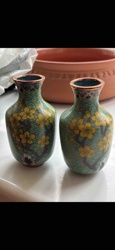
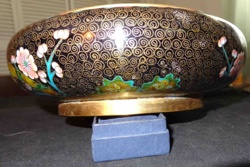
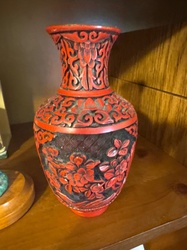
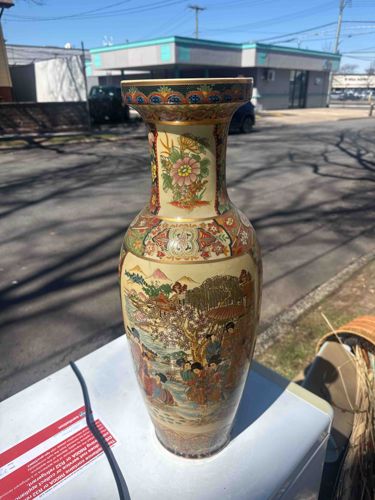
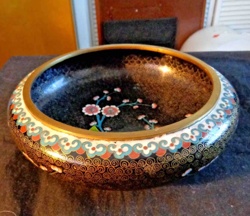
This is a large Satsuma-style porcelain baluster vase, representative of Japanese export ware likely dating from the mid-20th century (Showa period). Standing approximately 12 to 16 inches tall, it features a classic flared rim, a long neck, and an ovoid body tapering to a circular base. The vessel is constructed of cream-colored earthenware or porcelain with a fine crazed glaze typical of the Satsuma tradition. The decorative program is highly ornate, utilizing poly-chrome enamels and heavy gold gilding (moriage). The central body depicts a narrative landscape scene featuring traditionally dressed figures (Bijin) under a blossoming cherry tree with mountains in the background. The neck and shoulders are adorned with intricate geometric ruyi-head borders, floral medallions, and brocade patterns. The color palette is dominated by iron red, forest green, cobalt blue, and extensive gold accents. Notably, the gilding on the rim and shoulders shows some minor rubbing and oxidation consistent with age. There is visible surface grime, but no structural cracks or significant chips are immediately apparent from the exterior. The craftsmanship suggests a mass-produced quality intended for the Western decorative market rather than a 19th-century studio piece, indicated by the thickness of the enameling and the specific stylistic rendering of the faces.
Estimated Value

$150 - $250

Basic Information

Category

Asian Antiques & Decorative Arts

Appraised On

March 21, 2026

Estimated Value

$150 - $250

Item Description

This is a large Satsuma-style porcelain baluster vase, representative of Japanese export ware likely dating from the mid-20th century (Showa period). Standing approximately 12 to 16 inches tall, it features a classic flared rim, a long neck, and an ovoid body tapering to a circular base. The vessel is constructed of cream-colored earthenware or porcelain with a fine crazed glaze typical of the Satsuma tradition. The decorative program is highly ornate, utilizing poly-chrome enamels and heavy gold gilding (moriage). The central body depicts a narrative landscape scene featuring traditionally dressed figures (Bijin) under a blossoming cherry tree with mountains in the background. The neck and shoulders are adorned with intricate geometric ruyi-head borders, floral medallions, and brocade patterns. The color palette is dominated by iron red, forest green, cobalt blue, and extensive gold accents. Notably, the gilding on the rim and shoulders shows some minor rubbing and oxidation consistent with age. There is visible surface grime, but no structural cracks or significant chips are immediately apparent from the exterior. The craftsmanship suggests a mass-produced quality intended for the Western decorative market rather than a 19th-century studio piece, indicated by the thickness of the enameling and the specific stylistic rendering of the faces.
Get Your Items Appraised

Instant estimates of your treasures with AI-powered instant appraisals

Browse More Appraisals