AI Appraisal Estimate

AI-generated estimates · not official valuations

From the user

What was submitted

Photo and notes provided by the user — not generated by AI

Submitted item photo
Submitted photo · June 23, 2026

User's notes

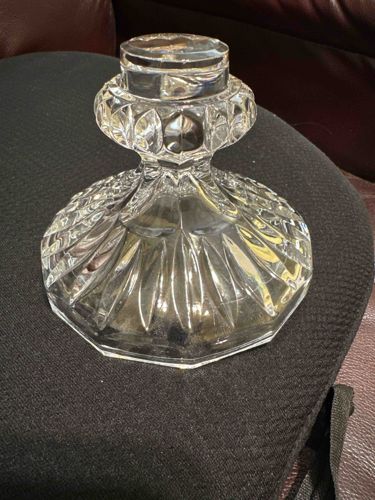
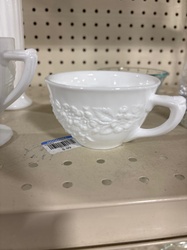
Clear ~ 5” diameter lid or pedistool with design around perimeter

AI analysis below

AI appraisal

AI analysis & estimate

AI-Generated · Verify before acting

Everything below is generated by AI for informational purposes only. AI can make mistakes — the AI may misidentify items or misattribute them (artist, maker, brand, designer, origin, era). This is not an official valuation and should not be used for insurance, sale, tax, estate, legal, or lending purposes — or any decision requiring a certified appraisal. It is not an authoritative claim about any person, brand, or rights holder — do not share or rely on it as a factual statement about a third party. Always consult qualified professionals before making financial decisions.

Note

This analysis also relies on unverified notes provided by the user, which may be incomplete or inaccurate and could affect the result.

Read the full disclaimer

AI Identification

·Not independently authenticated·Verify before acting

Pressed Glass Compote Lid or Pedestal Base

Collectible Glassware

AI Estimated Value

·Not an official valuation·Verify before acting

$15 - $25

As of June 23, 2026

AI Item Analysis

·AI can make mistakes·Verify before acting
This item is a clear, circular glass component, likely serving as a lid for a candy dish or a pedestal base for a compote, measuring approximately 5 inches in diameter. The piece is constructed from heavy pressed glass, featuring a multi-layered geometric design. The top portion (or finial/foot) is a smooth, cylindrical knob that transitions into a collar of deep thumbprint or diamond-point facet cuts. Below this, the main body flares outward into a domed shape, decorated with a combination of vertical ribbing and leaf-like mitre cuts that extend toward a scalloped or multi-faceted rim. The glass exhibits high clarity with a slight prismatic effect in the cut edges, typical of mid-20th-century American pressed glass (Early American Prescut or EAPC styles). No visible maker's marks or signatures are apparent in the image, which is common for mass-produced utility glassware of the 1940s-1960s. The condition appears excellent with no visible chips, cracks, or significant clouding, though there is light surface dust. The sharp edges of the molding suggest quality manufacturing with minimal wear on the 'foot' or contact surfaces.
AI Appraisal Report

·AI can make mistakes·Verify before acting
Based on my examination of the provided descriptions and images, this item is a piece of American pressed glass, identified as a lid or base component likely produced by a manufacturer such as Anchor Hocking or Indiana Glass Company, dating from the mid-20th century (c. 1950s-1970s). The piece exhibits the characteristic design elements of the Early American Prescut (EAPC) or 'Star of David' style, which was mass-produced for the domestic utility market. The condition appears to be 'Excellent' with high clarity and the sharp mold lines indicative of minimal usage wear. The current market for mid-century mass-produced pressed glass is highly saturated, with supply significantly exceeding collector demand. Comparables for single components like this lid—often sold as replacements for incomplete candy dishes or compotes—typically trade in the $15 to $25 range on secondary markets such as eBay or Etsy. The lack of a maker's mark is consistent with production standards of the era. Factors limiting the value include the commonality of the pattern and the fact that this is a partial set component rather than a complete set. While the visual evidence suggests an authentic piece of mid-century glass, a definitive valuation is limited by the digital format. For full authentication, I would need to perform a physical inspection to check for 'straw marks' or cooling lines, analyze the glass's weight and resonance, and use a UV light test to check biological/chemical markers (like manganese) common in vintage glass. No provenance was provided, which usually has a negligible impact on utility glassware of this type.

Get your items appraised

Instant estimates of your treasures with AI-powered appraisals

Browse More Appraisals