Campas Filhos Aveiro Salt-Glazed Pottery Vase
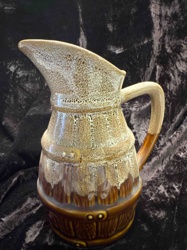
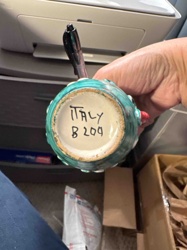
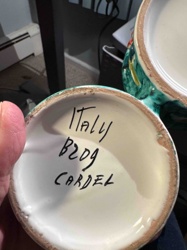
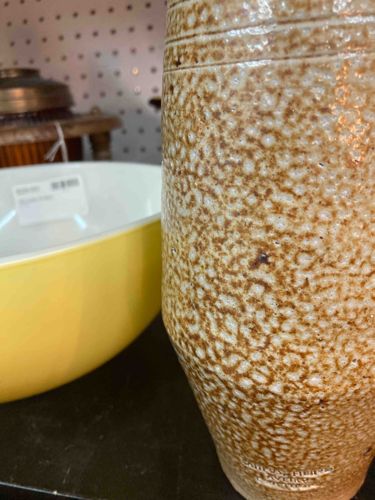
This is a tall, cylindrical stoneware vase produced by Campas Filhos of Aveiro, Portugal. The piece is characterized by a distinctive salt-glazed finish, which creates an orange-peel texture with a mottled tan and brown coloration. The glaze shows characteristic speckling and crystalline highlights typical of high-temperature salt firing. Near the top, there are several horizontal incised rings that add a subtle decorative element to the form. The body tapers slightly toward the base, where an impressed maker's mark is visible, reading 'CAMPAS FILHOS AVEIRO PORTUGAL.' The construction is thick-walled and sturdy, indicative of mid-20th-century European studio pottery. The condition appears well-preserved with no visible cracks or significant chips, though there is a natural variation in the glaze application and some minor surface artifacts from the firing process. This style of pottery from the Aveiro region is known for its durability and rustic aesthetic, likely dating from the 1960s to 1980s. The craftsmanship reflects a blend of industrial production and traditional glazing techniques.
AI-Generated Appraisal Disclaimer
Estimated Value
$125 - $185
Basic Information
Category
Vintages Ceramics and Pottery
Appraised On
March 26, 2026
Estimated Value
$125 - $185
Additional Details Provided By Owner
User Provided Information
campis filmos portugal
Item Description
This is a tall, cylindrical stoneware vase produced by Campas Filhos of Aveiro, Portugal. The piece is characterized by a distinctive salt-glazed finish, which creates an orange-peel texture with a mottled tan and brown coloration. The glaze shows characteristic speckling and crystalline highlights typical of high-temperature salt firing. Near the top, there are several horizontal incised rings that add a subtle decorative element to the form. The body tapers slightly toward the base, where an impressed maker's mark is visible, reading 'CAMPAS FILHOS AVEIRO PORTUGAL.' The construction is thick-walled and sturdy, indicative of mid-20th-century European studio pottery. The condition appears well-preserved with no visible cracks or significant chips, though there is a natural variation in the glaze application and some minor surface artifacts from the firing process. This style of pottery from the Aveiro region is known for its durability and rustic aesthetic, likely dating from the 1960s to 1980s. The craftsmanship reflects a blend of industrial production and traditional glazing techniques.
Related Tags
Get Your Items Appraised
Instant estimates of your treasures with AI-powered instant appraisals