Bronze Ninomiya Sontoku Statue
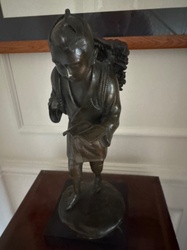
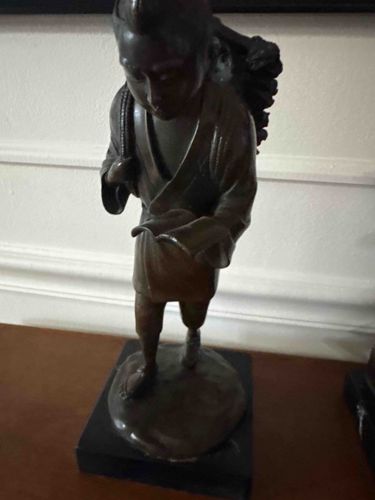
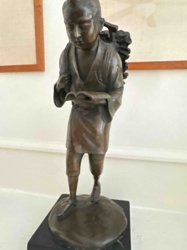
This item is a cast bronze sculpture depicting the iconic Japanese figure Ninomiya Sontoku, also known as Kinjiro. The figure is shown in his traditional representation: a young boy walking while carrying a heavy bundle of firewood on his back and reading a book simultaneously, symbolizing the virtues of hard work and scholar-like dedication. The sculpture is rendered in a dark chocolate brown patina with visible highlights where the metal has been rubbed or handled. Physically, the piece features detailed casting in the texture of the wooden bundle and the folds of his kimono. The figure stands on an integral mound-shaped bronze base, which is further mounted onto a rectangular black plinth, likely wood or marble. While the exact height is difficult to determine without a scale, it appears to be a tabletop size typical of Meiji or Showa era moral education figures. The condition shows minor surface wear consistent with age, specifically light dust accumulation in the crevices and a soft patina. There are no immediate signs of significant damage or structural repairs, indicating good craftsmanship and materials. This style of figure became extremely popular in Japan during the late 19th and early 20th centuries.
AI-Generated Appraisal Disclaimer
Estimated Value
$400 - $600
Basic Information
Category
Fine Art / Asian Antiques
Appraised On
January 11, 2026
Estimated Value
$400 - $600
Item Description
This item is a cast bronze sculpture depicting the iconic Japanese figure Ninomiya Sontoku, also known as Kinjiro. The figure is shown in his traditional representation: a young boy walking while carrying a heavy bundle of firewood on his back and reading a book simultaneously, symbolizing the virtues of hard work and scholar-like dedication. The sculpture is rendered in a dark chocolate brown patina with visible highlights where the metal has been rubbed or handled. Physically, the piece features detailed casting in the texture of the wooden bundle and the folds of his kimono. The figure stands on an integral mound-shaped bronze base, which is further mounted onto a rectangular black plinth, likely wood or marble. While the exact height is difficult to determine without a scale, it appears to be a tabletop size typical of Meiji or Showa era moral education figures. The condition shows minor surface wear consistent with age, specifically light dust accumulation in the crevices and a soft patina. There are no immediate signs of significant damage or structural repairs, indicating good craftsmanship and materials. This style of figure became extremely popular in Japan during the late 19th and early 20th centuries.
Related Tags
Get Your Items Appraised
Instant estimates of your treasures with AI-powered instant appraisals