AI Appraisal Estimate

AI-generated estimates · not official valuations

From the user

What was submitted

Photo and notes provided by the user — not generated by AI

Submitted item photo
Submitted photo · June 17, 2026

User's notes

No additional notes provided.

AI analysis below

AI appraisal

AI analysis & estimate

AI-Generated · Verify before acting

Everything below is generated by AI for informational purposes only. AI can make mistakes — the AI may misidentify items or misattribute them (artist, maker, brand, designer, origin, era). This is not an official valuation and should not be used for insurance, sale, tax, estate, legal, or lending purposes — or any decision requiring a certified appraisal. It is not an authoritative claim about any person, brand, or rights holder — do not share or rely on it as a factual statement about a third party. Always consult qualified professionals before making financial decisions.

Read the full disclaimer

AI Identification

·Not independently authenticated·Verify before acting

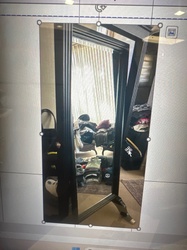
Vintage Arched Art Deco Style Stained Glass Wall Mirror

Furniture & Home Decor - Mirrors

AI Estimated Value

·Not an official valuation·Verify before acting

$125 - $225

As of June 17, 2026

AI Item Analysis

·AI can make mistakes·Verify before acting
This is a large, vertical wall mirror featuring a decorative stained glass or leaded glass border. The piece exhibits a classic arched top with stepped shoulders, leading down to a rectangular base with clipped lower corners, reminiscent of Art Deco or late 20th-century 'revival' geometries. The construction utilizes separate glass panes joined by what appears to be patinated zinc or lead cames. The perimeter border is composed of slender, translucent or white opalescent glass inserts that contrast with the clear central mirror plate. This framing technique creates a window-like aesthetic. The mirror's craftsmanship suggests a mid-to-late 20th-century origin, possibly the 1970s or 1980s when such leaded glass styles were highly popular in home decor. Condition-wise, the cames show a dark, aged patina which is typical for this medium. The structural integrity appears sound, though there is visible surface dust and some smudging on the glass surfaces consistent with regular domestic use. No major cracks, chips, or silvering desilverization (mirror rot) are immediately apparent from the image, but the solder joints at the corners should be inspected for stress fatigue. The scale is substantial, likely standing between 36 and 48 inches tall, making it a focal piece for a bedroom or entryway.
AI Appraisal Report

·AI can make mistakes·Verify before acting
Based on my visual examination of this vintage wall mirror, I identify it as a decorative Art Deco Revival piece, likely manufactured in the 1970s or 1980s. The mirror features a distinct stepped-arch silhouette and a border composed of opalescent glass segments held in place by lead or zinc cames. The construction style is consistent with the stained glass boom of the late 20th century rather than period Art Deco (1920s-30s), indicated by the specific texture of the opalescent glass and the character of the soldering. The condition appears sound; the glass panels show no visible cracks, and the reflective silvering seems intact without obvious desilverization. The dark patina on the metal work is appropriate for its age. Market conditions regarding 'revival' pieces are currently stable, with a moderate resurgence in interest for 1980s Postmodern and Deco-revival aesthetics. While not an antique from the original Art Deco period, its substantial size and geometric appeal make it a desirable decorative object for current interior trends. Comparables often appear in vintage shops and online marketplaces like Chairish or Etsy, usually selling in the low-to-mid hundreds. The value is capped by the fact that this is likely a mass-market decor item rather than a signed studio piece. Authenticity verification is limited by visual inspection alone. To fully confirm the origin, I would need to examine the back for manufacturer stamps or labels (common for companies like Syroco or distinct glass studios) and physically test the metal composition of the cames. Without provenance linking it to a specific designer, appraisal is based on decorative value.

Get your items appraised

Instant estimates of your treasures with AI-powered appraisals

Browse More Appraisals