Prehistoric Flint Macro-Blade or Side Scraper
Archaeological Artifacts / Native American Lithics

Prehistoric Flint Macro-Blade or Side Scraper

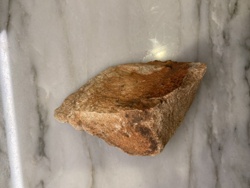
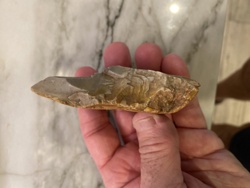
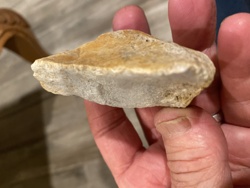
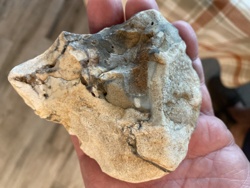
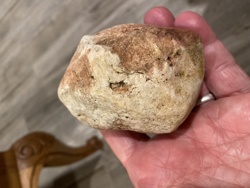
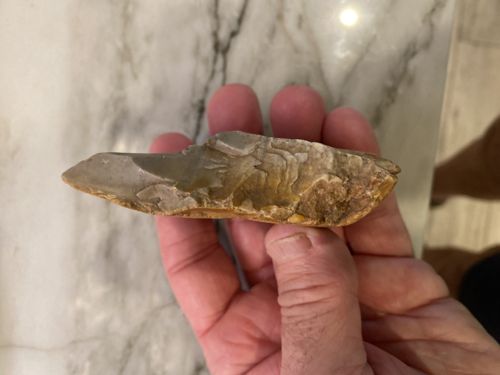
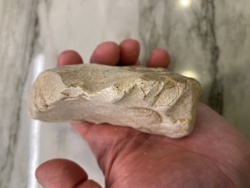
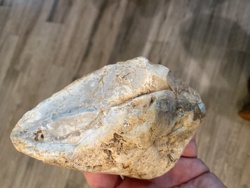
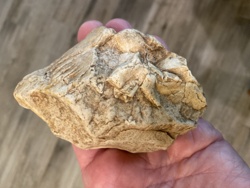
This item is a prehistoric lithic artifact, specifically a macro-blade or side scraper recovered from Guthrie, Oklahoma. Measuring approximately 2.5 inches in length and 1.75 inches in width, the tool is crafted from a high-quality cryptocrystalline silicate, likely a regional variety of chert or flint. The material displays a variegated color palette with tones ranging from a light tan and creamy beige to a darker brownish-gray, exhibiting a slight waxy luster indicative of heat treatment or high-quality raw material. The artifact shows clear evidence of conchoidal fracturing and deliberate retouching along the longitudinal edge to create a sharp, durable working surface. One side of the piece retains a portion of the original weathered cortex (the outer skin of the raw stone), which provides a natural grip. The dorsal surface features multiple flake scars and prominent ridges resulting from initial reduction. While there are no maker's marks, as is standard for prehistoric tools, the rhythmic flake patterns on the edge indicate skilled craftsmanship. The condition is characterized by a stable surface with a natural desert or earth patina acquired over millennia; there are minor micro-nicks along the working edge consistent with ancient use wear. Given the typology and location of the find, this tool likely dates to a hunter-gatherer period ranging from the Late Archaic to the Woodland stages.
Estimated Value

$45.00 - $75.00

Basic Information

Category

Archaeological Artifacts / Native American Lithics

Appraised On

February 18, 2026

Estimated Value

$45.00 - $75.00

Additional Details Provided By Owner

User Provided Information

Prehistoric stone scraper/ knife found in Guthrie, OK 2.5" x 1.75"

Item Description

This item is a prehistoric lithic artifact, specifically a macro-blade or side scraper recovered from Guthrie, Oklahoma. Measuring approximately 2.5 inches in length and 1.75 inches in width, the tool is crafted from a high-quality cryptocrystalline silicate, likely a regional variety of chert or flint. The material displays a variegated color palette with tones ranging from a light tan and creamy beige to a darker brownish-gray, exhibiting a slight waxy luster indicative of heat treatment or high-quality raw material. The artifact shows clear evidence of conchoidal fracturing and deliberate retouching along the longitudinal edge to create a sharp, durable working surface. One side of the piece retains a portion of the original weathered cortex (the outer skin of the raw stone), which provides a natural grip. The dorsal surface features multiple flake scars and prominent ridges resulting from initial reduction. While there are no maker's marks, as is standard for prehistoric tools, the rhythmic flake patterns on the edge indicate skilled craftsmanship. The condition is characterized by a stable surface with a natural desert or earth patina acquired over millennia; there are minor micro-nicks along the working edge consistent with ancient use wear. Given the typology and location of the find, this tool likely dates to a hunter-gatherer period ranging from the Late Archaic to the Woodland stages.
Get Your Items Appraised

Instant estimates of your treasures with AI-powered instant appraisals

Browse More Appraisals