AI Appraisal Estimate

AI-generated estimates · not official valuations

From the user

What was submitted

Photo and notes provided by the user — not generated by AI

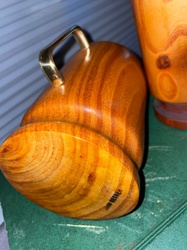
Submitted item photo
Submitted photo · June 13, 2026

User's notes

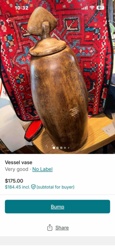
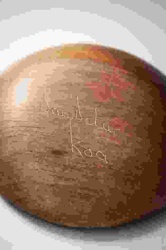
this is a signed monkey pod bowl with lid can you tell who signed it

AI analysis below

AI appraisal

AI analysis & estimate

AI-Generated · Verify before acting

Everything below is generated by AI for informational purposes only. AI can make mistakes — the AI may misidentify items or misattribute them (artist, maker, brand, designer, origin, era). This is not an official valuation and should not be used for insurance, sale, tax, estate, legal, or lending purposes — or any decision requiring a certified appraisal. It is not an authoritative claim about any person, brand, or rights holder — do not share or rely on it as a factual statement about a third party. Always consult qualified professionals before making financial decisions.

Note

This analysis also relies on unverified notes provided by the user, which may be incomplete or inaccurate and could affect the result.

Read the full disclaimer

AI Identification

·Not independently authenticated·Verify before acting

S.H. Chun Signed Monkey Pod Wood Lidded Bowl

Hand-Turned Woodenware / Studio Art Wood

AI Estimated Value

·Not an official valuation·Verify before acting

$125 - $225

As of June 13, 2026

AI Item Analysis

·AI can make mistakes·Verify before acting
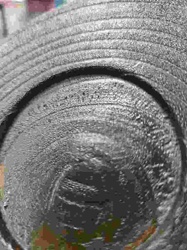
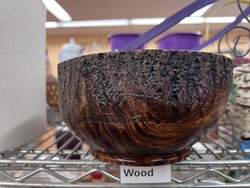
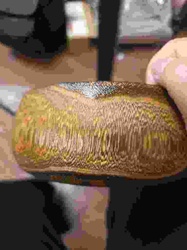
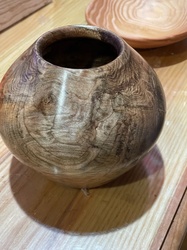
This is a hand-turned lidded bowl crafted from Monkey Pod wood, a tropical hardwood known for its rich contrasting grain patterns. This specific piece features an incised signature on the base that appears to read 'S.H. Chun' or 'S.H. Choon,' followed by 'M-POD' (shorthand for Monkey Pod). The wood displays a warm range of colors from golden amber to deep chocolate browns, characteristic of matured wood from the Samanea saman tree. The construction is lathe-turned, evidencing smooth curves and a refined profile typical of mid-century to late 20th-century Hawaiian or Southeast Asian woodcraft. The surface exhibits several fine hairline cracks and drying checks across the grain, which are common in aged tropical hardwoods due to moisture fluctuation. There are also visible surface scratches and minor abrasions throughout the finish. The incised markings are deeply cut but show some age-related smoothing. The craftsmanship suggests a professional studio artist rather than mass-production, likely dating from the 1960s to 1980s. The overall patina is semi-matte, suggesting the original oil or wax finish has worn down over time.
AI Appraisal Report

·AI can make mistakes·Verify before acting
I have carefully examined the submitted images of the hand-turned Monkey Pod lidded bowl signed 'S.H. Chun.' Authenticity appears consistent with studio turnings from the mid-to-late 20th century, specifically the 1960s-1970s era when Hawaiian and Southeast Asian woodcraft saw a significant export market. The signature is typical of individual studio work rather than industrial production. However, the condition significantly impacts the market value; while the grain movement is aesthetically pleasing, the visible hairline cracks and drying checks indicate a loss of structural integrity due to environmental fluctuations. These defects, along with the worn patina, place this item in the 'fair' collector category rather than 'pristine.' Market demand for Monkey Pod wood is stable but currently lacks the high-end premium associated with Koa or Milo woods. Comparables for signed, non-pedigreed Monkey Pod bowls of this size and condition typically realize prices between $100 and $250 at auction or specialized vintage boutiques. The signature 'S.H. Chun' adds modest provenance, though Chun is not currently ranked among the 'master-tier' woodturners (like Moulthrop or Stocksdale) whose works command four-figure sums. Please note: This appraisal is based solely on digital imagery. A definitive valuation would require an in-person inspection to verify wood density, check the depth of the fissures, and ensure the signature is not a later addition. Professional authentication would be bolstered by original receipts or provenance linking the piece to a specific gallery or Hawaiian studio exhibition from the mid-century period.

Get your items appraised

Instant estimates of your treasures with AI-powered appraisals

Browse More Appraisals