AI Appraisal Estimate

AI-generated estimates · not official valuations

From the user

What was submitted

Photo and notes provided by the user — not generated by AI

Submitted item photo
Submitted photo · June 26, 2026

User's notes

No additional notes provided.

AI analysis below

AI appraisal

AI analysis & estimate

AI-Generated · Verify before acting

Everything below is generated by AI for informational purposes only. AI can make mistakes — the AI may misidentify items or misattribute them (artist, maker, brand, designer, origin, era). This is not an official valuation and should not be used for insurance, sale, tax, estate, legal, or lending purposes — or any decision requiring a certified appraisal. It is not an authoritative claim about any person, brand, or rights holder — do not share or rely on it as a factual statement about a third party. Always consult qualified professionals before making financial decisions.

Read the full disclaimer

AI Identification

·Not independently authenticated·Verify before acting

Ebony and Metal Wall Crucifix

Religious Artifacts / Devotional Items

AI Estimated Value

·Not an official valuation·Verify before acting

$65 - $110

As of June 26, 2026

AI Item Analysis

·AI can make mistakes·Verify before acting
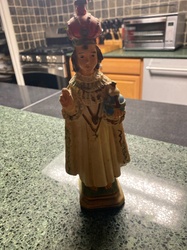
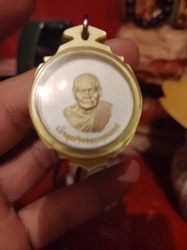
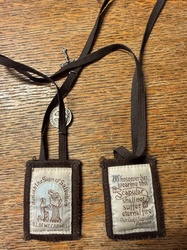
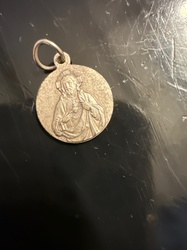
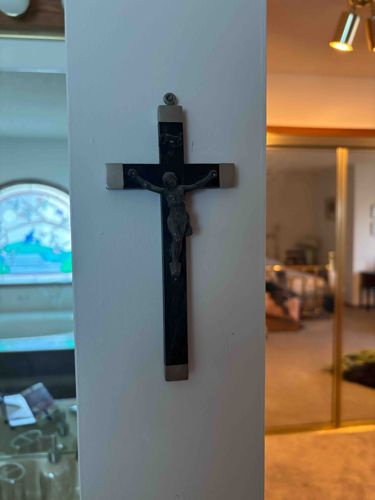
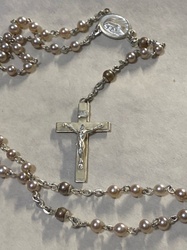
This is a wall-mounted crucifix, likely dating from the mid-20th century. The piece features a central cross constructed from a dark, dense wood—potentially ebony or a heavily ebonized hardwood. The vertical and horizontal beams are capped with silver-toned metal ends, which appear to be either polished nickel or chrome-plated brass, given the cool luster. A small metal eyelet is attached to the top cap for hanging. The corpus (body of Christ) is cast in a matching silver-toned metal and is secured to the cross at the hands and feet. Above the corpus, a small metal plate represents the 'INRI' titulus. The overall construction is slim and minimalist, characteristic of mid-century devotional art. The condition shows moderate wear with some visible oxidation and darkening of the metal components, particularly on the corpus, which has lost some of its original brilliance to patina. The wood surface remains intact but shows light surface dust and minor age-related drying. There are no visible maker's marks on the front; such pieces were often mass-produced for the Catholic market in Europe (particularly Italy or Germany) or North America between 1940 and 1970. The craftsmanship is solid but decorative rather than fine-art quality, with visible nail or pin heads securing the figure to the cross.
AI Appraisal Report

·AI can make mistakes·Verify before acting
I have conducted a visual inspection of this wall-mounted crucifix, which exhibits the aesthetic and material markers of mid-20th-century devotional art (circa 1940–1960). The use of dark, dense wood—likely ebony or high-quality ebonized hardwood—paired with the streamlined, polished metal caps suggests a stylistic lean toward the Art Deco or Mid-Century Modern transition. The corpus displays a typical semi-mass-produced casting quality common for ecclesiastical items distributed in European and North American markets during this period. The item is in good vintage condition. The moderate oxidation and patina on the silver-toned metal corpus are consistent with age and do not detract significantly from its value, though they confirm the piece has not been professionally refurbished. The wood is stable, with minor surface dehydration noted. The absence of a maker's mark is standard for these items, which were typically sold through religious supply houses. Market demand for mid-century religious artifacts is currently stable, driven primarily by collectors of MCM decor rather than religious antiquity collectors. Comparables on the secondary market for ebony and chrome/nickel crucifixes of this size and era consistently fall within the sub-$150 range. Its value is supported by the quality of the wood but limited by its mass-produced nature. Limitations: This appraisal is based solely on digital images. Without a physical inspection, I cannot definitively confirm if the metal is solid silver, silver-plated, or a base alloy like nickel, which would affect the material value. A physical examination to check for hallmarks, verify wood density/grain, and a forensic test of the metal composition would be required for a definitive valuation. Provenance documentation regarding its original purchase location (e.g., Italy or Germany) would also provide better context for its origin.

Get your items appraised

Instant estimates of your treasures with AI-powered appraisals

Browse More Appraisals