AI Appraisal Estimate

AI-generated estimates · not official valuations

From the user

What was submitted

Photo and notes provided by the user — not generated by AI

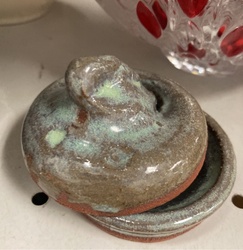
Submitted item photo
Submitted photo · June 21, 2026

User's notes

No additional notes provided.

AI analysis below

AI appraisal

AI analysis & estimate

AI-Generated · Verify before acting

Everything below is generated by AI for informational purposes only. AI can make mistakes — the AI may misidentify items or misattribute them (artist, maker, brand, designer, origin, era). This is not an official valuation and should not be used for insurance, sale, tax, estate, legal, or lending purposes — or any decision requiring a certified appraisal. It is not an authoritative claim about any person, brand, or rights holder — do not share or rely on it as a factual statement about a third party. Always consult qualified professionals before making financial decisions.

Read the full disclaimer

AI Identification

·Not independently authenticated·Verify before acting

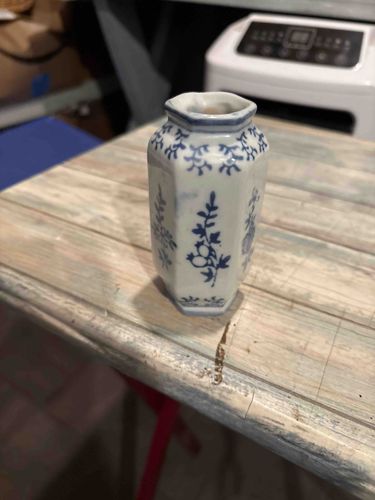
Octagonal Blue and White Porcelain Miniature Bud Vase

Antique/Vintage Ceramics and Pottery

AI Estimated Value

·Not an official valuation·Verify before acting

$45.00-$75.00

As of June 21, 2026

AI Item Analysis

·AI can make mistakes·Verify before acting
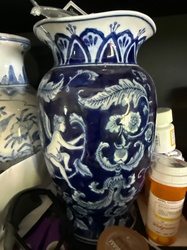
This item is a small, hand-painted miniature bud vase, characterized by its distinctive octagonal (eight-sided) body. Crafted from white porcelain, it features a classic 'Blue and White' underglaze aesthetic. The decorative motif consists of delicate, vertical floral and fruiting sprigs, possibly depicting pomegranates or peaches, which are traditional symbols in East Asian art. The top shoulder of the vase is adorned with a repetitive scalloped or ruyi-head border, while the base and neck are finished with simple blue line bands. Physically, the piece appears to be roughly 3 to 4 inches in height, featuring a short, narrow neck with a flared, faceted rim. The construction shows some slight irregularities in the molding of the octagonal facets, suggesting a semi-manual production process. Regarding condition, there is a visible blue smudge or glaze bleed on one of the main panels, a common manufacturing defect in cobalt underglaze pottery. Small dark specks or 'pinholes' are visible in the glaze, which are typical of older kiln firing processes. No major chips or cracks are immediately apparent, though there is minor surface wear consistent with age. Based on the style and execution, this piece is likely a mid-20th-century reproduction of earlier Qing Dynasty export porcelain, possibly of Chinese or Japanese origin. The glaze has a slight greyish-white tint rather than a bright modern white, indicating a vintage age.
AI Appraisal Report

·AI can make mistakes·Verify before acting
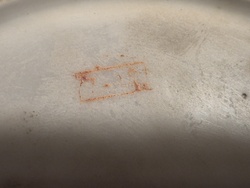
Based on my visual examination of this octagonal blue and white miniature bud vase, I have identified it as a mid-20th-century decorative piece produced in the tradition of Qing Dynasty export porcelain. The eight-sided form and cobalt underglaze floral sprigs—likely representing pomegranates—point toward Ming/Qing revivalism. The condition is fair to good; the presence of kiln pinholes and glaze bleeds suggests a mass-produced or semi-manual workshop origin rather than an Imperial or high-artist quality. The slight greyish tint of the glaze is characteristic of vintage mid-century kilns. The market for small-scale vintage 'blue and white' remains steady among collectors of Chinoiserie and 'shelf-sitters,' though the lack of a visible reign mark or artist seal on the base limits its appeal to serious scholars. Similar items frequently sell at regional auctions and online vintage marketplaces within the $40 to $80 range. The value is primarily decorative rather than historical. Limitations: This appraisal is based strictly on photographic evidence. A definitive determination of age and origin is constrained without a physical inspection of the foot rim for clay body texture, 'orange peel' glaze tactile analysis, and UV light inspection to rule out expertly concealed repairs. To authenticate as an earlier period piece, provenance documentation or thermoluminescence testing of the ceramic core would be required.

Get your items appraised

Instant estimates of your treasures with AI-powered appraisals

Browse More Appraisals