Paleolithic Chert Scraping Tool
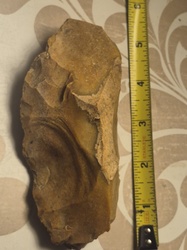
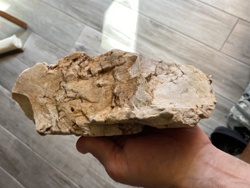
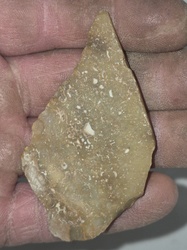
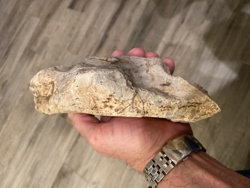
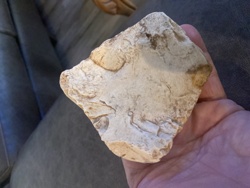
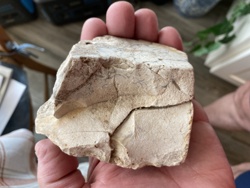
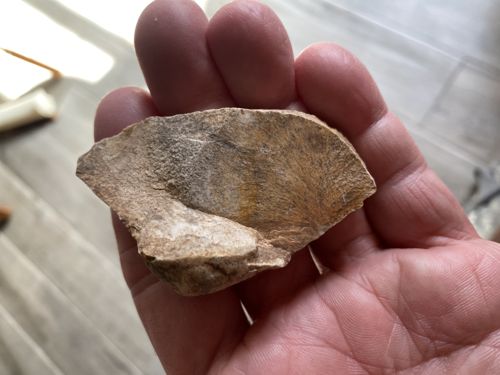
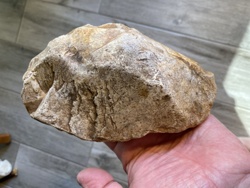
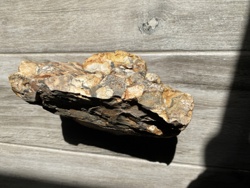
This is a Paleolithic-style lithic artifact, specifically identified as a scraper made from local chert. Measuring approximately 2 inches by 1.25 inches, the tool features a semi-circular or 'thumbnail' profile. The material exhibits a mottled tan and earthy brown coloration consistent with regional Guthrie, Oklahoma geology. The dorsal surface shows evidence of primary flaking with a bulb of percussion visible, indicating deliberate human manufacture through percussion flaking. The working edge displays fine marginal retouching, suggesting it was utilized for hide preparation or woodworking. The surface shows a natural matte patina and mineral staining representative of significant antiquity. The overall condition is stable, with sharp functional edges remaining largely intact despite minor edge nibbling from historical use or environmental exposure. The craftsmanship reflects an expedient but effective tool design typical of nomadic hunter-gatherer societies, where functional utility was prioritized over aesthetic symmetry. There are no modern maker marks, consistent with an ancient origin.
AI-Generated Appraisal Disclaimer
Estimated Value
$45.00 - $75.00
Basic Information
Category
Archeological Artifacts
Appraised On
February 19, 2026
Estimated Value
$45.00 - $75.00
Additional Details Provided By Owner
User Provided Information
Paleolithic chert scraping tool found in Guthrie OK measuring 2" x 1.25"
Item Description
This is a Paleolithic-style lithic artifact, specifically identified as a scraper made from local chert. Measuring approximately 2 inches by 1.25 inches, the tool features a semi-circular or 'thumbnail' profile. The material exhibits a mottled tan and earthy brown coloration consistent with regional Guthrie, Oklahoma geology. The dorsal surface shows evidence of primary flaking with a bulb of percussion visible, indicating deliberate human manufacture through percussion flaking. The working edge displays fine marginal retouching, suggesting it was utilized for hide preparation or woodworking. The surface shows a natural matte patina and mineral staining representative of significant antiquity. The overall condition is stable, with sharp functional edges remaining largely intact despite minor edge nibbling from historical use or environmental exposure. The craftsmanship reflects an expedient but effective tool design typical of nomadic hunter-gatherer societies, where functional utility was prioritized over aesthetic symmetry. There are no modern maker marks, consistent with an ancient origin.
Related Tags
Get Your Items Appraised
Instant estimates of your treasures with AI-powered instant appraisals