Signed Inuit Stone Sculpture
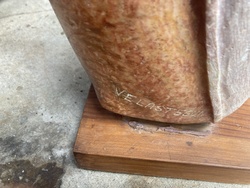
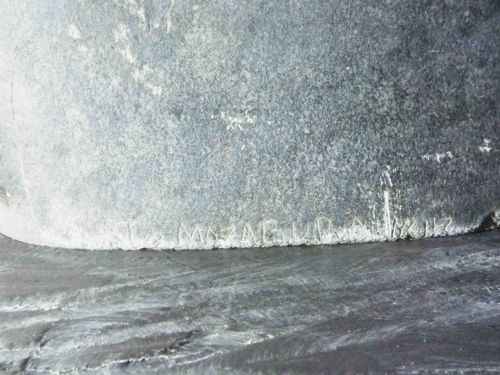
This is a detail view of an original stone sculpture, potentially soapstone or serpentinite, showcasing a hand-etched signature and identification number at the base. The material displays a mottled grey and charcoal coloration with a matte, finely sanded finish that transitions into a more textured, darker grey base. A significant diagnostic feature is the inscription across the lower edge of the subject's form, which appears to read 'MAZA' or 'MAZABUD' followed by a numeric sequence, possibly an Inuit Disc Number or artist identification code. The craftsmanship indicates a subtractive carving technique typical of Arctic indigenous art. The surface shows minor white abrasions and scuffing, particularly near the incised lettering, which is common with softer stones like soapstone. There is a visible texture of directional sanding marks on the vertical surface, while the horizontal base displays a coarser, more rugged cleavage. The style suggests a mid-to-short 20th-century origin, aligned with the rise of the Canadian Inuit carving co-operatives. The presence of the hand-carved initials/name and digits is a critical indicator of authenticity and provides a primary path for tracing the specific artist's identity and geographical origin.
AI-Generated Appraisal Disclaimer
Estimated Value
$100 - $300
Basic Information
Category
Fine Art - Sculpture
Appraised On
March 23, 2026
Estimated Value
$100 - $300
Additional Details Provided By Owner
User Provided Information
Unknown Artist, UnTitled original artwork
Item Description
This is a detail view of an original stone sculpture, potentially soapstone or serpentinite, showcasing a hand-etched signature and identification number at the base. The material displays a mottled grey and charcoal coloration with a matte, finely sanded finish that transitions into a more textured, darker grey base. A significant diagnostic feature is the inscription across the lower edge of the subject's form, which appears to read 'MAZA' or 'MAZABUD' followed by a numeric sequence, possibly an Inuit Disc Number or artist identification code. The craftsmanship indicates a subtractive carving technique typical of Arctic indigenous art. The surface shows minor white abrasions and scuffing, particularly near the incised lettering, which is common with softer stones like soapstone. There is a visible texture of directional sanding marks on the vertical surface, while the horizontal base displays a coarser, more rugged cleavage. The style suggests a mid-to-short 20th-century origin, aligned with the rise of the Canadian Inuit carving co-operatives. The presence of the hand-carved initials/name and digits is a critical indicator of authenticity and provides a primary path for tracing the specific artist's identity and geographical origin.
Related Tags
Get Your Items Appraised
Instant estimates of your treasures with AI-powered instant appraisals