AI Appraisal Estimate

AI-generated estimates · not official valuations

From the user

What was submitted

Photo and notes provided by the user — not generated by AI

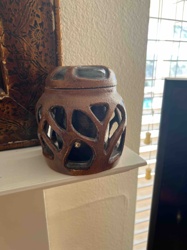
Submitted item photo
Submitted photo · May 30, 2026

User's notes

I’m in in

AI analysis below

AI appraisal

AI analysis & estimate

AI-Generated · Verify before acting

Everything below is generated by AI for informational purposes only. AI can make mistakes — the AI may misidentify items or misattribute them (artist, maker, brand, designer, origin, era). This is not an official valuation and should not be used for insurance, sale, tax, estate, legal, or lending purposes — or any decision requiring a certified appraisal. It is not an authoritative claim about any person, brand, or rights holder — do not share or rely on it as a factual statement about a third party. Always consult qualified professionals before making financial decisions.

Note

This analysis also relies on unverified notes provided by the user, which may be incomplete or inaccurate and could affect the result.

Read the full disclaimer

AI Identification

·Not independently authenticated·Verify before acting

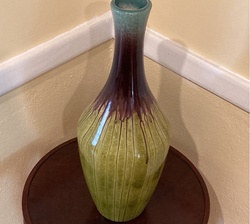
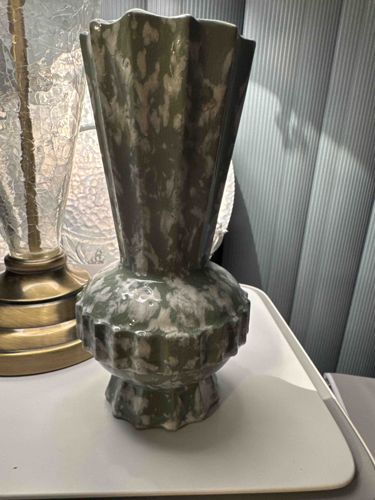
Mid-Century Fluted Glazed Ceramic Vase

Art Pottery / Home Décor

AI Estimated Value

·Not an official valuation·Verify before acting

$45 - $75

As of May 30, 2026

AI Item Analysis

·AI can make mistakes·Verify before acting
This item is a medium-to-large scale decorative ceramic vase featuring a distinctive two-toned glaze and Art Deco-inspired structural elements. Constructed from molded clay, the vase is characterized by a high-gloss olive green base glaze heavily mottled with white or cream-colored flecks, creating a 'frosted' or 'snow-glaze' aesthetic typical of mid-20th-century pottery. The form consists of a wide, fluted trumpet neck with a scalloped rim, tapering down into a bulbous mid-section. This central body portion features sharp, vertical ribbing or gadrooning, which is echoed in the flared, pedestal-style base. Structurally, the piece exhibits strong vertical lines and geometric symmetry, suggesting a production date between the 1940s and 1960s. While no specific maker's marks are visible in the image, the style and glaze technique are highly reminiscent of American art pottery firms such as Haeger, Red Wing, or McCoy. The condition appears stable with a consistent high-shine finish, though there are subtle surface irregularities inherent to the glazing process. Notable areas for inspection would include the scalloped rim and the sharp edges of the fluting for potential chips or flea bites. The interior appears darker, indicating the glaze likely extends fully through the throat of the piece for water retention. Overall, the piece demonstrates solid industrial craftsmanship with a focus on bold, silhouettes and tactile surface treatment.
AI Appraisal Report

·AI can make mistakes·Verify before acting
Based on my examination of the high-resolution images provided, I find this fluted ceramic vase to be a handsome example of mid-20th-century American commercial art pottery. The 'frosted' or mottled glaze, combined with the sharp vertical gadrooning and scalloped trumpet neck, strongly aligns with the aesthetic language of firms like Haeger or Hull Potters, likely produced between 1945 and 1955. From this visual inspection, the glaze remains vibrant with no visible crazing or significant structural fractures. The piece retains a high decorative value, though I must note that without a visible maker's mark or 'mold number,' it remains categorized as 'Unattributed American Art Pottery.' The market for mid-century ceramics of this nature is currently saturated but stable. High-volume production during the post-war era means these pieces are not exceedingly rare, though the larger scale and specific 'olive-snow' glaze color attract collectors of 'Atomic' or 'Eames-era' decor. Factors limiting value include several minor glaze skips near the base and the lack of a definitive brand stamp. Please be advised that authentication via imagery is preliminary. A physical inspection is required to check for 'flea bites' along the fragile scalloped rim and to verify the clay's color and texture, which identifies the specific regional manufacturer. Full authentication would also require checking for recessed marks on the underside with a raking light. Scientific testing is generally not required for this class of object, but provenance regarding its original purchase location could elevate its collectibility.

Get your items appraised

Instant estimates of your treasures with AI-powered appraisals

Browse More Appraisals