AI estimate as of December 10, 2025 · verify with a professional before acting
AI-Generated · Verify before acting
Everything on this page is generated by AI for informational purposes only. AI can make mistakes — the AI may misidentify items or misattribute them (artist, maker, brand, designer, origin, era). This is not an official valuation and should not be used for insurance, sale, tax, estate, legal, or lending purposes — or any decision requiring a certified appraisal. It is not an authoritative claim about any person, brand, or rights holder — do not share or rely on it as a factual statement about a third party. Always consult qualified professionals before making financial decisions.
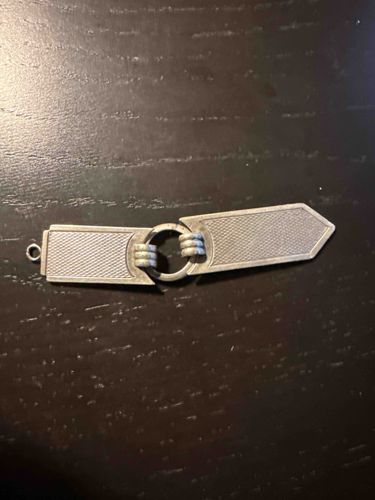
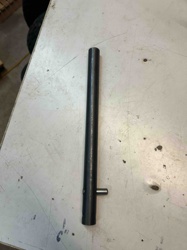
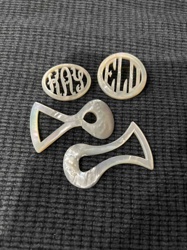
This item is an elongated, silver-toned metal component, likely part of a buckle or decorative clasp, exhibiting characteristics of the Art Deco period. It is composed of two main rectangular sections connected by a central, interlocking mechanism. Both rectangular sections feature a finely textured, cross-hatched or 'engine-turned' guilloché pattern, which is a common decorative technique for adding visual interest and preventing fingerprints. The left section is a simple rectangle with a small, circular loop at its far end, suggesting it was designed to attach to another element, such as a strap or chain. The right section is also rectangular, but terminates in an arrow or pointed shape, giving it a directional aesthetic. The central connecting feature consists of what appears to be two stylized, concentric rings, or perhaps a single ring flanked by two decorative bands with grooved details. These rings are integrated into the ends of the rectangular sections, allowing them to pivot or interlock. The overall condition appears good, with a visible patina consistent with age and use, suggesting it is not newly manufactured. There are no obvious signs of significant damage, heavy wear, or recent repairs, although minor surface scratches are present, common for a piece of its presumed age. The craftsmanship indicates a factory-made item, likely mass-produced but with attention to detail in the decorative etching. The crisp lines and geometric shapes strongly hint at an Art Deco style, placing its estimated age roughly between the 1920s and 1940s. The material appears to be a base metal with a silver-colored plating or an alloy such as nickel silver, without any discernible hallmarks from the provided image.
AI Appraisal Report
Based on my visual examination of the provided image, this elongated silver-toned component strongly exhibits characteristics consistent with the Art Deco period, likely dating between the 1920s and 1940s. The guilloché pattern on both rectangular sections and the crisp, geometric lines are hallmarks of this style. Its function as a buckle or clasp component is clear given the interlocking central mechanism and the attachment loop. The condition appears good, showing a respectable patina consistent with age and minor surface scratches, but no apparent significant damage or repairs. This indicates regular use but careful handling.
Market conditions for Art Deco-era jewelry components, especially those not incorporating precious metals or gemstones, are generally moderate. While the Art Deco aesthetic remains popular, components like this, likely factory-made from a base metal (such as nickel silver or plated pot metal), do not command high prices as standalone pieces. Comparables would include similar period hardware, belt buckles, or purse clasps. Demand exists among collectors, crafters, and those seeking to restore period pieces, but it is not exceptionally high nor is the item particularly rare.
Factors impacting value include its good preservation, the desirable Art Deco design, and its potential usability. The lack of precious materials is the primary limiting factor for a higher valuation. Without clear hallmarks, the exact manufacturer or material composition remains speculative. For full authentication and a more precise material identification, an in-person examination, including metallurgical testing to confirm the metal composition, would be crucial. Provenance, if available, could also add to its historical value. Given these considerations, I estimate its appraisal value to be between $40 and $80 in its current state, reflecting its intrinsic decorative appeal and historical context as an Art Deco artifact.