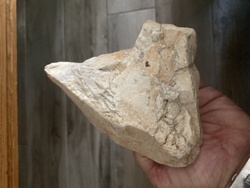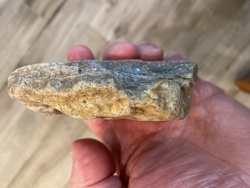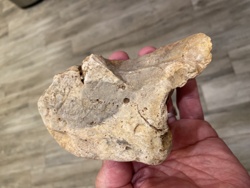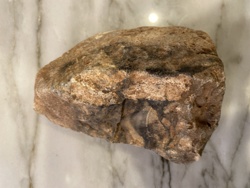
Middle Paleo Mousterian Chert Biface Hand Axe/Scraper
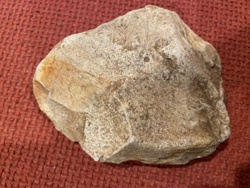
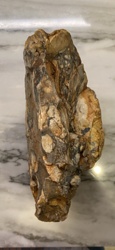
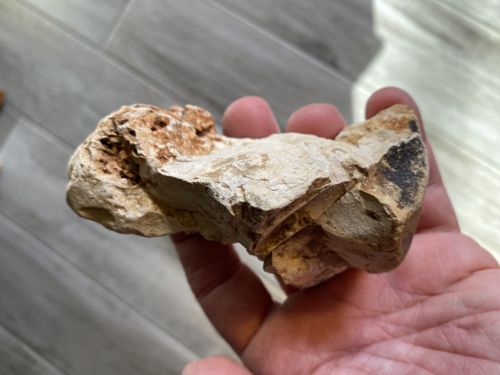
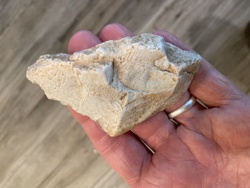
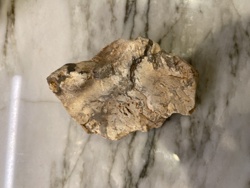
This artifact is a lithic biface tool, identified as a hand axe or scraper, measuring approximately 4 inches in length and 3 inches in width. It is constructed from a light-colored, tan-to-cream chert with visible inclusions of iron-rich reddish-brown oxidation, characteristic of stones found in the Guthrie, Oklahoma region. The tool exhibits bifacial flaking, where material has been removed from both sides to create a functional edge. The surface displays a significant amount of cortical surface and rugged texture, indicating a fairly rustic manufacture or a tool in the early-to-mid stages of reduction. Notably, the item features several hinge fractures and step fractures along its worked margins. The condition is heavily weathered with a significant calcareous patina and accumulated mineral deposits (caliche) within the crevices, suggesting long-term burial in an alkaline soil environment. While the user identifies this as Mousterian (typically associated with Neanderthals in Eurasia), in a North American context, such a tool would typically be classified within the Middle Paleoindian or Early Archaic lithic traditions. The craftsmanship is utilitarian, prioritizing function over aesthetic symmetry, with a thick cross-section that would have provided durability for heavy-duty scraping or chopping tasks. There are no modern maker's marks, as it is a prehistoric lithic artifact.
AI-Generated Appraisal Disclaimer
Estimated Value
$45 - $85
Basic Information
Category
Archaeological Artifacts / Prehistoric Stone Tools
Appraised On
February 19, 2026
Estimated Value
$45 - $85
Additional Details Provided By Owner
User Provided Information
Middle Paleo Mousterian chert Bi face hand axe scraper tool found in Guthrie, OK measuring 4" x 3"
Item Description
This artifact is a lithic biface tool, identified as a hand axe or scraper, measuring approximately 4 inches in length and 3 inches in width. It is constructed from a light-colored, tan-to-cream chert with visible inclusions of iron-rich reddish-brown oxidation, characteristic of stones found in the Guthrie, Oklahoma region. The tool exhibits bifacial flaking, where material has been removed from both sides to create a functional edge. The surface displays a significant amount of cortical surface and rugged texture, indicating a fairly rustic manufacture or a tool in the early-to-mid stages of reduction. Notably, the item features several hinge fractures and step fractures along its worked margins. The condition is heavily weathered with a significant calcareous patina and accumulated mineral deposits (caliche) within the crevices, suggesting long-term burial in an alkaline soil environment. While the user identifies this as Mousterian (typically associated with Neanderthals in Eurasia), in a North American context, such a tool would typically be classified within the Middle Paleoindian or Early Archaic lithic traditions. The craftsmanship is utilitarian, prioritizing function over aesthetic symmetry, with a thick cross-section that would have provided durability for heavy-duty scraping or chopping tasks. There are no modern maker's marks, as it is a prehistoric lithic artifact.
Related Tags
Get Your Items Appraised
Instant estimates of your treasures with AI-powered instant appraisals