Paleolithic Chert Biface Hand Axe Scraper
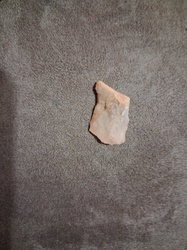
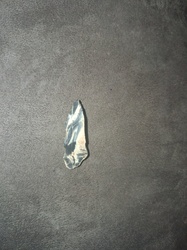
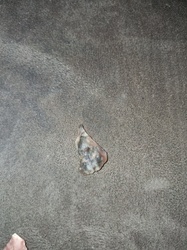
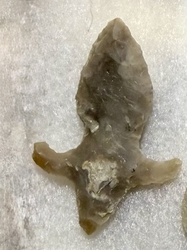
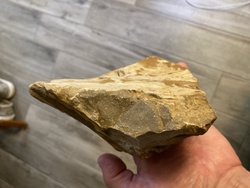
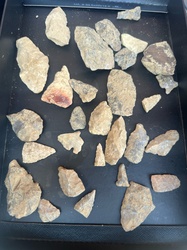
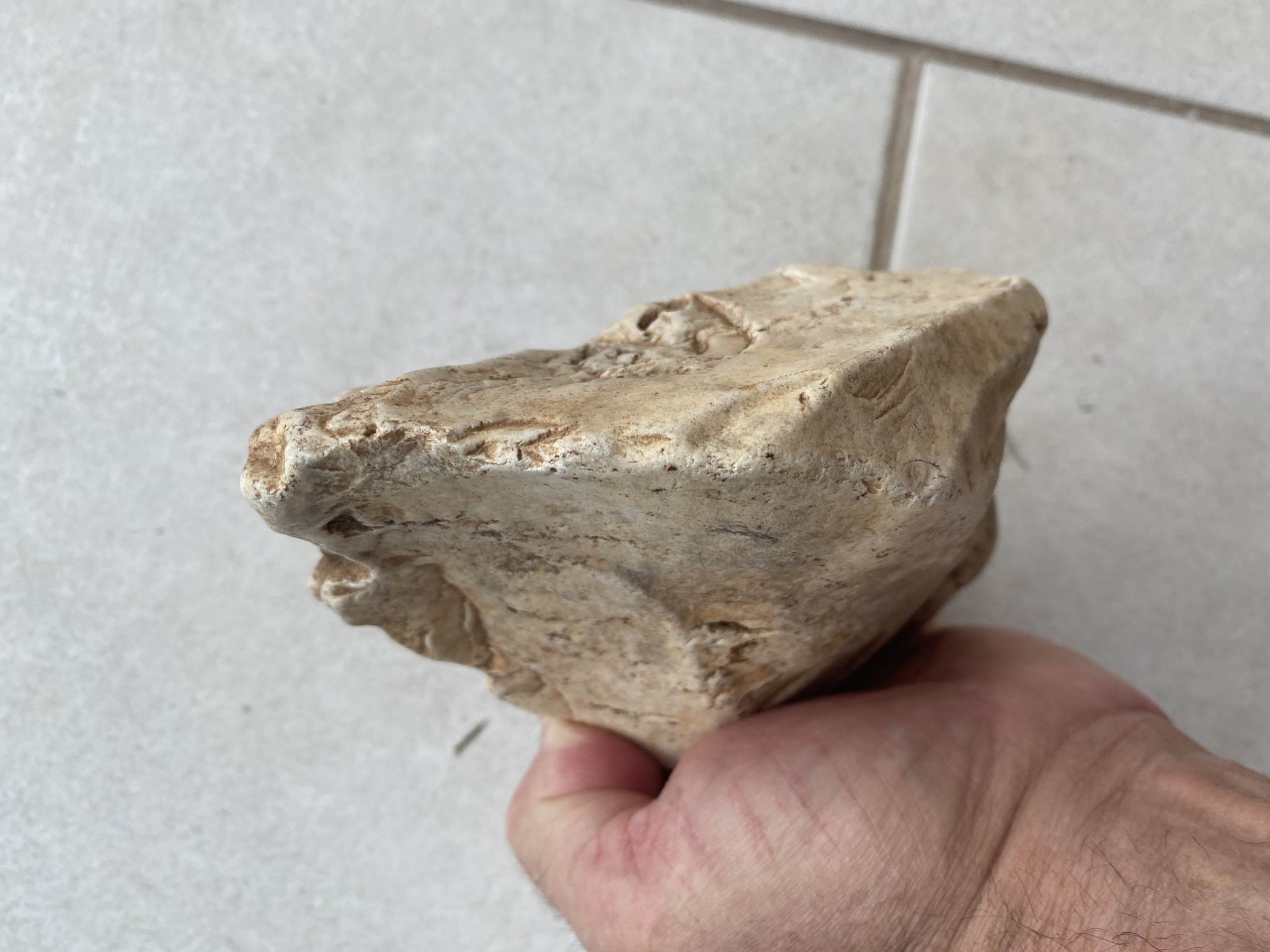
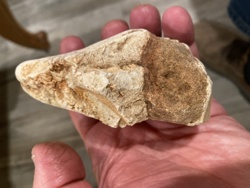
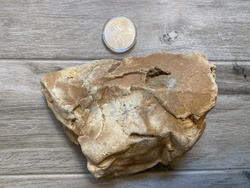
This is a significant lithic artifact composed of chert, measuring approximately 6.5 inches by 4.5 inches, discovered in Guthrie, Oklahoma. The item exhibits classic bifacial flaking techniques indicative of Paleolithic tool manufacturing, where material has been removed from both sides to create a functional cutting or scraping edge. The coloration is a characteristic off-white to tan creamy hue, typical of Oklahoma chert varieties which often develop a thick mineral patina over millennia of exposure and burial. Its construction features a teardrop or amygdaloid shape with a thick, heavy base designed to fit comfortably in the palm, tapering to a narrower worked point or edge. Notable features include visible percussion flaking scars and secondary retouching along the working margins, suggesting it served as a multi-purpose hand axe and scraper. The surface shows significant weathering and a smooth, waxy patina that blunts the sharpness of the original strike points, a classic indicator of extreme age. There are no modern maker's marks, as this is a prehistoric hand-knapped tool. While it lacks the refined symmetry of later Neolithic pieces, the rugged craftsmanship identifies it as a robust utilitarian tool. The condition appears stable with no recent fractures, though it bears the scars of ancient use and natural environmental wear consistent with its provenance.
AI-Generated Appraisal Disclaimer
Estimated Value
$450 - $700
Basic Information
Category
Archaeological Lithic Artifacts
Appraised On
May 11, 2026
Estimated Value
$450 - $700
Additional Details Provided By Owner
User Provided Information
A chert Paleolithic bi face hand axe scraper tool found in Guthrie, OK measuring 6.5" x 4.5"
Item Description
This is a significant lithic artifact composed of chert, measuring approximately 6.5 inches by 4.5 inches, discovered in Guthrie, Oklahoma. The item exhibits classic bifacial flaking techniques indicative of Paleolithic tool manufacturing, where material has been removed from both sides to create a functional cutting or scraping edge. The coloration is a characteristic off-white to tan creamy hue, typical of Oklahoma chert varieties which often develop a thick mineral patina over millennia of exposure and burial. Its construction features a teardrop or amygdaloid shape with a thick, heavy base designed to fit comfortably in the palm, tapering to a narrower worked point or edge. Notable features include visible percussion flaking scars and secondary retouching along the working margins, suggesting it served as a multi-purpose hand axe and scraper. The surface shows significant weathering and a smooth, waxy patina that blunts the sharpness of the original strike points, a classic indicator of extreme age. There are no modern maker's marks, as this is a prehistoric hand-knapped tool. While it lacks the refined symmetry of later Neolithic pieces, the rugged craftsmanship identifies it as a robust utilitarian tool. The condition appears stable with no recent fractures, though it bears the scars of ancient use and natural environmental wear consistent with its provenance.
Related Tags
Explore similar items and categories:
Get Your Items Appraised
Instant estimates of your treasures with AI-powered instant appraisals