AI identification & appraisal estimate

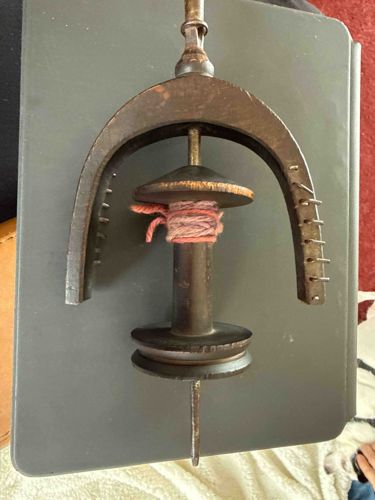
Antique Spinning Wheel Flyer and Bobbin Assembly

This name is the AI's identification of the item — it may be incorrect.

Submitted photo of Antique Spinning Wheel Flyer and Bobbin Assembly
Photo submitted by the user — not generated by AI

AI Estimated Value

Not an official valuation

$45.00 - $75.00

AI estimate as of January 29, 2026 · verify with a professional before acting

AI-Generated · Verify before acting

Everything on this page is generated by AI for informational purposes only. AI can make mistakes — the AI may misidentify items or misattribute them (artist, maker, brand, designer, origin, era). This is not an official valuation and should not be used for insurance, sale, tax, estate, legal, or lending purposes — or any decision requiring a certified appraisal. It is not an authoritative claim about any person, brand, or rights holder — do not share or rely on it as a factual statement about a third party. Always consult qualified professionals before making financial decisions.

Read the full disclaimer

AI Item Analysis

This is a vintage or antique component of a flax or wool spinning wheel, specifically the flyer and bobbin assembly. The item is primary constructed from a dark-stained hardwood, likely oak or mahogany, and features a characteristic U-shaped flyer frame. This frame is equipped with metal hooks (or hecks) along both arms, which are used to guide the spun fiber onto the bobbin evenly. The central bobbin is a lathe-turned wooden piece with a double-pulleyd base (whorl), indicating a double-drive or bobbin-lead system. A metal spindle shaft runs through the center of the assembly. Visible wear includes significant edge rounding on the wooden components, light surface oxidation on the metal spindle and hooks, and some chipping to the finish, particularly on the flyer's upper arch and the bobbin's flanges. There is a small remnant of pink and orange variegated wool yarn wound around the bobbin core. The craftsmanship is utilitarian but precise, typical of 19th-century workshop production. No maker's marks are visible, which is common for replacement components or parts from regional wheel makers.
AI Appraisal Report

I have examined the digital image of the spinning wheel flyer and bobbin assembly. The item is a 19th-century utilitarian component, likely crafted from a stained hardwood such as fruitwood or maple. The wear patterns—specifically the oxidation on the metal 'hecks' and the frictional thinning on the bobbin whorls—are consistent with a working life of several decades. The presence of residual variegated wool yarn suggests it was part of a functional flax or wool wheel rather than a modern decorative reproduction. While the craftsmanship is precise, the lack of a maker's mark and the chipping on the flyer’s arch indicate this was a standard, mass-produced workshop piece. The market for orphaned spinning components is niche, primarily driven by restorers seeking period-correct replacement parts. Complete wheels command higher premiums ($150-$400), whereas individual flyer/bobbin assemblies are valued based on their compatibility with existing wheel frames. Modern spinning enthusiasts often prefer new, precision-balanced components, making this primarily an antique collector's piece or a restoration 'donor' part. Limitations: My assessment is based solely on visual inspection of the image. A physical examination is required to verify the integrity of the spindle (ensuring it is not bent), the wood’s density, and to check for hidden repairs or woodworm. Full authentication would require testing the metal's carbon content to confirm 19th-century origin and comparing the whorl dimensions against known regional patterns (e.g., Saxon vs. Castle styles). Without provenance documentation, I cannot attribute this to a specific maker.

Keep exploring

More antique textiles & sewing tools appraisals

Get your items appraised

Instant AI-powered appraisal estimates from a photo

Browse More Appraisals