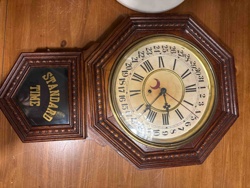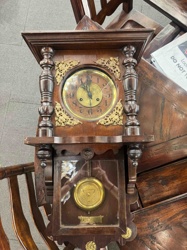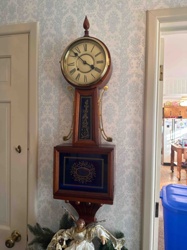
Late 19th Century German Vienna Regulator Wall Clock
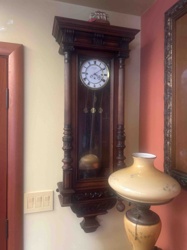
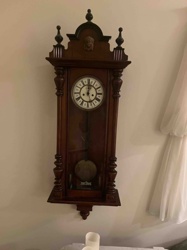
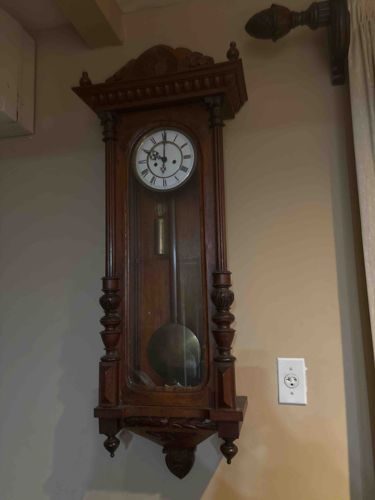
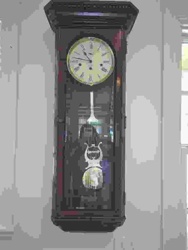
This is a fine example of a late 19th-century Vienna Regulator style wall clock, likely of German manufacture (such as Gustav Becker or Junghans). The case is constructed from solid walnut and walnut veneers, showcasing a rich, dark brown patina consistent with its age. The architectural design features a prominent pediment with a carved cresting, flanked by turned finials. The long trunk is defined by fluted full-columns and intricate hand-carved decorative motifs on the lower bracket. The clock face is a white porcelain or enamel dial with black Roman numerals, featuring decorative black steel hands and two winding holes, indicating a time-and-strike movement. Visible through the long glass door is a large, polished brass pendulum bob and a single weight, suggesting a weight-driven mechanical movement rather than spring-driven. Physically, the clock appears to be in good vintage condition; however, there is a visible layer of surface dust and slight oxidation on the brass components. The wood shows minor scuffs and age-related wear, but no significant structural damage or modern restoration is immediately apparent. The craftsmanship is high, evidenced by the detailed turnings and the precision of the case joinery, typical of late Victorian-era horology.
AI-Generated Appraisal Disclaimer
Estimated Value
$800 - $1,200
Basic Information
Category
Antique Horology / Wall Clocks
Appraised On
January 1, 2026
Estimated Value
$800 - $1,200
Additional Details Provided By Owner
User Provided Information
Clock I always remember my grandma having she found it in an antique store one day apparently. I wasn’t born yet
Item Description
This is a fine example of a late 19th-century Vienna Regulator style wall clock, likely of German manufacture (such as Gustav Becker or Junghans). The case is constructed from solid walnut and walnut veneers, showcasing a rich, dark brown patina consistent with its age. The architectural design features a prominent pediment with a carved cresting, flanked by turned finials. The long trunk is defined by fluted full-columns and intricate hand-carved decorative motifs on the lower bracket. The clock face is a white porcelain or enamel dial with black Roman numerals, featuring decorative black steel hands and two winding holes, indicating a time-and-strike movement. Visible through the long glass door is a large, polished brass pendulum bob and a single weight, suggesting a weight-driven mechanical movement rather than spring-driven. Physically, the clock appears to be in good vintage condition; however, there is a visible layer of surface dust and slight oxidation on the brass components. The wood shows minor scuffs and age-related wear, but no significant structural damage or modern restoration is immediately apparent. The craftsmanship is high, evidenced by the detailed turnings and the precision of the case joinery, typical of late Victorian-era horology.
Get Your Items Appraised
Instant estimates of your treasures with AI-powered instant appraisals