AI Appraisal Estimate

AI-generated estimates · not official valuations

From the user

What was submitted

Photo and notes provided by the user — not generated by AI

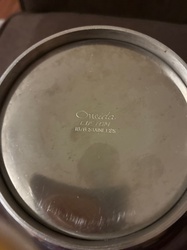
Submitted item photo
Submitted photo · June 23, 2026

User's notes

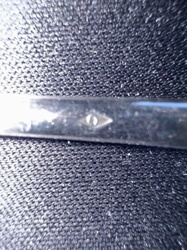
Pat 12 WMROGERS

AI analysis below

AI appraisal

AI analysis & estimate

AI-Generated · Verify before acting

Everything below is generated by AI for informational purposes only. AI can make mistakes — the AI may misidentify items or misattribute them (artist, maker, brand, designer, origin, era). This is not an official valuation and should not be used for insurance, sale, tax, estate, legal, or lending purposes — or any decision requiring a certified appraisal. It is not an authoritative claim about any person, brand, or rights holder — do not share or rely on it as a factual statement about a third party. Always consult qualified professionals before making financial decisions.

Note

This analysis also relies on unverified notes provided by the user, which may be incomplete or inaccurate and could affect the result.

Read the full disclaimer

AI Identification

·Not independently authenticated·Verify before acting

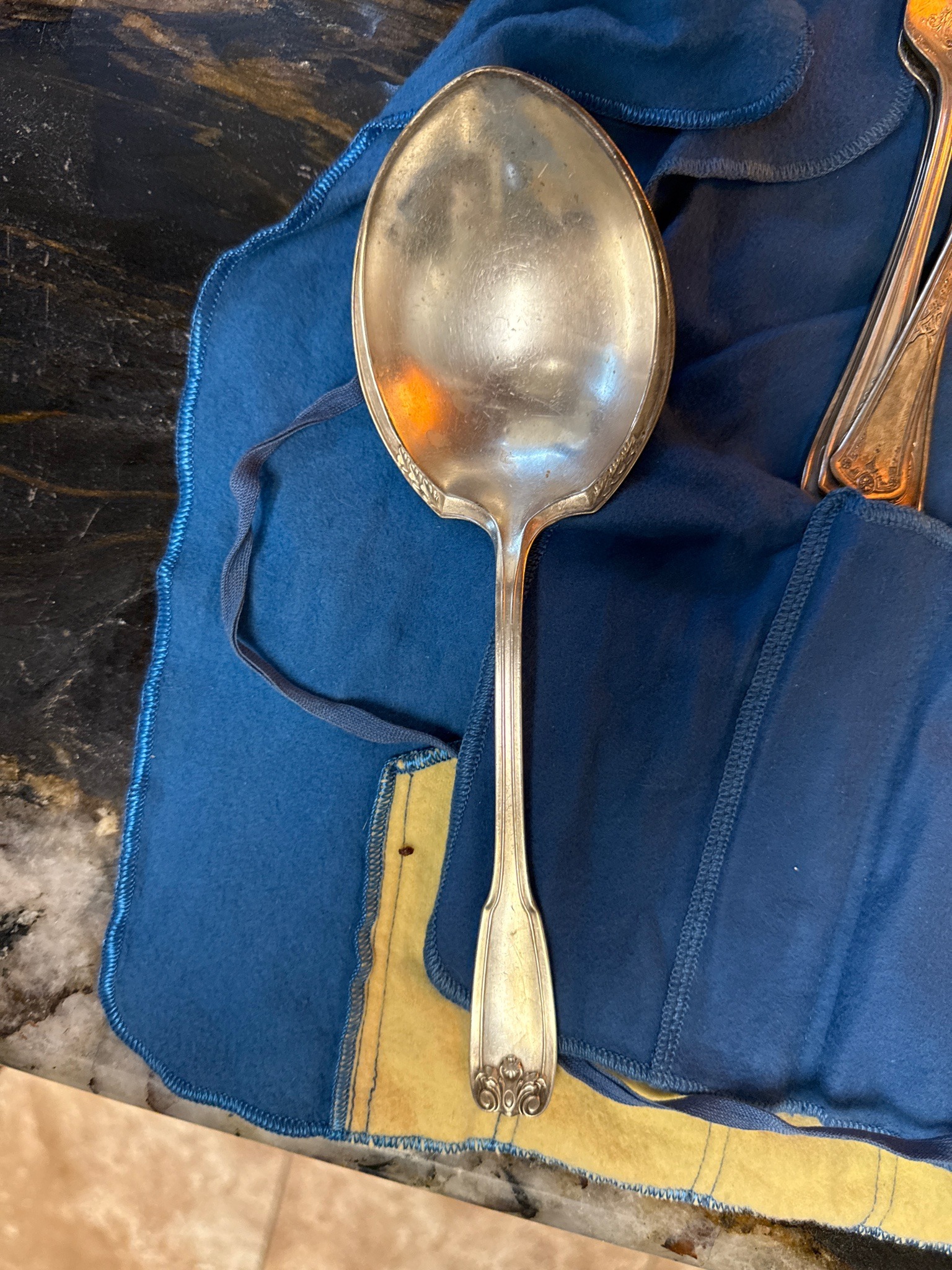
Wm. Rogers & Son Silverplated Berry or Casserole Spoon

Antique Flatware / Silverplate Hollowware

AI Estimated Value

·Not an official valuation·Verify before acting

$15.00 - $25.00

As of June 23, 2026

AI Item Analysis

·AI can make mistakes·Verify before acting
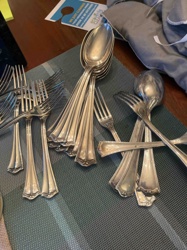
This is a vintage silverplated serving spoon, specifically a berry or casserole spoon, identified by its wide, oval-shaped bowl and ornate terminal. Based on the provided context, it was manufactured by Wm. Rogers & Son, a hallmark associated with the International Silver Company. The pattern features a classic Beaux-Arts or Neo-Renaissance influence, sporting a decorative shell and scroll motif at the tip of the handle handle (terminal) and subtle filigree or scalloped detailing where the handle meets the base of the bowl. The metal construction consists of a base metal, likely nickel silver or brass, which has been electroplated with a layer of sterling silver. The overall length appears standard for a large serving piece, approximately 8 to 9 inches. In terms of condition, the spoon exhibits significant signs of age-appropriate wear. There is notable tarnishing and oxidation across the surface, particularly within the bowl and the recessed areas of the pattern. Small scratches and scuffs are visible, which are common for frequently used flatware. A distinct yellowish patina is forming on the stem, suggesting the silver plating may be thinning in high-contact areas, revealing the base metal beneath. The 'Pat 12' marking indicates the pattern was patented in 1912, placing the manufacturing era in the early 20th century. The craftsmanship is indicative of high-quality mass-produced Americana flatware from the Edwardian period, designed to bring elegance to the formal dining room.
AI Appraisal Report

·AI can make mistakes·Verify before acting
I have completed my examination of the silverplated serving spoon bearing the Wm. Rogers & Son mark and the 1912 patent date. Authenticated by the 'Pat 12' and 'AA' quality marks, this piece is identified as the 'Orchid' pattern, a popular Edwardian-era design characterized by its shell-and-scroll motif. Upon visual inspection of the images, I find the spoon to be in 'Fair' condition. The notable yellowing on the stem indicates 'bleeding,' where the silver electroplating has worn away to reveal the base metal beneath. Such wear, combined with the pitting in the bowl, significantly limits its value to that of a decorative or 'shabby chic' collectible rather than a museum-quality specimen. The market for silverplated flatware is currently saturated. Unlike sterling silver, which maintains a high floor price due to bullion value, silverplated items rely entirely on pattern desirability and condition. While this specific berry spoon is more sought after than standard teaspoons, its mass-produced nature means it is not rare. Similar pieces in better condition frequently sell for under $30 at auction. Limitations: This appraisal is based solely on digital imagery. Full authentication would require a physical inspection to verify the tactile weight and check for structural repairs hidden by tarnish. Acid testing could definitively confirm the base metal composition (likely nickel silver). For a formal valuation for insurance purposes, I would require provenance documentation or a bill of sale to prove its chain of custody.

Get your items appraised

Instant estimates of your treasures with AI-powered appraisals

Browse More Appraisals