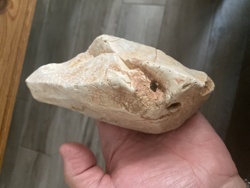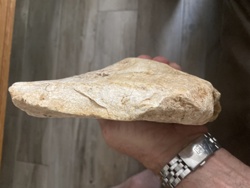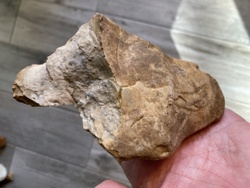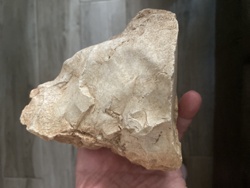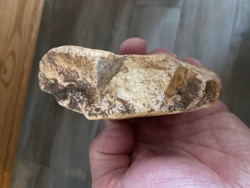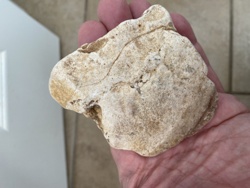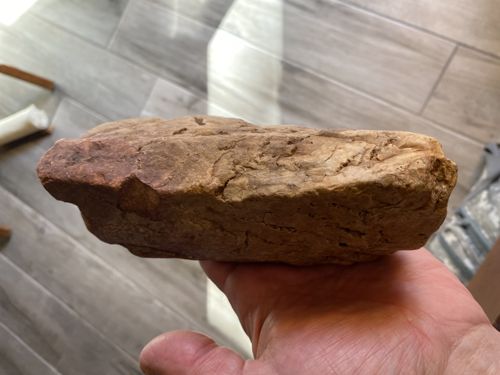
Lower Paleolithic Style Large Bi-Face Hand Axe / Scraper
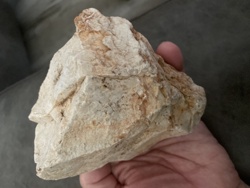
This is a substantial prehistoric-style lithic tool, measuring approximately 6 inches in length by 3.5 inches in width. The specimen is crafted from what appears to be a silicate material such as chert or highly silicified petrified wood, exhibiting a rich earthy palette of ochre, burnt sienna, and tan. The object displays characteristic bi-facial flaking, where material has been systematically removed from both sides to create a functional cutting or scraping edge. Its construction is robust, featuring a thick, ergonomic midsection that tapers toward the edges, suggesting it was designed to be held directly in the hand rather than hafted. The surface shows a complex texture consisting of flake scars and natural cortex remnants. There is a distinct heavy patina and mineral staining across the surface, which is consistent with long-term environmental exposure and burial. Notable condition elements include minor edge battering and rounded ridges, indicating significant age or possible water-tumbling. The craftsmanship represents a utilitarian 'core tool' tradition, focused on durability and repetitive use for heavy-duty tasks like butchery or woodworking. The lack of modern crush marks or fresh fractures supports its status as an authentic ancient artifact likely dating to the Lower Paleolithic or a later regional equivalent.
AI-Generated Appraisal Disclaimer
Estimated Value
$400 - $650
Basic Information
Category
Prehistoric Lithic Artifacts
Appraised On
February 18, 2026
Estimated Value
$400 - $650
Additional Details Provided By Owner
User Provided Information
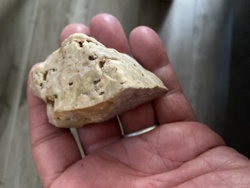
Lower Paleolithic chert or petrified wood largr bi face hand axe scraper or prehistoric celt tool found in Guthrie OK measuring 6" x 3.5"
Item Description
This is a substantial prehistoric-style lithic tool, measuring approximately 6 inches in length by 3.5 inches in width. The specimen is crafted from what appears to be a silicate material such as chert or highly silicified petrified wood, exhibiting a rich earthy palette of ochre, burnt sienna, and tan. The object displays characteristic bi-facial flaking, where material has been systematically removed from both sides to create a functional cutting or scraping edge. Its construction is robust, featuring a thick, ergonomic midsection that tapers toward the edges, suggesting it was designed to be held directly in the hand rather than hafted. The surface shows a complex texture consisting of flake scars and natural cortex remnants. There is a distinct heavy patina and mineral staining across the surface, which is consistent with long-term environmental exposure and burial. Notable condition elements include minor edge battering and rounded ridges, indicating significant age or possible water-tumbling. The craftsmanship represents a utilitarian 'core tool' tradition, focused on durability and repetitive use for heavy-duty tasks like butchery or woodworking. The lack of modern crush marks or fresh fractures supports its status as an authentic ancient artifact likely dating to the Lower Paleolithic or a later regional equivalent.
Related Tags
Explore similar items and categories:
Get Your Items Appraised
Instant estimates of your treasures with AI-powered instant appraisals