Prehistoric Handaxe Scraper (Guthrie, OK Lithic Tool)
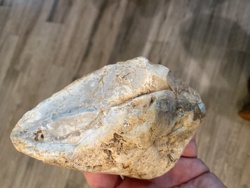
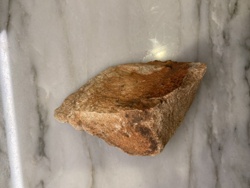
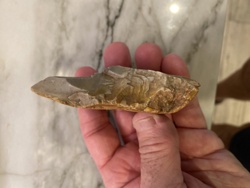
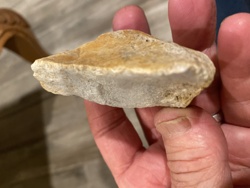
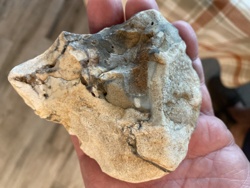
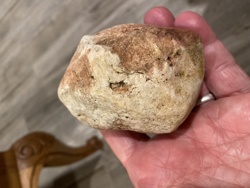
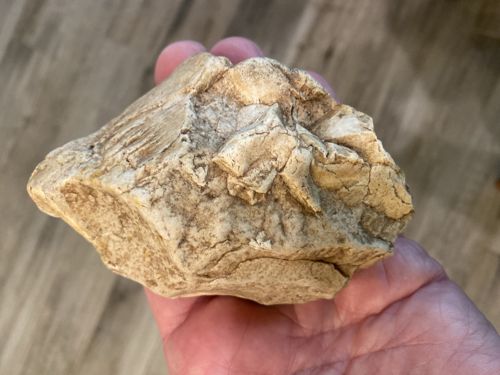
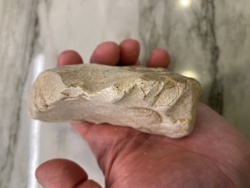
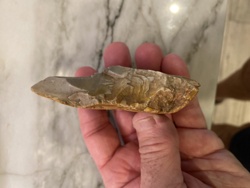
This is a prehistoric lithic tool, specifically identified as a handaxe-style scraper found in Guthrie, Oklahoma. Measuring approximately 4 inches in length and 2.75 inches in width, the item is sized perfectly for handheld ergonomic use. The material appears to be a local variety of light tan or cream-colored chert or flint, showing a heavy, aged patina and mineral staining consistent with long-term burial in the Oklahoma soil. The physical construction displays evidence of unifacial and purposeful percussion flaking along the edges to create a sharpened margin for scraping tasks. One side remains relatively bulbous to fit into the palm, while the opposite side tapers to a working edge. Notable features include a prominent ridge and deep flake scars indicative of ancient lithic reduction techniques. While many areas show rounded edges from significant weathering or 'rolling' over centuries, the intentional form remains clear. The condition shows heavy mineralization and some honest environmental wear but lacks modern fracture damage, preserving its historical integrity. This artifact likely dates to the Archaic period based on the regional lithic technology and provides significant archaeological interest regarding the early inhabitants of the Great Plains.
AI-Generated Appraisal Disclaimer
Estimated Value
$45.00 - $75.00
Basic Information
Category
Archaeological Artifacts / Native American Lithics
Appraised On
February 17, 2026
Estimated Value
$45.00 - $75.00
Additional Details Provided By Owner
User Provided Information
Prehistoric handaxe scraper tool found in Guthrie, OK measuring 4" x 2.75
Item Description
This is a prehistoric lithic tool, specifically identified as a handaxe-style scraper found in Guthrie, Oklahoma. Measuring approximately 4 inches in length and 2.75 inches in width, the item is sized perfectly for handheld ergonomic use. The material appears to be a local variety of light tan or cream-colored chert or flint, showing a heavy, aged patina and mineral staining consistent with long-term burial in the Oklahoma soil. The physical construction displays evidence of unifacial and purposeful percussion flaking along the edges to create a sharpened margin for scraping tasks. One side remains relatively bulbous to fit into the palm, while the opposite side tapers to a working edge. Notable features include a prominent ridge and deep flake scars indicative of ancient lithic reduction techniques. While many areas show rounded edges from significant weathering or 'rolling' over centuries, the intentional form remains clear. The condition shows heavy mineralization and some honest environmental wear but lacks modern fracture damage, preserving its historical integrity. This artifact likely dates to the Archaic period based on the regional lithic technology and provides significant archaeological interest regarding the early inhabitants of the Great Plains.
Related Tags
Explore similar items and categories:
Get Your Items Appraised
Instant estimates of your treasures with AI-powered instant appraisals