AI Appraisal Estimate

AI-generated estimates · not official valuations

From the user

What was submitted

Photo and notes provided by the user — not generated by AI

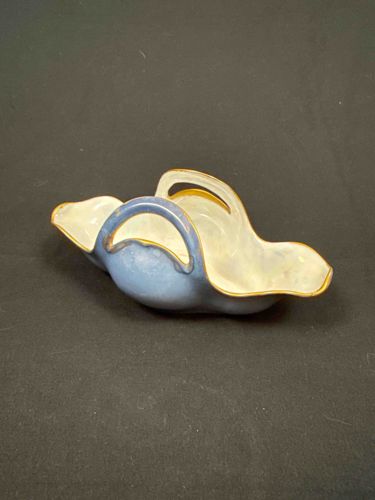
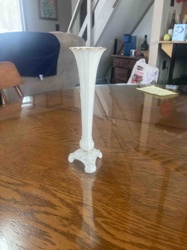
Submitted item photo
Submitted photo · June 4, 2026

User's notes

No additional notes provided.

AI analysis below

AI appraisal

AI analysis & estimate

AI-Generated · Verify before acting

Everything below is generated by AI for informational purposes only. AI can make mistakes — the AI may misidentify items or misattribute them (artist, maker, brand, designer, origin, era). This is not an official valuation and should not be used for insurance, sale, tax, estate, legal, or lending purposes — or any decision requiring a certified appraisal. It is not an authoritative claim about any person, brand, or rights holder — do not share or rely on it as a factual statement about a third party. Always consult qualified professionals before making financial decisions.

Read the full disclaimer

AI Identification

·Not independently authenticated·Verify before acting

Art Nouveau Porcelain Scalloped Bonbon Dish

Decorative Arts & Ceramics

AI Estimated Value

·Not an official valuation·Verify before acting

$45 - $85

As of June 4, 2026

AI Item Analysis

·AI can make mistakes·Verify before acting
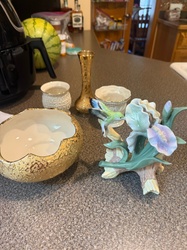
This is a fine Art Nouveau-style porcelain bonbon or nut dish, characterized by its organic, fluid silhouettes and biomorphic form. The piece features a dual-handled design with an elongated, boat-like shape and heavily scalloped edges. The exterior is finished in a mottled, matte cornflower blue glaze that exhibits subtle variations in tone, while the interior possesses a contrasting lustrous, multi-colored mother-of-pearl or opalescent iridescent glaze. A notable highlight is the hand-painted gold gilt trim lining the rim and detailing the curved handles, adding a touch of elegance typical of mid-20th-century decorative ceramics. The construction is delicate but firm, suggesting a production date between the 1920s and 1950s, possibly from a manufacturer like Hull, Weller, or Roseville, though no maker's mark is visible in the photograph. The item appears to be in very good vintage condition with no visible cracks or large chips; however, there is light shelf wear on the base and minor thinning of the gold gilding along the handle edges from handling. The craftsmanship is high, evidenced by the smooth transitions between the handle apertures and the body of the vessel.
AI Appraisal Report

·AI can make mistakes·Verify before acting
Based on my visual examination of the provided images, this is a charming vintage porcelain bonbon dish, likely dating to the mid-20th century (circa 1930s-1950s). The piece exhibits strong Art Nouveau revivial influences through its biomorphic, scalloped form and dual-handled silhouette. The juxtaposition of the matte cornflower blue exterior against the iridescent, mother-of-pearl luster interior is characteristic of American and German porcelain exports from this era, reminiscent of styles popularized by makers like RS Prussia (specifically their unseen molds) or potentially American potteries like Hull or Camark, though the luster finish strongly suggests a German or Japanese import designated for the Western market. The condition appears very good for its age. I note the integrity of the rim is maintained, with the scalloped edges showing no visible chips in the photographs. The gold gilding remains largely intact, though, as noted, there is expected wear on the handles consistent with use. The glaze application appears uniform without crazing visible in the high-resolution view. Regarding value, the lack of a visible maker's mark significantly impacts the ceiling of its appraisal. Without a backstamp (e.g., RS Prussia, Noritake, or a specific studio mark), the piece must be valued primarily on decorative appeal rather than collector specificity. Similar unmarked lusterware dishes generally realize prices in the $45 to $85 range at auction or in antique retail settings. To provide a definitive attribution or higher valuation, I would need to physically inspect the paste translucency against light and examine the foot rim for incised mold numbers that may not be captured in the photo.

Get your items appraised

Instant estimates of your treasures with AI-powered appraisals

Browse More Appraisals