Egyptian-Style Faience Scarab Beetle Amulet
Antiquities and Archaeological Artifacts

Egyptian-Style Faience Scarab Beetle Amulet

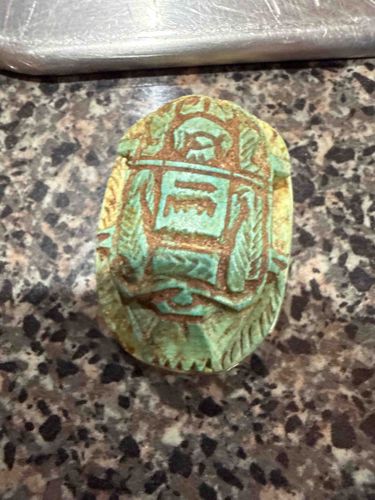
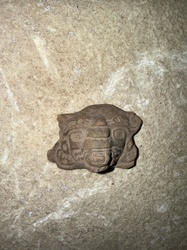
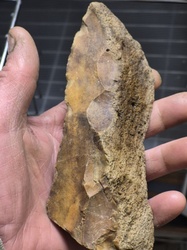
This item is an Egyptian-style scarab beetle amulet, likely crafted from glazed faience or a carved soft stone like steatite. It features a distinctive pale turquoise or seafoam green glaze that has survived in varying degrees across the surface. The piece is oval in shape with a high-relief carved back depicting the stylized anatomy of a dung beetle (Scarabaeus sacer), including the head, clypeus, and elytra (wing cases). The base appears to contain incised hieroglyphic-like symbols or decorative motifs, often found on such amulets to serve as seals or protective charms. Geographically and stylistically, it references the New Kingdom or Late Period of Ancient Egypt, though without forensic testing, it is difficult to distinguish between an authentic antiquity and a high-quality 19th or 20th-century Grand Tour souvenir. The object shows significant surface wear, with areas of the glaze rubbed away to reveal a yellowish, porous interior core. There is dark brown earthen accumulation or 'patina' settled into the deeper recessed carvings, which may be natural age-related soil or artificially applied to enhance the antique appearance. The craftsmanship shows manual carving with slight asymmetries, indicating it was hand-finished rather than modern factory-molded.
Estimated Value

$400 - $700

Basic Information

Category

Antiquities and Archaeological Artifacts

Appraised On

December 31, 2025

Estimated Value

$400 - $700

Item Description

This item is an Egyptian-style scarab beetle amulet, likely crafted from glazed faience or a carved soft stone like steatite. It features a distinctive pale turquoise or seafoam green glaze that has survived in varying degrees across the surface. The piece is oval in shape with a high-relief carved back depicting the stylized anatomy of a dung beetle (Scarabaeus sacer), including the head, clypeus, and elytra (wing cases). The base appears to contain incised hieroglyphic-like symbols or decorative motifs, often found on such amulets to serve as seals or protective charms. Geographically and stylistically, it references the New Kingdom or Late Period of Ancient Egypt, though without forensic testing, it is difficult to distinguish between an authentic antiquity and a high-quality 19th or 20th-century Grand Tour souvenir. The object shows significant surface wear, with areas of the glaze rubbed away to reveal a yellowish, porous interior core. There is dark brown earthen accumulation or 'patina' settled into the deeper recessed carvings, which may be natural age-related soil or artificially applied to enhance the antique appearance. The craftsmanship shows manual carving with slight asymmetries, indicating it was hand-finished rather than modern factory-molded.
Get Your Items Appraised

Instant estimates of your treasures with AI-powered instant appraisals

Browse More Appraisals