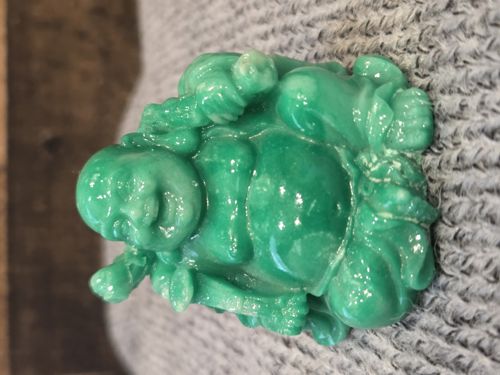
Carved Jadeite Laughing Buddha Figurine
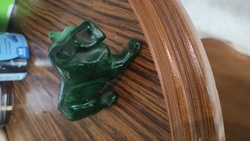
This small, hand-carved figurine depicts the Laughing Buddha (Budai), traditionally associated with happiness, wealth, and abundance. The piece is crafted from a vibrant, mottled green stone, likely jadeite or a similar hardstone. The color ranges from a saturated emerald green to lighter, translucent minty hues, displaying the characteristic 'greasy' luster of jade. The carving is detailed, showing the figure in a seated posture with an exposed potbelly, a jovial facial expression, and holding what appears to be a bag of treasures or a mala. The surface exhibits a high-polish finish, which enhances the stone's natural chatoyancy. In terms of condition, there are minor surface abrasions and small internal fractures (vines) typical of natural mineral formations, but no significant chips or post-production damage are visible. The craftsmanship suggests a 20th-century origin, possibly mid-to-late century, following traditional Chinese lapidary styles. There are no visible maker's marks or signatures, which is common for functional or decorative stone carvings of this period. The overall quality reflects a mass-produced but well-executed artisan decorative object.

AI-Generated Appraisal Disclaimer
Estimated Value
$350 - $550
Basic Information
Category
Cultures & Religions - Asian Antiques & Collectibles
Appraised On
February 20, 2026
Estimated Value
$350 - $550
Item Description
This small, hand-carved figurine depicts the Laughing Buddha (Budai), traditionally associated with happiness, wealth, and abundance. The piece is crafted from a vibrant, mottled green stone, likely jadeite or a similar hardstone. The color ranges from a saturated emerald green to lighter, translucent minty hues, displaying the characteristic 'greasy' luster of jade. The carving is detailed, showing the figure in a seated posture with an exposed potbelly, a jovial facial expression, and holding what appears to be a bag of treasures or a mala. The surface exhibits a high-polish finish, which enhances the stone's natural chatoyancy. In terms of condition, there are minor surface abrasions and small internal fractures (vines) typical of natural mineral formations, but no significant chips or post-production damage are visible. The craftsmanship suggests a 20th-century origin, possibly mid-to-late century, following traditional Chinese lapidary styles. There are no visible maker's marks or signatures, which is common for functional or decorative stone carvings of this period. The overall quality reflects a mass-produced but well-executed artisan decorative object.
Get Your Items Appraised
Instant estimates of your treasures with AI-powered instant appraisals