Middle Paleolithic Bifacial Chert Hand Axe/Scraper Tool
Prehistoric Stone Artifacts / Anthropological Tools

Middle Paleolithic Bifacial Chert Hand Axe/Scraper Tool

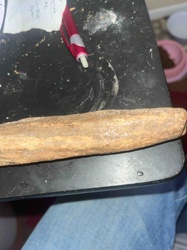
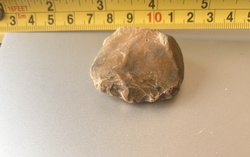
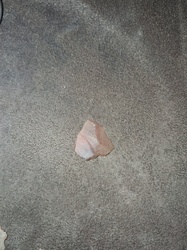
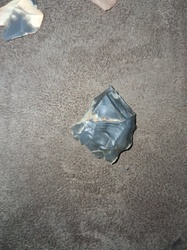
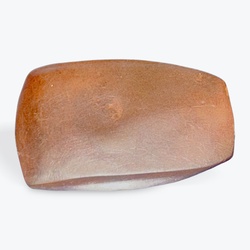
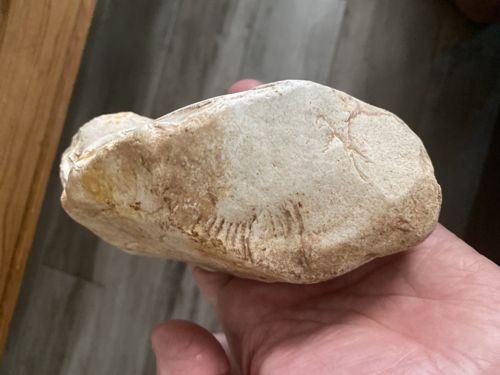
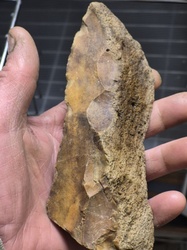
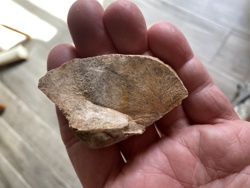
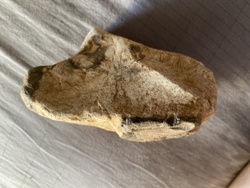
This artifact is a bifacial lithic tool, identified as a hand axe or large scraper, measuring approximately 5.5 inches in length and 3.25 inches in width. Found in Guthrie, Oklahoma, the item is constructed from a dense, cream-to-tan colored chert material with visible earthy iron-oxide staining and mineral deposits across its surface. The tool demonstrates intentional knapping through percussion flaking, creating a tapered, wedge-like profile suitable for heavy-duty butchery or wood-working tasks. Notable physical features include a thick, rounded butt end designed to fit the palm comfortably, leading to a narrower, sharpened working edge. The surface exhibits significant patination and smoothing, suggesting long-term exposure to geological processes and environmental wear consistent with Middle Paleolithic or early archaic timelines. While the piece shows some weathering and minor step-fractures along the biting edges, the overall integrity of the tool remains high, displaying a clear understanding of lithic reduction by the maker. The craftsmanship is utilitarian yet precise, with the absence of modern machine marks or metal-tool scarring confirming its prehistoric origin as a multi-purpose survival tool.
Estimated Value

$150 - $250

Basic Information

Category

Prehistoric Stone Artifacts / Anthropological Tools

Appraised On

February 19, 2026

Estimated Value

$150 - $250

Additional Details Provided By Owner

User Provided Information

Middle Paleolithic chert Bi face hand axe scraper tool found in Guthrie OK measuring 5.5" x 3.25"

Item Description

This artifact is a bifacial lithic tool, identified as a hand axe or large scraper, measuring approximately 5.5 inches in length and 3.25 inches in width. Found in Guthrie, Oklahoma, the item is constructed from a dense, cream-to-tan colored chert material with visible earthy iron-oxide staining and mineral deposits across its surface. The tool demonstrates intentional knapping through percussion flaking, creating a tapered, wedge-like profile suitable for heavy-duty butchery or wood-working tasks. Notable physical features include a thick, rounded butt end designed to fit the palm comfortably, leading to a narrower, sharpened working edge. The surface exhibits significant patination and smoothing, suggesting long-term exposure to geological processes and environmental wear consistent with Middle Paleolithic or early archaic timelines. While the piece shows some weathering and minor step-fractures along the biting edges, the overall integrity of the tool remains high, displaying a clear understanding of lithic reduction by the maker. The craftsmanship is utilitarian yet precise, with the absence of modern machine marks or metal-tool scarring confirming its prehistoric origin as a multi-purpose survival tool.
Get Your Items Appraised

Instant estimates of your treasures with AI-powered instant appraisals

Browse More Appraisals