AI Appraisal Estimate

AI-generated estimates · not official valuations

From the user

What was submitted

Photo and notes provided by the user — not generated by AI

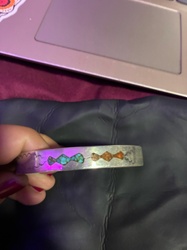
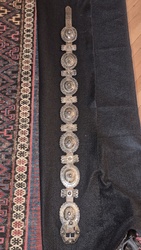
Submitted item photo
Submitted photo · June 8, 2026

User's notes

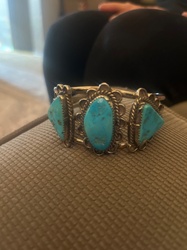
1970's Arizona turquoise silver bracelet

AI analysis below

AI appraisal

AI analysis & estimate

AI-Generated · Verify before acting

Everything below is generated by AI for informational purposes only. AI can make mistakes — the AI may misidentify items or misattribute them (artist, maker, brand, designer, origin, era). This is not an official valuation and should not be used for insurance, sale, tax, estate, legal, or lending purposes — or any decision requiring a certified appraisal. It is not an authoritative claim about any person, brand, or rights holder — do not share or rely on it as a factual statement about a third party. Always consult qualified professionals before making financial decisions.

Note

This analysis also relies on unverified notes provided by the user, which may be incomplete or inaccurate and could affect the result.

Read the full disclaimer

AI Identification

·Not independently authenticated·Verify before acting

Vintage 1970s Arizona Turquoise and Sterling Silver Cuff Bracelet

Jewelry - Native American Style / Vintage Fashion

AI Estimated Value

·Not an official valuation·Verify before acting

$450 - $650

As of June 8, 2026

AI Item Analysis

·AI can make mistakes·Verify before acting
This is a vintage Native American style cuff bracelet, circa 1970s, featuring a prominent Arizona turquoise cabochon as its central focal point. The turquoise exhibits a vibrant teal-to-green hue with a natural reddish-brown and golden matrix, characteristic of southwestern mines like Royston or Kingman. The stone is set in a plain bezel surrounded by a classic twisted wire (rope) detail, which is further encased within a secondary stamped silver border. The bracelet shank is a split-wire or 'carinated' construction typical of Navajo silverwork from this era. The metal appears to be sterling silver, identified by its luster and the deep natural oxidation (tarnish) accumulating in the recessed areas around the bezel and rope detailing. This patina indicates age and adds depth to the craftsmanship. The overall construction is robust, showing hand-wrought characteristics rather than mass-produced casting. Condition-wise, the stone appears secure without visible cracks, though the silver shows light surface wear and scratches consistent with its 50-year age. No visible hallmarks are present in this view, which was common for period trade jewelry made for the booming 1970s tourism market in the American Southwest.
AI Appraisal Report

·AI can make mistakes·Verify before acting
I have virtually examined this vintage 1970s cuff bracelet. Based on the provided imagery, the piece displays hallmarks of classic Navajo construction, specifically the split-wire carinated shank and traditional rope-and-bezel setting. The turquoise stone exhibits a high-quality matrix characteristic of the Southwestern mines active during the 1970s jewelry boom. The oxidation pattern suggests a genuine age-related patina rather than chemical darkening, supporting a vintage origin. The market for 1970s 'Old Pawn' and trade jewelry remains robust, with collectors favoring pieces that show hand-wrought characteristics over mass-produced imports. Comparable sales for unsigned, high-grade turquoise cuffs of this weight range between $400 and $700. The lack of a hallmark is typical for 'tourist trade' items of this era and does not necessarily detract from the value, though a known maker's mark (such as 'Bell' or 'Maisel’s') would provide a significant premium. Critically, a physical examination is required to confirm the metal's purity via acid testing, as many 1970s pieces were crafted in 'nickel silver' or 'German silver' rather than .925 sterling. Additionally, I cannot definitively determine if the turquoise has been stabilized or treated without microscopic inspection. The presence of provenance or a sales receipt from a reputable 1970s trading post would further solidify the valuation. Without physical handling to assess the weight, flexibility of the silver, and the security of the stone setting, this appraisal remains a professional estimate based on visual indicators alone.

Get your items appraised

Instant estimates of your treasures with AI-powered appraisals

Browse More Appraisals