Paleolithic Large Chert Hand Axe/Scraper
Prehistoric Artifacts / Lithic Tools

Paleolithic Large Chert Hand Axe/Scraper

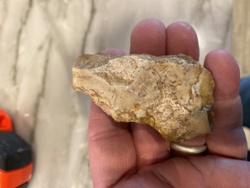
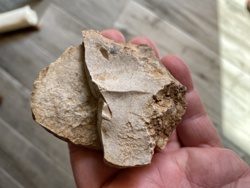
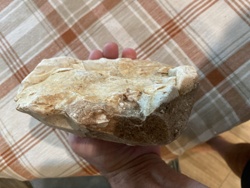
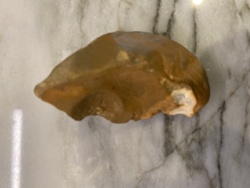
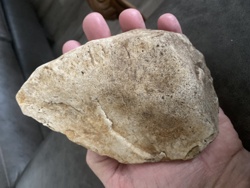
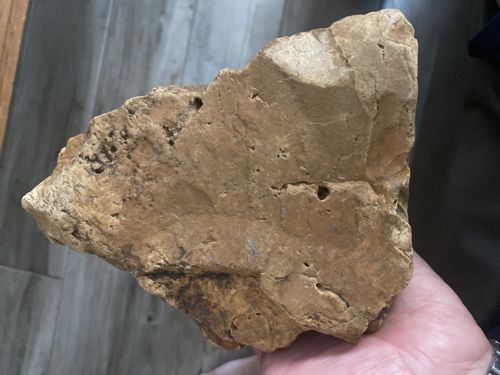
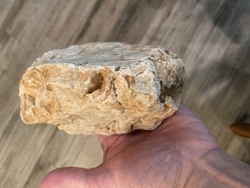
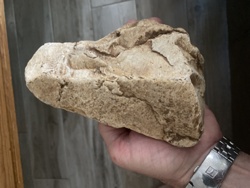
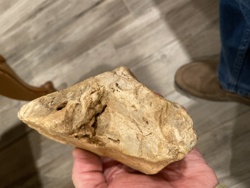
This is a large lithic tool, identified as a hand axe or scraper, measuring approximately 7 inches by 5 inches. The item is manufactured from a dense, opaque chert material, displaying a characteristic tan and light brown coloration. The construction exhibits bifacial reduction techniques, with visible flake scars across the surface that indicate intentional shaping by hit-percussion. The overall form is roughly triangular or cordiform, featuring a broad, thick base for gripping and a tapers toward a more articulated working edge. Notable features include several small circular pits and vugs inherent to the stone's geology, along with a heavy desert varnish or mineral patina resulting from long-term environmental exposure. The edges show signs of step-fracturing and micro-wear, consistent with heavy-duty scraping or chopping tasks. The condition is stable with no modern fractures apparent, though it shows extensive ancient wear and rounded edges suggestive of high-energy water transport or significant age. Based on the morphology and finding location in Guthrie, OK, this specimen represents a significant example of early human tool production in the Paleo-Indian or early archaic period, showcasing primitive yet effective craftsmanship in chert knapping.
Estimated Value

$450.00 - $700.00

Basic Information

Category

Prehistoric Artifacts / Lithic Tools

Appraised On

February 19, 2026

Estimated Value

$450.00 - $700.00

Additional Details Provided By Owner

User Provided Information

Paleolithic chert large hand axe scraper found in Guthrie OK measuring 7" x 5"

Item Description

This is a large lithic tool, identified as a hand axe or scraper, measuring approximately 7 inches by 5 inches. The item is manufactured from a dense, opaque chert material, displaying a characteristic tan and light brown coloration. The construction exhibits bifacial reduction techniques, with visible flake scars across the surface that indicate intentional shaping by hit-percussion. The overall form is roughly triangular or cordiform, featuring a broad, thick base for gripping and a tapers toward a more articulated working edge. Notable features include several small circular pits and vugs inherent to the stone's geology, along with a heavy desert varnish or mineral patina resulting from long-term environmental exposure. The edges show signs of step-fracturing and micro-wear, consistent with heavy-duty scraping or chopping tasks. The condition is stable with no modern fractures apparent, though it shows extensive ancient wear and rounded edges suggestive of high-energy water transport or significant age. Based on the morphology and finding location in Guthrie, OK, this specimen represents a significant example of early human tool production in the Paleo-Indian or early archaic period, showcasing primitive yet effective craftsmanship in chert knapping.
Get Your Items Appraised

Instant estimates of your treasures with AI-powered instant appraisals

Browse More Appraisals