Vintage Stag-Handled Carving Knife and Meat Fork Set
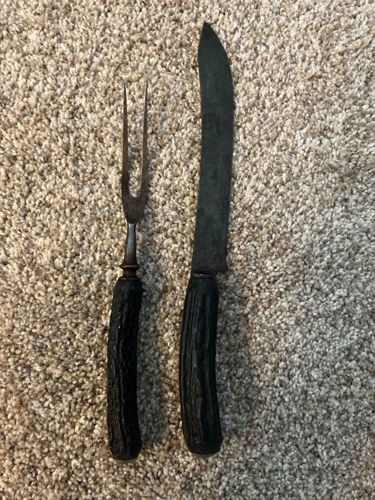
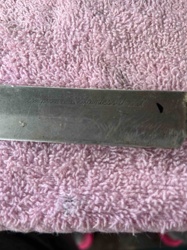
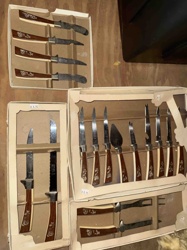
This is a two-piece vintage carving set consisting of a long-bladed carving knife and a two-tine meat fork. Both pieces feature handles constructed from natural stag horn (antler), which have been stained or weathered to a very deep, dark brown, almost black finish. The handles exhibit a heavy, rugose texture characteristic of natural antler growth, providing a secure grip. The metal components appear to be made of high-carbon steel, as evidenced by the significant dark oxidation and aged patina across the blade and tines. The knife features a long, slightly curved scimitar-style blade, while the fork has two long, slender tines and a decorative bolster transition between the metal and the handle. In terms of condition, both items show significant signs of age and use; the steel is heavily tarnished with surface rust and pitting, which is expected for carbon steel of this era. There are no visible maker's marks or stamps in the current photo, but the style is consistent with late 19th-century or early 20th-century craftsmanship (c. 1880-1920), likely produced in a major cutlery center such as Sheffield, England, or Solingen, Germany. The overall construction suggests utilitarian but high-quality original manufacturing intended for formal or hunting-themed dining room service.
AI-Generated Appraisal Disclaimer
Estimated Value
$40–$75
Basic Information
Category
Vintage Cutlery and Kitchenware
Appraised On
January 28, 2026
Estimated Value
$40–$75
Item Description
This is a two-piece vintage carving set consisting of a long-bladed carving knife and a two-tine meat fork. Both pieces feature handles constructed from natural stag horn (antler), which have been stained or weathered to a very deep, dark brown, almost black finish. The handles exhibit a heavy, rugose texture characteristic of natural antler growth, providing a secure grip. The metal components appear to be made of high-carbon steel, as evidenced by the significant dark oxidation and aged patina across the blade and tines. The knife features a long, slightly curved scimitar-style blade, while the fork has two long, slender tines and a decorative bolster transition between the metal and the handle. In terms of condition, both items show significant signs of age and use; the steel is heavily tarnished with surface rust and pitting, which is expected for carbon steel of this era. There are no visible maker's marks or stamps in the current photo, but the style is consistent with late 19th-century or early 20th-century craftsmanship (c. 1880-1920), likely produced in a major cutlery center such as Sheffield, England, or Solingen, Germany. The overall construction suggests utilitarian but high-quality original manufacturing intended for formal or hunting-themed dining room service.
Get Your Items Appraised
Instant estimates of your treasures with AI-powered instant appraisals