AI estimate as of July 17, 2025 · verify with a professional before acting
AI-Generated · Verify before acting
Everything on this page is generated by AI for informational purposes only. AI can make mistakes — the AI may misidentify items or misattribute them (artist, maker, brand, designer, origin, era). This is not an official valuation and should not be used for insurance, sale, tax, estate, legal, or lending purposes — or any decision requiring a certified appraisal. It is not an authoritative claim about any person, brand, or rights holder — do not share or rely on it as a factual statement about a third party. Always consult qualified professionals before making financial decisions.
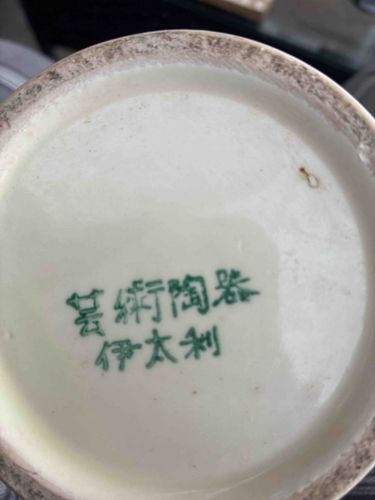
The image displays the base of a ceramic item, likely a vase, jar, or similar vessel, indicating its origin and manufacturing details. The material appears to be a glazed ceramic or porcelain, characterized by a smooth, off-white, or light cream interior surface. The base is circular with a distinct unglazed rim, revealing the natural clay body, which is a light brown or bisque color, and shows some accumulated dirt and wear consistent with age and use. The central area of the base features an impressed or stamped mark in green glaze, which reads '藝術陶器' (Geishutsu Tōki) meaning 'Art Pottery' or 'Art Ceramics' and below it '伊太利' (Itaria) meaning 'Italy'. This mark suggests the item is either an Italian-made piece sold in a Japanese market, or a piece made in the Japanese market in an 'Italian style' that intended to signify its connection to Italian design or origin. The typography of the kanji characters is clear and well-defined, indicative of a professional application process. There is a small, raised speck or particle in the glaze, possibly a firing imperfection or a piece of foreign matter that adhered during the glazing process, located near the character '器'. The overall condition of the glazed surface appears good, with no obvious cracks or chips visible on the bottom, though the unglazed rim shows typical handling grime and minor abrasions. The quality of craftsmanship appears to be good, with a smooth, even glaze application, although the single speck is a minor flaw. Based on the style of the mark and the linguistic information, this piece likely dates from the early to mid-20th century, possibly post-WWII, when cultural exchange and global trade began to flourish more significantly.
AI Appraisal Report
Based on my visual examination of the provided image, this ceramic item, likely a vase or similar vessel, presents several interesting characteristics. The base reveals a light, unglazed bisque clay body, consistent with common ceramic practices, and an interior glazed surface that appears largely intact and clean. The most significant feature is the green glazed mark '藝術陶器' (Art Pottery) and '伊太利' (Italy). The clear and well-defined kanji suggest a professional application. The presence of 'Italy' in Japanese characters is intriguing, possibly indicating a piece made in Italy for a Japanese market or a Japanese piece referencing Italian design influence. The typical wear on the unglazed rim and a minor glaze speck are consistent with age and handling, but do not significantly detract from its overall appeal. The condition is good, with no visible cracks or major chips on the base.
Authenticity, based solely on this image, appears plausible for the period suggested (early to mid-20th century). However, without physical examination, I cannot comment on the quality of the clay body, the presence of repairs, or the specific firing techniques. Market comparables for "Art Pottery" with bicultural marks are limited but generally fall into a niche collector's category. The demand for such a specific cross-cultural piece is moderate. Its rarity comes from the unique combination of Japanese 'Art Pottery' and 'Italy' marks.
Factors impacting value include its good condition and the unusual nature of the mark. Without knowing the full form of the item, its aesthetic appeal, and overall size, a precise valuation is challenging. To fully authenticate and assess, I would require a physical inspection to check for hidden imperfections, evaluate the artistic merit of the complete piece, and possibly conduct chemical analysis of the glazes and clay if deeper provenance questions arise. Research into Japanese imports of Italian pottery during the early to mid-20th century or specific Japanese makers producing 'Italian style' ceramics would also be beneficial.