AI estimate as of October 25, 2025 · verify with a professional before acting
AI-Generated · Verify before acting
Everything on this page is generated by AI for informational purposes only. AI can make mistakes — the AI may misidentify items or misattribute them (artist, maker, brand, designer, origin, era). This is not an official valuation and should not be used for insurance, sale, tax, estate, legal, or lending purposes — or any decision requiring a certified appraisal. It is not an authoritative claim about any person, brand, or rights holder — do not share or rely on it as a factual statement about a third party. Always consult qualified professionals before making financial decisions.
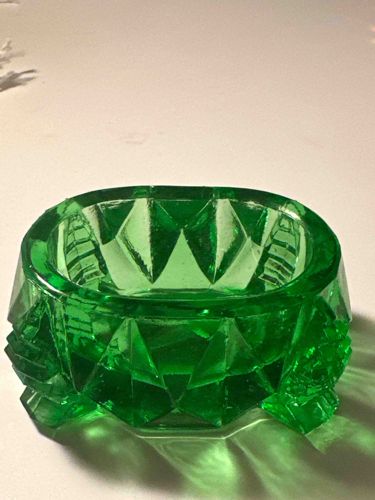
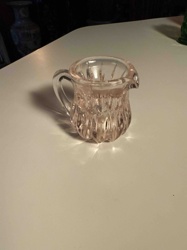
This item is an oval-shaped salt cellar, likely crafted from emerald green Depression era glass. Its vibrant green hue is characteristic of uranium glass, which glows under UV light, though this feature cannot be confirmed from the image alone. The cellar features a robust, pressed glass construction with a deeply faceted exterior, creating a diamond-cut, almost geometric pattern around its entire body. These facets are visible both on the exterior walls and along the interior base, creating a dazzling play of light and shadow, particularly evident in the cast shadows. The rim is smooth and rounded. The piece is supported by four distinct feet, formed by the continuation of the faceted pattern downwards, giving it a somewhat squat yet elegant stance. Given its likely material and construction, this piece probably dates from the 1920s to 1940s, a period when colored pressed glassware was highly popular and mass-produced. There are no obvious chips, cracks, or repairs visible in the provided images, suggesting it is in good vintage condition. The quality of craftsmanship is typical for pressed glass of its era, robust and functional, with distinct mold lines potentially present but not clearly discernible from the images. It serves as an excellent example of utilitarian yet decorative home goods from the Depression era.
AI Appraisal Report
I have examined the image provided of this emerald green Depression Glass salt cellar. Based on its appearance, I assess it to be an authentic example of pressed glass from the Depression era, likely dating between the 1920s and 1940s. The vibrant green color is highly characteristic of uranium glass common during this period, and while I cannot confirm its glow under UV light from the image, the color consistency and typical opacity suggest this possibility. The deeply faceted exterior, creating a diamond-cut pattern, exemplifies the decorative yet mass-produced nature of Depression glass. Its four-footed design adds to its charm and stability.
The condition appears to be good vintage condition, with no obvious chips, cracks, or repairs visible in the provided photographs. This significantly contributes to its value. Factors influencing the value include its decorative appeal, the historical interest of Depression glass, and its functional yet collectible nature as tableware. Comparatively, similar depression glass salt cellars or open salts in good condition typically fetch prices in the $25-$45 range in the current market, depending on patterns and rarity. This particular pattern appears relatively common.
Demand for Depression glass remains steady among collectors, though it is not considered exceptionally rare, leading to an accessible price point for collectors. The robust construction is typical of the era, and while mold lines are not discernible in the image, their presence would not detract significantly from the value unless overly prominent.
Limitations in authenticity verification from images alone exist. While the visual cues strongly suggest Depression glass, physical inspection would be crucial to confirm the material (specifically, whether it is uranium glass through UV light testing), the absence of any minor imperfections not visible in photos, and the exact manufacturing technique (e.g., specific mold marks). Examination of provenance documentation could further solidify its history. However, for a common item such as this, extensive scientific testing or documentation is generally not warranted for basic authentication.