Antique Wire Chain Mail Pot Scrubber
Antique Kitchenware / Domestic Utensils

Antique Wire Chain Mail Pot Scrubber

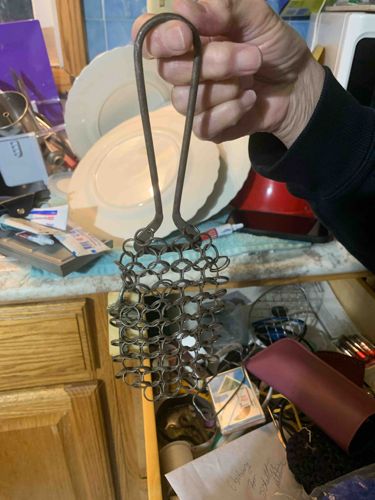
This item is an antique kitchen utensil, specifically a wire chain mail pot scrubber or 'dish cloth.' It is constructed from heavy-gauge iron or steel wire. The tool features a rigid, elongated teardrop-shaped handle made of solid wire, which terminates in a flexible mesh of interlocking concentric rings. The mesh consists of several rows of circular links woven together in a pattern similar to medieval chain mail. This design was intended to provide a high-abrasion surface for scouring cast iron cookware and copper pots without being as destructive as solid blades. The item shows a dark, aged patina consistent with carbon steel that has been exposed to water and grease over many years. There are visible signs of oxidation (rust) and minor surface wear, typical for a utilitarian object from the late 19th to early 20th century. The rings appear to be hand-formed or machine-linked with open ends crimped together. No maker's marks are immediately visible, which is common for such housewares of the era. Its rugged construction indicates high durability and a focus on industrial-style efficiency for domestic tasks.

Estimated Value

$45.00 - $75.00

Basic Information

Category

Antique Kitchenware / Domestic Utensils

Appraised On

January 9, 2026

Estimated Value

$45.00 - $75.00

Item Description

This item is an antique kitchen utensil, specifically a wire chain mail pot scrubber or 'dish cloth.' It is constructed from heavy-gauge iron or steel wire. The tool features a rigid, elongated teardrop-shaped handle made of solid wire, which terminates in a flexible mesh of interlocking concentric rings. The mesh consists of several rows of circular links woven together in a pattern similar to medieval chain mail. This design was intended to provide a high-abrasion surface for scouring cast iron cookware and copper pots without being as destructive as solid blades. The item shows a dark, aged patina consistent with carbon steel that has been exposed to water and grease over many years. There are visible signs of oxidation (rust) and minor surface wear, typical for a utilitarian object from the late 19th to early 20th century. The rings appear to be hand-formed or machine-linked with open ends crimped together. No maker's marks are immediately visible, which is common for such housewares of the era. Its rugged construction indicates high durability and a focus on industrial-style efficiency for domestic tasks.

Get Your Items Appraised

Instant estimates of your treasures with AI-powered instant appraisals

Browse More Appraisals