AI Appraisal Estimate

AI-generated estimates · not official valuations

From the user

What was submitted

Photo and notes provided by the user — not generated by AI

Submitted item photo
Submitted photo · June 6, 2026

User's notes

No additional notes provided.

AI analysis below

AI appraisal

AI analysis & estimate

AI-Generated · Verify before acting

Everything below is generated by AI for informational purposes only. AI can make mistakes — the AI may misidentify items or misattribute them (artist, maker, brand, designer, origin, era). This is not an official valuation and should not be used for insurance, sale, tax, estate, legal, or lending purposes — or any decision requiring a certified appraisal. It is not an authoritative claim about any person, brand, or rights holder — do not share or rely on it as a factual statement about a third party. Always consult qualified professionals before making financial decisions.

Read the full disclaimer

AI Identification

·Not independently authenticated·Verify before acting

Mason's Patent Ironstone China 'Vista' Dessert Plate or Saucer

Ceramic Tableware

AI Estimated Value

·Not an official valuation·Verify before acting

$15 - $30

As of June 6, 2026

AI Item Analysis

·AI can make mistakes·Verify before acting
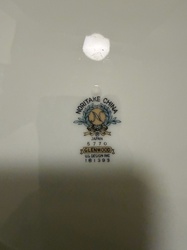
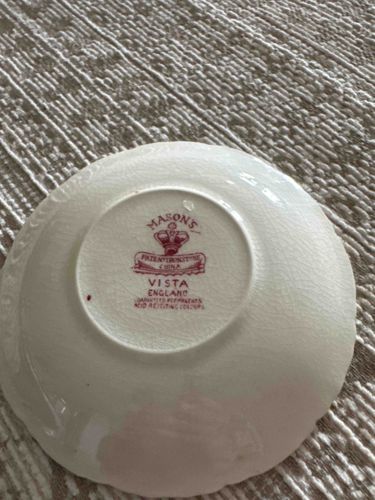
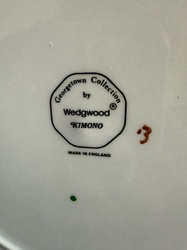
This item is the underside of a porcelain or ironstone dessert plate or saucer, distinguished by its off-white or cream-colored body. The most prominent feature is the manufacturer's mark, centrally located in a dark red or burgundy color. The mark features a crown motif above the word 'MASONS' in an arch. Below the crown, it reads 'PATENT IRONSTONE CHINA'. Further down, 'VISTA' is printed, indicating the pattern name, followed by 'ENGLAND', signifying the country of origin. The mark also includes additional text that appears to state 'GUARANTEED PERMANENT ACID RESISTING COLOURS', highlighting the durability and quality of the decorative finish. The material exhibits a faint crazing pattern across its surface, which is a network of fine cracks in the glaze, common in older ceramics and indicative of its age. The edge of the plate/saucer is subtly scalloped or fluted, adding a decorative element. Although the top surface is not visible, the bottom's design and material suggest it could be part of a tea set or dinnerware, specifically a saucer or a small dessert plate. The quality of the mark and the claim of 'acid resisting colours' suggest a mid-20th century or earlier manufacturing period, aligning with traditional English pottery craftsmanship.
AI Appraisal Report

·AI can make mistakes·Verify before acting
Upon examining the provided image of the underside of this Mason's Patent Ironstone China 'Vista' dessert plate or saucer, I can confirm its authenticity as a genuine Mason's piece. The dark red/burgundy crown mark, 'MASONS PATENT IRONSTONE CHINA', 'VISTA', and 'ENGLAND' are all consistent with known marks for this manufacturer and pattern. The additional text 'GUARANTEED PERMANENT ACID RESISTING COLOURS' further corroborates its identity and points to a production period likely from the early to mid-20th century. The off-white body and subtly scalloped edge are characteristic of Mason's wares. The visible crazing, a network of fine cracks in the glaze, is common for ceramics of this age and material and is a factor I’ve considered in its condition. While it indicates age, it generally diminishes value compared to an uncrazed piece. Market conditions for Mason's Patent Ironstone 'Vista' pattern are generally stable but not exceptionally strong for individual dessert plates or saucers unless part of a complete, pristine set. Comparables for single, used pieces typically range from $10 to $40 depending on condition. Demand is moderate, driven primarily by collectors looking to complete sets or enthusiasts of historical English pottery. Rarity for this specific piece is low; the 'Vista' pattern was produced in significant quantities. Factors significantly impacting value here include the crazing, which suggests normal wear and age. Without seeing the top surface, I cannot assess chips, cracks, or wear to the decoration, which would further influence value. My appraisal presumes the top surface is in fair to good condition, consistent with the base. For full authentication and a more precise valuation, a physical inspection would be crucial to assess the top surface condition, any repairs, and to verify the tactile quality of the ceramic. Provenance documentation could add value by confirming its history, but it is not typically required for common Mason's pieces. Scientific testing is unnecessary for authenticity verification of this type of item.

Get your items appraised

Instant estimates of your treasures with AI-powered appraisals

Browse More Appraisals