AI Appraisal Estimate

AI-generated estimates · not official valuations

From the user

What was submitted

Photo and notes provided by the user — not generated by AI

Submitted item photo
Submitted photo · June 12, 2026

User's notes

Hampshire

AI analysis below

AI appraisal

AI analysis & estimate

AI-Generated · Verify before acting

Everything below is generated by AI for informational purposes only. AI can make mistakes — the AI may misidentify items or misattribute them (artist, maker, brand, designer, origin, era). This is not an official valuation and should not be used for insurance, sale, tax, estate, legal, or lending purposes — or any decision requiring a certified appraisal. It is not an authoritative claim about any person, brand, or rights holder — do not share or rely on it as a factual statement about a third party. Always consult qualified professionals before making financial decisions.

Note

This analysis also relies on unverified notes provided by the user, which may be incomplete or inaccurate and could affect the result.

Read the full disclaimer

AI Identification

·Not independently authenticated·Verify before acting

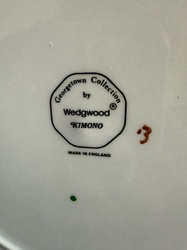
Johnson Bros Windsor Ware Hampshire Dinnerware Backstamp

Vintage Ceramics & Tableware

AI Estimated Value

·Not an official valuation·Verify before acting

$15.00 - $45.00 per individual piece

As of June 12, 2026

AI Item Analysis

·AI can make mistakes·Verify before acting
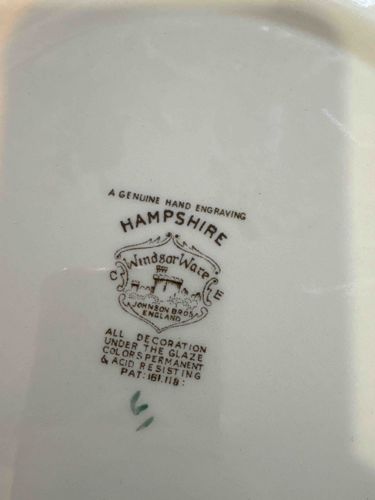
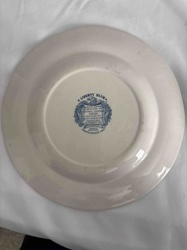
This image displays a highly detailed backstamp or maker's mark located on the underside of a ceramic tableware piece, specifically from the Hampshire pattern produced by Johnson Brothers (Johnson Bros) of England. The item is crafted from a creamy off-white or white ironstone or earthenware body, characteristic of mid-20th-century English semi-porcelain. The markings are executed in a deep brown or black transfer print under the glaze, ensuring durability and resistance to wear. The stamp includes the text 'A GENUINE HAND ENGRAVING' at the top, followed by the pattern name 'HAMPSHIRE' in a curved serif font. Central to the mark is the 'Windsor Ware' crest, featuring a stylized castle turret motif. Text within and around the shield clarifies the origin as 'JOHNSON BROS ENGLAND'. Technical specifications below the crest state 'ALL DECORATION UNDER THE GLAZE COLORS PERMANENT & ACID RESISTING', along with a patent number 'PAT: 161.118'. Additionally, a hand-painted green artist's or inspector's mark (resembling a slash or tally) is visible further down, which indicates quality control stages during production. The glaze appears smooth with a high-gloss finish, showing minimal signs of crazing or significant utilitarian wear in the captured area, suggesting a well-preserved vintage condition. This style of backstamp was predominantly utilized between the 1940s and 1960s, a period when English potteries excelled in producing robust transferware for the international market.
AI Appraisal Report

·AI can make mistakes·Verify before acting
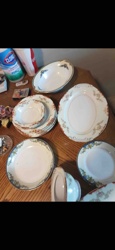
I have examined the digital image of the Johnson Bros Windsor Ware backstamp for the 'Hampshire' pattern. The marking is consistent with authentic mid-20th-century production (circa 1940s-1960s) from the Hanley, Stoke-on-Trent potteries. The underglaze transfer print is crisp, and the presence of the hand-painted inspector's mark in green is a common indicator of the factory’s quality control process during that era. The 'Hampshire' pattern, featuring its characteristic floral multicolors on a scalloped ironstone body, remains a popular choice for collectors of English transferware. Based on the provided image, the glaze shows excellent clarity with no visible crazing or staining, which significantly preserves its marketability. However, the value of Johnson Bros pieces is highly dependent on the specific vessel type; while bread plates may retail for $12-15, larger serving platters or lidded tureens can fetch $60-$100. Market demand for mid-century English ironstone is stable but not speculative. Comparables from recent secondary market sales show that individual place setting components are plentiful, keeping prices accessible. The 'acid-resisting' patent mark (PAT: 161.118) confirms it was produced for a market that prioritized durability. Limitations: This appraisal is based on a visual inspection of the backstamp only. A physical examination is required to detect professional restorations, hairline cracks not visible in photos, or 'flea bites' along the rim. To fully authenticate and finalize this valuation, I would need to inspect the front-facing decoration for fading and verify the physical weight and resonance (the 'ping' test) of the earthenware. Provenance or original purchase receipts would further solidify the item's history but are not strictly necessary for this common production line.

Get your items appraised

Instant estimates of your treasures with AI-powered appraisals

Browse More Appraisals