AI identification & appraisal estimate

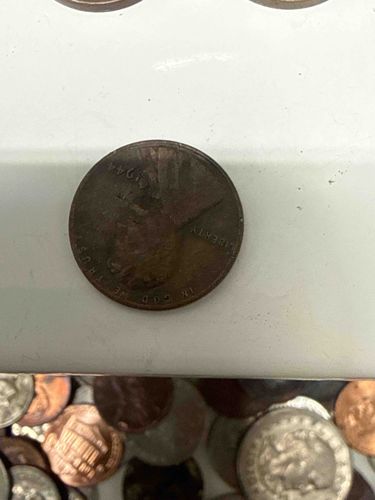
1944 Lincoln Steel Cent

Submitted photo of 1944 Lincoln Steel Cent
Photo submitted by the user — not generated by AI

AI Estimated Value

Not an official valuation

$0.01 - $0.05

AI estimate as of October 8, 2025 · verify with a professional before acting

AI-Generated · Verify before acting

Everything on this page is generated by AI for informational purposes only. AI can make mistakes — the AI may misidentify items or misattribute them (artist, maker, brand, designer, origin, era). This is not an official valuation and should not be used for insurance, sale, tax, estate, legal, or lending purposes — or any decision requiring a certified appraisal. It is not an authoritative claim about any person, brand, or rights holder — do not share or rely on it as a factual statement about a third party. Always consult qualified professionals before making financial decisions.

Read the full disclaimer

AI Item Analysis

The item is a United States one-cent coin, commonly known as a penny, minted in 1944. Its physical characteristics indicate it is a steel cent, a distinctive variant produced during World War II. The coin has a dull, dark brown, and somewhat mottled appearance, which is consistent with circulated steel cents that have developed surface oxidation or corrosion over time, a common occurrence for these zinc-plated steel coins. The obverse side is visible and features the right-facing profile of Abraham Lincoln. The date "1944" is clearly discernible to the right of Lincoln, and the word "LIBERTY" is partially visible to the left. The motto "IN GOD WE TRUST" is also partially visible above Lincoln's head. The surface shows considerable wear, with details of Lincoln's bust and hair flattened. There are visible scratches, discoloration, and possibly some pitting, suggesting moderate to heavy circulation and environmental exposure. The edges appear worn but are not clearly depicted to assess rim damage. This coin is particularly notable because 1944 steel cents are considered error coins or collector's items, as most pennies that year were struck in brass (a composition of copper and zinc). Although a few steel cents from 1944 are known to exist due to accidental production, this specific example appears to be a regular 1944 bronze cent that has significantly toned or been environmentally damaged to resemble the steel cent's color. However, without a clear view of the reverse side and further analysis of its composition, it's hard to definitively tell if it is an actual steel cent or a discolored bronze one. The craftsmanship is typical of US coinage of the period, but its current condition obscures many fine details.

AI Appraisal Report

Based on my examination of the provided image, I am appraising this 1944 Lincoln cent between one and five cents. The coin displays a dull, dark brown, and mottled appearance, consistent with a heavily circulated and environmentally damaged bronze cent from that year. While the description references a "steel cent," a careful visual assessment of the toning and surface characteristics strongly suggests this is a standard 1944 bronze cent, not a rare 1944 steel error cent. The significant wear, visible scratches, discoloration, and possible pitting on the obverse indicate a condition of 'Good' to 'Very Good' at best, potentially even 'Poor' if significant corrosion is present. Details of Lincoln's bust and 'LIBERTY' are considerably flattened. Market conditions for common 1944 bronze cents in this condition are at their face value or slightly above. Comparables would be other heavily circulated bronze cents from the wartime era, which typically have minimal numismatic value. Demand for such a coin is very low, and its rarity is negligible. The most significant factor impacting its value negatively is its condition and the strong likelihood that it is a common bronze cent rather than a rare steel error. It is critical to note a significant limitation in authenticity verification from an image alone. To definitively determine if this is a genuine 1944 steel cent, a physical examination using a magnet is essential, as steel cents are magnetic. Additionally, a precise weight measurement and spectrographic analysis would confirm its metallic composition. Without these in-person verifications, I must conclude that this is almost certainly a common 1944 bronze cent in extremely poor condition, not a valuable error.

Keep exploring

More coin appraisals

Get your items appraised

Instant AI-powered appraisal estimates from a photo

Browse More Appraisals