Middle Paleolithic Bifacial Chert Hand Axe / Scraper
Prehistoric Archaeological Artifacts / Lithic Tools

Middle Paleolithic Bifacial Chert Hand Axe / Scraper

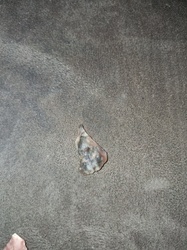
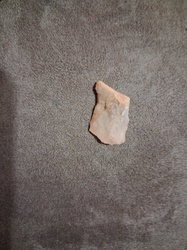
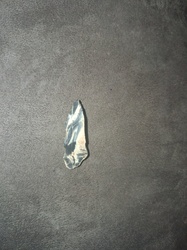
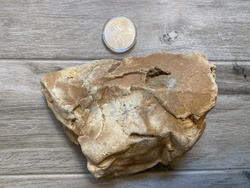
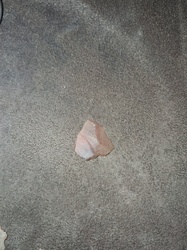
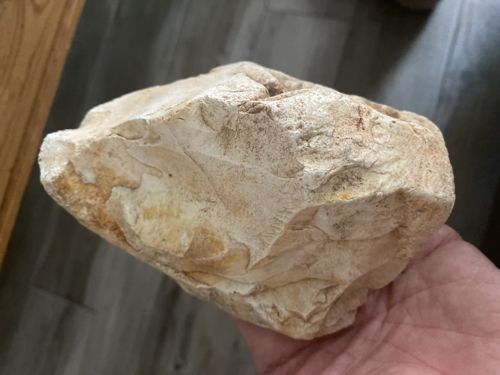
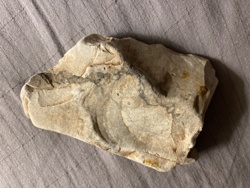
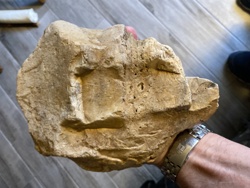
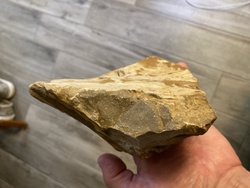
This is a substantial prehistoric lithic tool, identified as a bifacial hand axe or large scraper, measuring approximately 5 inches by 4 inches. Crafted from a light-colored chert, the material displays a range of creamy white, tan, and pale ochre tones. The tool exhibits characteristic percussion flaking across both faces (bifacial construction), resulting in a roughly ovate or cordiform shape with a tapered working end and a thicker, more bulbous base designed to fit comfortably in the palm. The surface shows a significant degree of prehistoric patina and calcification, consistent with long-term burial in the soil chemistry found near Guthrie, Oklahoma. The knapping scars are large and deep, indicating primary reduction using a hard hammer technique, typical of Middle Paleolithic technology. Notable features include a slightly sinuous edge profile and a blunt dorsal section for ergonomic gripping. In terms of condition, the tool shows expected age-related weathering and smoothing of flake ridges, with some minor modern edge nibbling or incidental surface abrasions. The absence of a refined, pressure-flaked finish suggests it served as a heavy-duty multipurpose tool for butchering or woodworking. The craftsmanship reflects a high level of prehistoric skill in assessing the crystalline structure of the local chert to produce a durable, functional edge.
Estimated Value

$450 - $650

Basic Information

Category

Prehistoric Archaeological Artifacts / Lithic Tools

Appraised On

February 19, 2026

Estimated Value

$450 - $650

Additional Details Provided By Owner

User Provided Information

Middle Paleolithic chert Bi face hand axe scraper tool found on Guthrie OK measuring 5" x 4"

Item Description

This is a substantial prehistoric lithic tool, identified as a bifacial hand axe or large scraper, measuring approximately 5 inches by 4 inches. Crafted from a light-colored chert, the material displays a range of creamy white, tan, and pale ochre tones. The tool exhibits characteristic percussion flaking across both faces (bifacial construction), resulting in a roughly ovate or cordiform shape with a tapered working end and a thicker, more bulbous base designed to fit comfortably in the palm. The surface shows a significant degree of prehistoric patina and calcification, consistent with long-term burial in the soil chemistry found near Guthrie, Oklahoma. The knapping scars are large and deep, indicating primary reduction using a hard hammer technique, typical of Middle Paleolithic technology. Notable features include a slightly sinuous edge profile and a blunt dorsal section for ergonomic gripping. In terms of condition, the tool shows expected age-related weathering and smoothing of flake ridges, with some minor modern edge nibbling or incidental surface abrasions. The absence of a refined, pressure-flaked finish suggests it served as a heavy-duty multipurpose tool for butchering or woodworking. The craftsmanship reflects a high level of prehistoric skill in assessing the crystalline structure of the local chert to produce a durable, functional edge.
Get Your Items Appraised

Instant estimates of your treasures with AI-powered instant appraisals

Browse More Appraisals