These notes were written by the person who submitted this item. Appraiser.AI has not verified them, and the AI's identification and estimate may rely on them.
AI Estimated Value
Not an official valuation
$15,000 - $25,000
AI estimate as of July 12, 2025 · verify with a professional before acting
AI-Generated · Verify before acting
Everything on this page is generated by AI for informational purposes only. AI can make mistakes — the AI may misidentify items or misattribute them (artist, maker, brand, designer, origin, era). This is not an official valuation and should not be used for insurance, sale, tax, estate, legal, or lending purposes — or any decision requiring a certified appraisal. It is not an authoritative claim about any person, brand, or rights holder — do not share or rely on it as a factual statement about a third party. Always consult qualified professionals before making financial decisions.
This analysis also relies on unverified notes provided by the user, which may be incomplete or inaccurate and could affect the result.
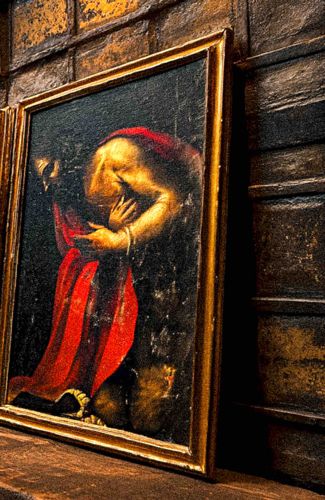
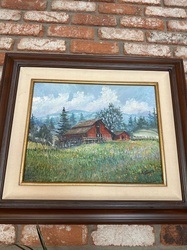
This is an oil painting on canvas from the 17th century, depicting a figure in a state of distress or contemplation. The composition is dark and moody, with a strong use of chiaroscuro, characteristic of Baroque painting. The central figure, possibly male, is shown with a hunched posture, face obscured by an arm, and hands clasped toward the chest, suggesting deep emotion or suffering. A prominent feature is the vibrant red drapery, striped with a darker hue, which contrasts sharply and dramatically with the predominantly dark background and the figure's muted, earthy skin tones. The technique appears to be expressive, with visible brushstrokes, particularly in the drapery and illuminated areas of the skin. The canvas itself shows signs of age, with visible craquelure across the surface, indicating the paint layers have dried and cracked over centuries. There are also areas where the paint appears to be worn or somewhat abraded, and the dark background displays a degree of loss or perhaps accumulated surface dirt, contributing to a muted appearance. The painting is housed within a simple, narrow, gilded wooden frame. The gilding on the frame appears worn in places, revealing what might be a red bole layer beneath, suggesting its age. The overall condition suggests a historical artwork that has likely seen centuries of display and minor environmental wear, contributing to its patina. The quality of craftsmanship is evident in the dramatic lighting and emotional portrayal, typical of masterworks from the period, although no specific maker's marks or signatures are discernible from the image.
AI Appraisal Report
Based on my examination of the image and the owner's details, this 17th-century oil on canvas powerfully conveys emotion through its Baroque chiaroscuro and expressive brushwork. The visible craquelure, worn paint, and abraded areas are consistent with a historical artwork of this age, contributing to its authentic patina. The simple, worn gilded frame further supports its antiquity. The dramatic lighting and emotional depth suggest a competent artist from the period, aligning with common characteristics of works created during the 17th century.
Market conditions for unsigned 17th-century European paintings can vary significantly. While a strong artistic hand is evident, the absence of a discernible signature or clear attribution limits its appeal to top-tier collectors and institutions who often prioritize documented provenance and specific master identification. Comparables for unsigned but quality pieces from this period typically fall into the mid-range for Old Master works, often valued for their decorative and historical merit rather than specific authorship. Demand exists among period collectors and interior designers seeking genuine antique artworks.
Factors significantly impacting value here are the lack of attribution, the generalized condition issues such as paint loss and surface dirt, and its current display state. The emotional impact and artistic style are certainly positive attributes. However, full authentication and accurate valuation are significantly limited without physical examination. In-person inspection would allow for detailed analysis of paint layers, canvas weave, and specific pigments. Provenance documentation, such as sales records or exhibition history, is crucial for establishing attribution and ownership history. Furthermore, scientific testing (e.g., pigment analysis, dating techniques) would be essential to definitively confirm age and materials, aiding in a more precise authentication and attribution.