AI Appraisal Estimate

AI-generated estimates · not official valuations

From the user

What was submitted

Photo and notes provided by the user — not generated by AI

Submitted item photo
Submitted photo · June 6, 2026

User's notes

not sure

AI analysis below

AI appraisal

AI analysis & estimate

AI-Generated · Verify before acting

Everything below is generated by AI for informational purposes only. AI can make mistakes — the AI may misidentify items or misattribute them (artist, maker, brand, designer, origin, era). This is not an official valuation and should not be used for insurance, sale, tax, estate, legal, or lending purposes — or any decision requiring a certified appraisal. It is not an authoritative claim about any person, brand, or rights holder — do not share or rely on it as a factual statement about a third party. Always consult qualified professionals before making financial decisions.

Note

This analysis also relies on unverified notes provided by the user, which may be incomplete or inaccurate and could affect the result.

Read the full disclaimer

AI Identification

·Not independently authenticated·Verify before acting

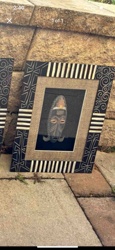
Mid-Century Tiki Style Tapa Cloth Bark Art with Faux-Bamboo Frame

Wall Art & Cultural Decor

AI Estimated Value

·Not an official valuation·Verify before acting

$250.00 - $450.00

As of June 6, 2026

AI Item Analysis

·AI can make mistakes·Verify before acting
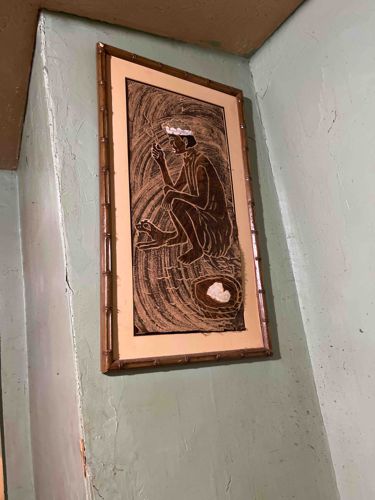
This rectangular wall art piece features a traditional Polynesian bark cloth (tapa cloth) material, likely originating from the mid-20th century Mid-Century Modern or 'Tiki' design era. The central image depicts a stylized figure in a squatting position, smoking a long pipe, accompanied by a small animal or dog-like figure and a shallow bowl or basket. The artwork is executed in a monochromatic dark brown or black pigment against the natural tan fibrous texture of the beaten bark. The background consists of swirling, concentric circular lines that provide a sense of movement and depth to the composition. The construction involves a layered mounting: the rugged-edged bark cloth is set against a cream-colored mat, all housed under glass within a decorative faux-bamboo wooden frame. The frame features traditional notched details and a warm honey-oak finish typical of the 1950s-1970s Polynesian pop aesthetic. In terms of condition, the piece shows visible signs of age including slight yellowing of the mat board and minor separations in the frame joints. The tapa cloth itself appears to have intentionally frayed edges, consistent with handmade production, and there is a noticeable lighter spot near the bottom basket which may be a natural fiber variance or minor surface wear. No maker's mark is immediately visible in this view, though it represents a high-quality example of the era's decorative ethnic-inspired crafts.
AI Appraisal Report

·AI can make mistakes·Verify before acting
I have carefully examined the high-resolution images provided of this Mid-Century Modern Tiki-style wall art. The piece is a quintessential example of the Polynesian Pop aesthetic that peaked in the 1950s and 1960s. The artwork utilizes authentic tapa cloth (beaten mulberry bark) as its substrate, featuring a stylized figurative motif typical of commercial art produced for the Western market during this era. The condition appears to be 'good' to 'very good' for its age. While I noted some separation in the faux-bamboo frame joints and slight foxing on the mat board, these factors are common in pieces of this vintage. The central tapa remains vibrant without significant fading of the dark pigments, which often occurs due to UV exposure. The presence of the original faux-bamboo frame significantly enhances its desirability among MCM collectors, as these specific frames are often damaged or replaced over time. Market demand for 'Tiki' memorabilia remains strong, particularly for larger, framed textiles that can serve as focal points in period-correct interior design. Similar tapa cloth pieces without frames typically trade for $75-$150, but the complete presentation with the faux-bamboo element elevates the value. Limitations: My valuation is based on visual evidence. I cannot definitively confirm if the pigment is traditional soot-based ink or a mid-century synthetic print without microscopic analysis. A physical inspection would be required to verify the backing materials and check for hidden dry rot or insect damage common in organic bark materials. Provenance regarding the original point of purchase (e.g., a specific trading post or department store) would further refine this estimate.

Get your items appraised

Instant estimates of your treasures with AI-powered appraisals

Browse More Appraisals