Dendritic Agate River Stone
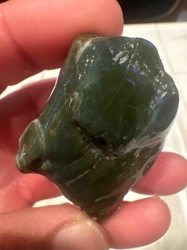
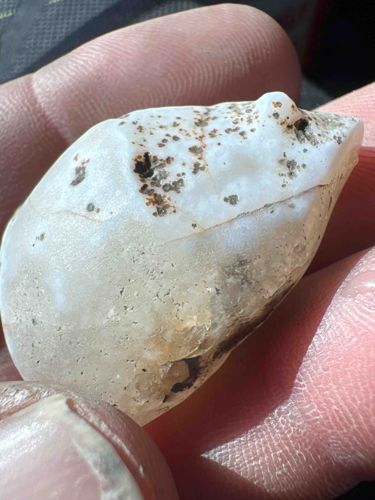
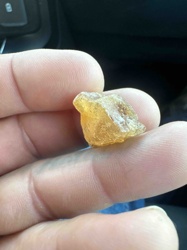
This is a naturally occurring water-worn chalcedony or agate stone, small enough to be held comfortably between two fingers, suggesting a diameter of approximately 1.5 to 2 centimeters. The specimen displays a predominantly milky white to translucent waxy luster, characteristic of microcrystalline quartz. A defining feature is the presence of dark brown to black dendritic or moss-like inclusions, likely manganese or iron oxides, which appear as a concentrated cluster of spots on the upper surface. The stone has a smooth, rounded, almost egg-like shape, though one side appears more angular or fractured, indicating a natural break or cleave. There is a visible linear fissure or hairline crack running horizontally across the mid-section. The surface texture varies from highly polished and smooth to slightly pitted with minute indentations, known as 'chatter marks,' which occur due to the stone tumbling in a high-energy water environment like a riverbed. There are no signs of human manipulation, artificial carving, or maker's marks, characterizing it as a raw mineral specimen. The unique visual appeal lies in the pareidolia effect, where the specific arrangement of the inclusions and the rounded contours vaguely resemble a profile or face, though this is a natural geological coincidence rather than intentional craftsmanship.
AI-Generated Appraisal Disclaimer
Estimated Value
$15.00 - $25.00
Basic Information
Category
Minerals and Gemstones
Appraised On
March 27, 2026
Estimated Value
$15.00 - $25.00
Item Description
This is a naturally occurring water-worn chalcedony or agate stone, small enough to be held comfortably between two fingers, suggesting a diameter of approximately 1.5 to 2 centimeters. The specimen displays a predominantly milky white to translucent waxy luster, characteristic of microcrystalline quartz. A defining feature is the presence of dark brown to black dendritic or moss-like inclusions, likely manganese or iron oxides, which appear as a concentrated cluster of spots on the upper surface. The stone has a smooth, rounded, almost egg-like shape, though one side appears more angular or fractured, indicating a natural break or cleave. There is a visible linear fissure or hairline crack running horizontally across the mid-section. The surface texture varies from highly polished and smooth to slightly pitted with minute indentations, known as 'chatter marks,' which occur due to the stone tumbling in a high-energy water environment like a riverbed. There are no signs of human manipulation, artificial carving, or maker's marks, characterizing it as a raw mineral specimen. The unique visual appeal lies in the pareidolia effect, where the specific arrangement of the inclusions and the rounded contours vaguely resemble a profile or face, though this is a natural geological coincidence rather than intentional craftsmanship.
Related Tags
Get Your Items Appraised
Instant estimates of your treasures with AI-powered instant appraisals