Fossilized Otodus Obliquus Shark Tooth
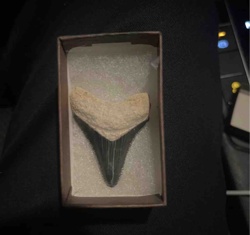
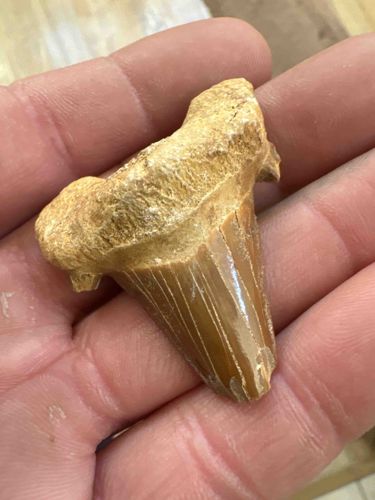
This specimen is a fossilized tooth from the extinct mackerel shark, Otodus obliquus. Based on the human hand for scale, the tooth measures approximately 1.5 to 2 inches in length. The item exhibits a central triangular blade with a distinct tan to caramel-colored enameloid finish, showing vertical striations typical of the species. The root is large, bulky, and robust with a sandy, buff-colored mineralized texture, characteristic of fossils often recovered from the phosphate mines of Morocco. The tooth features a prominent bourlette—the chevron-shaped area between the root and the blade. Small lateral cusplets are visible on the shoulders of the tooth, though they appear somewhat worn. Condition-wise, the specimen shows significant signs of natural wear; the tip of the blade is blunted or chipped, and the root structure appears somewhat weathered with minor losses to the distal ends. There is no immediate evidence of modern restoration or artificial 'faking' common in high-volume commercial fossils, though the presence of sediment suggests a raw, unpolished state. This specimen dates to the Paleocene to Eocene epochs, approximately 45 to 60 million years ago, representing an apex predator of the ancient seas.
AI-Generated Appraisal Disclaimer
Estimated Value
$15.00-$25.00
Basic Information
Category
Fossils & Paleontology
Appraised On
January 3, 2026
Estimated Value
$15.00-$25.00
Item Description
This specimen is a fossilized tooth from the extinct mackerel shark, Otodus obliquus. Based on the human hand for scale, the tooth measures approximately 1.5 to 2 inches in length. The item exhibits a central triangular blade with a distinct tan to caramel-colored enameloid finish, showing vertical striations typical of the species. The root is large, bulky, and robust with a sandy, buff-colored mineralized texture, characteristic of fossils often recovered from the phosphate mines of Morocco. The tooth features a prominent bourlette—the chevron-shaped area between the root and the blade. Small lateral cusplets are visible on the shoulders of the tooth, though they appear somewhat worn. Condition-wise, the specimen shows significant signs of natural wear; the tip of the blade is blunted or chipped, and the root structure appears somewhat weathered with minor losses to the distal ends. There is no immediate evidence of modern restoration or artificial 'faking' common in high-volume commercial fossils, though the presence of sediment suggests a raw, unpolished state. This specimen dates to the Paleocene to Eocene epochs, approximately 45 to 60 million years ago, representing an apex predator of the ancient seas.
Related Tags
Explore similar items and categories:
Get Your Items Appraised
Instant estimates of your treasures with AI-powered instant appraisals