Paleo Indian Portable Rock Art and Chert Hand Axe
Archaeological Artifacts / Native American Lithics

Paleo Indian Portable Rock Art and Chert Hand Axe

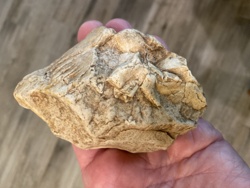
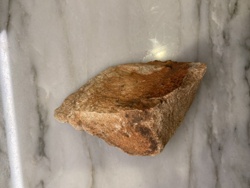
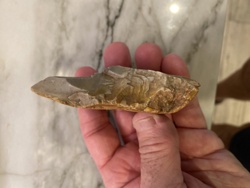
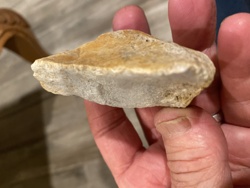
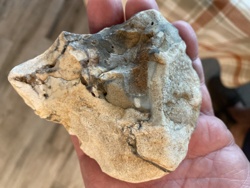
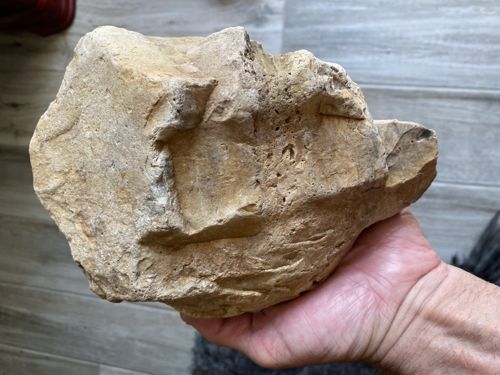
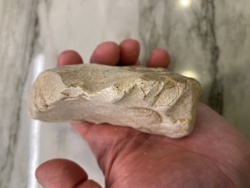
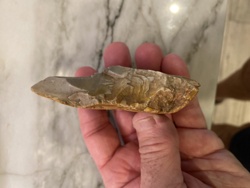
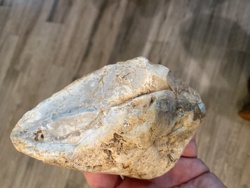
This specimen is a large chert lithic object measuring approximately 8.5 by 7 inches, identified as a dual-purpose portable rock art piece and hand axe tool from the Paleo Indian period. The item originates from Guthrie, Oklahoma, and exhibits the characteristic tan and ochre hues of local chert. Physically, the object is heavy and robust, displaying significant percussive flaking and bulbous contours. The most striking element is its anthropomorphic profile, which bears a resemblance to a human head including a suggested brow line, nasal ridge, and chin area created through deliberate fracture patterns. As a tool, it functions as a hand axe or scraper; the thick 'base' fits into the palm, while the tapering edges show signs of intentional thinning and edge-work. Condition-wise, the stone shows a heavy desert varnish and calcified patina consistent with great age and long-term exposure to the elements. There are no modern saw marks or grinding apparent, only ancient impact scars and step-fractures. In the context of lithic analysis, this piece demonstrates a high degree of intentionality in its shape, bridging the gap between utilitarian stone tools and early symbolic expression. The craftsmanship involves sophisticated knapping techniques typical of the early inhabitants of the North American plains, utilizing the natural geometry of the rock to minimize labor while maximizing function and form.
Estimated Value

$400 - $850

Basic Information

Category

Archaeological Artifacts / Native American Lithics

Appraised On

March 28, 2026

Estimated Value

$400 - $850

Additional Details Provided By Owner

User Provided Information

A large chert Paleo Indian portable rock art human head and hand axe scraper tool. Found in Guthrie,OK measuring 8.5" x 7"

Item Description

This specimen is a large chert lithic object measuring approximately 8.5 by 7 inches, identified as a dual-purpose portable rock art piece and hand axe tool from the Paleo Indian period. The item originates from Guthrie, Oklahoma, and exhibits the characteristic tan and ochre hues of local chert. Physically, the object is heavy and robust, displaying significant percussive flaking and bulbous contours. The most striking element is its anthropomorphic profile, which bears a resemblance to a human head including a suggested brow line, nasal ridge, and chin area created through deliberate fracture patterns. As a tool, it functions as a hand axe or scraper; the thick 'base' fits into the palm, while the tapering edges show signs of intentional thinning and edge-work. Condition-wise, the stone shows a heavy desert varnish and calcified patina consistent with great age and long-term exposure to the elements. There are no modern saw marks or grinding apparent, only ancient impact scars and step-fractures. In the context of lithic analysis, this piece demonstrates a high degree of intentionality in its shape, bridging the gap between utilitarian stone tools and early symbolic expression. The craftsmanship involves sophisticated knapping techniques typical of the early inhabitants of the North American plains, utilizing the natural geometry of the rock to minimize labor while maximizing function and form.
Get Your Items Appraised

Instant estimates of your treasures with AI-powered instant appraisals

Browse More Appraisals